



Story by Tafara Chikumira
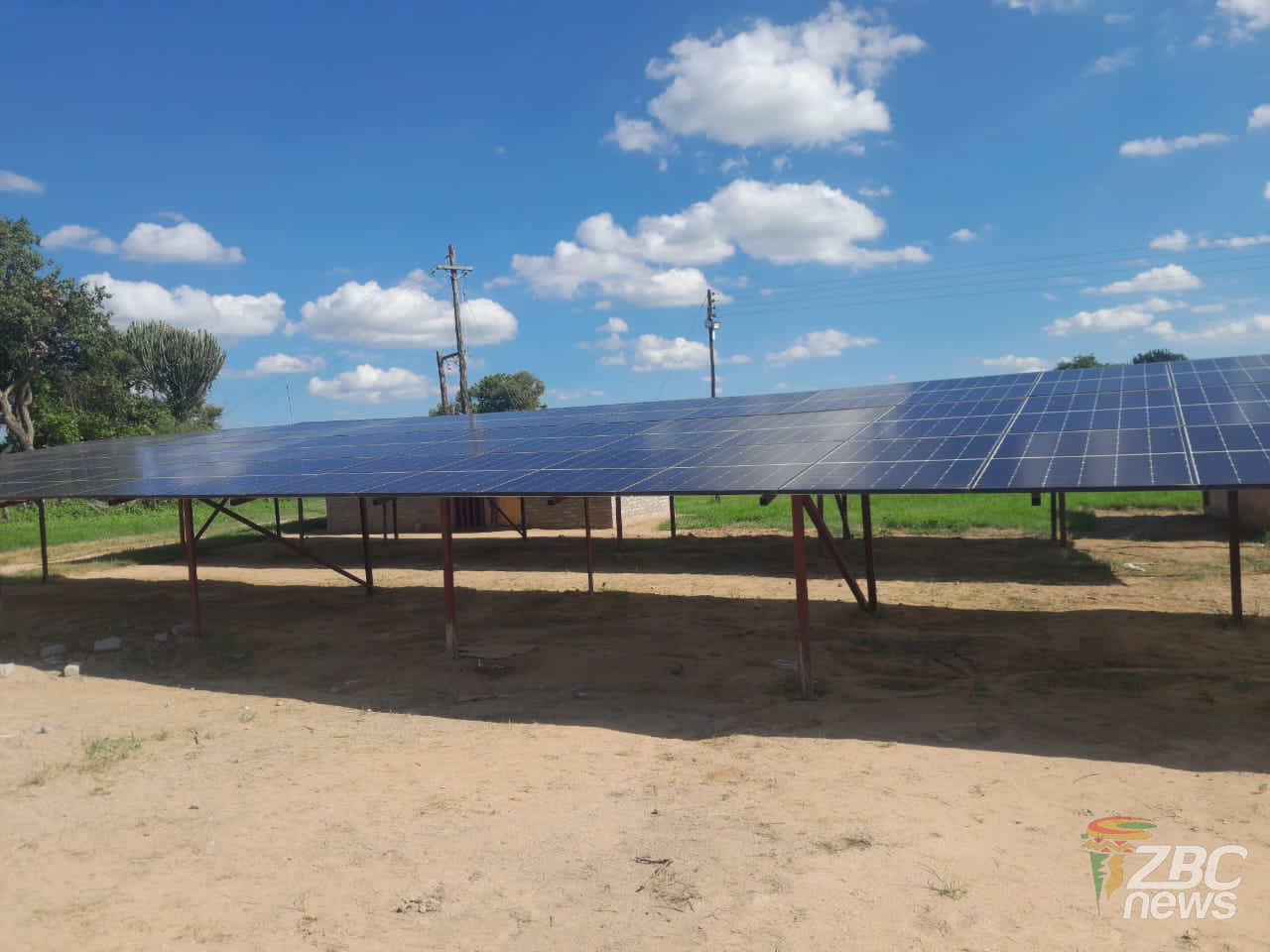
A Gweru-based farmer has commissioned a privately funded solar power plant capable of feeding electricity into the national grid, highlighting the growing role of indigenous agricultural producers in Zimbabwe’s renewable energy transition.
The project, established at the farmer’s property, comes as Zimbabwe intensifies efforts to diversify its energy mix and reduce pressure on the national grid through increased adoption of clean and sustainable power sources.
Valued at approximately US$60 000, the solar installation has a generation capacity of 44 kilowatts, significantly exceeding the 10 kilowatts required to meet the farm’s operational needs. The excess electricity will be exported to the national grid, contributing to broader power availability beyond the local area.
Zimbabwe Electricity Transmission and Distribution Company (ZETDC) Engineering Manager Engineer Wonder Mangwanda said the project demonstrates how decentralised energy generation can support national supply.
“The amount of power being produced here exceeds the farm’s consumption needs. The excess energy will be fed into the national grid, meaning communities as far away as Chipinge can benefit. In effect, the farmer is banking power, which can later be drawn during periods when there is no sunshine,” he said.
The owner of the project, Mrs Matilda Manhambo, said reliable energy is essential for sustained agricultural productivity, particularly in horticulture, which requires consistent irrigation and cold-chain systems throughout the year.
“As horticulture farmers, we have a responsibility to produce throughout the year, and that requires a constant power supply. Solar energy enables us to achieve this while also answering government’s call to adopt green energy solutions,” she said.
The initiative has drawn regional attention, with Botswana’s Ambassador to Zimbabwe, Her Excellency Sarah Molosiwa, commending the project as a model aligned with regional goals of energy and food self-sufficiency.
“The region must think outside the box. We need to invest more in infrastructure and fully utilise our land to feed ourselves. We cannot rely on imports for food security, and initiatives like this show what can be achieved,” she said.
Energy experts say private-sector participation in renewable energy generation will be critical in easing Zimbabwe’s electricity shortages, particularly as climate variability continues to affect hydropower output. Projects such as this are expected to strengthen national resilience while supporting sustainable agricultural production.

