



Story by Lisa Masuku-Kurira
THE Midlands Province is positioning itself for stronger economic growth in 2026, as provincial leadership and senior government officials convened in Bulawayo on Tuesday to map out strategies for sustaining and expanding gains achieved under the National Development Strategy 1 (NDS1).
The meeting focused on consolidating economic progress recorded between 2021 and 2025 and aligning provincial development priorities with the objectives of the NDS2.
Midlands Province Director for Economic Affairs and Investment in the Office of the President and Cabinet, Mr Kosheni Mtisi, said the province had attracted investments exceeding US$2 billion over the past five years, driven largely by growth in the iron and steel sector, mining, and major infrastructure projects.
“As a province, we were not hard hit by the El Niño-induced drought. Investment worth over US$2 billion has been made in our Province since 2021,” Mr Mtisi said.
He noted that the resilience of the provincial economy had created a strong foundation for further expansion under NDS2.
Midlands Minister of State for Provincial Affairs and Devolution, Honourable Owen Ncube, said the province was targeting sustained growth by leveraging ongoing government programmes and infrastructure investments rolled out since the advent of the Second Republic.
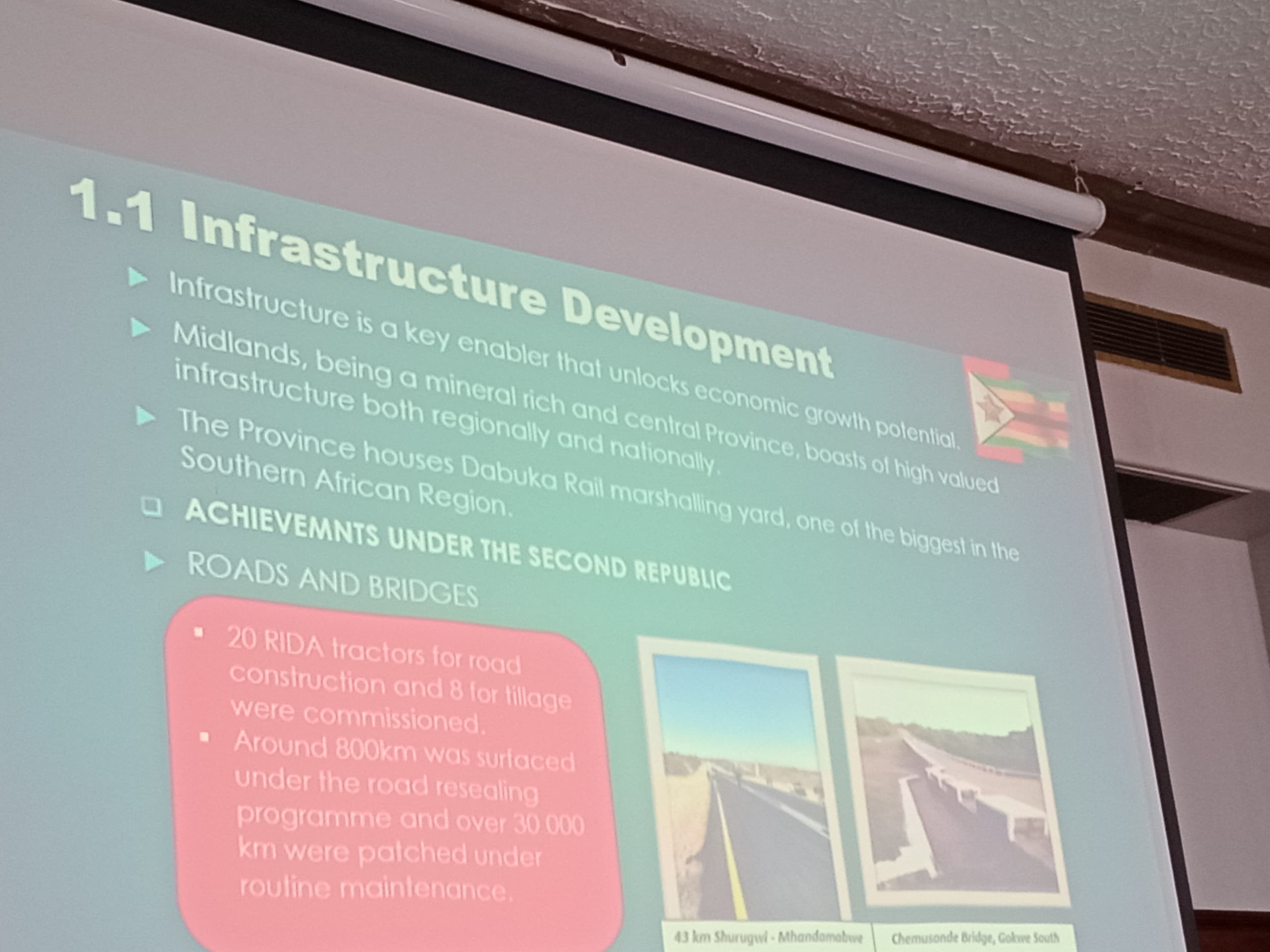
“The Midlands Province prides itself in being a beneficiary of a number of programs ranging from rehabilitation of schools, massive road rehabilitation, since the inception of the Second republic, we are happy that we produced over 2000 metric tonnes of wheat and a number of schools and clinics were electrified.”
He added that agricultural productivity had also improved, with the province producing over 2 000 metric tonnes of wheat, contributing to national food security.
“Our GDP has been growing remarkably since 2021 and we are targeting increased growth this year again. We believe that leveraging on the second economic blueprint, our GDP will continue on an upward trajectory,” Honourable Ncube said.
Mining, iron and steel production remain central to the Midlands’ contribution to the national economy, with authorities identifying the sectors as key drivers of industrialisation, employment creation and export earnings.
The province is expected to play a critical role in supporting Zimbabwe’s broader economic transformation agenda and Vision 2030, as government shifts focus towards value addition, infrastructure development and inclusive growth under NDS2.

