



Story by Abigirl Tembo, Health Editor
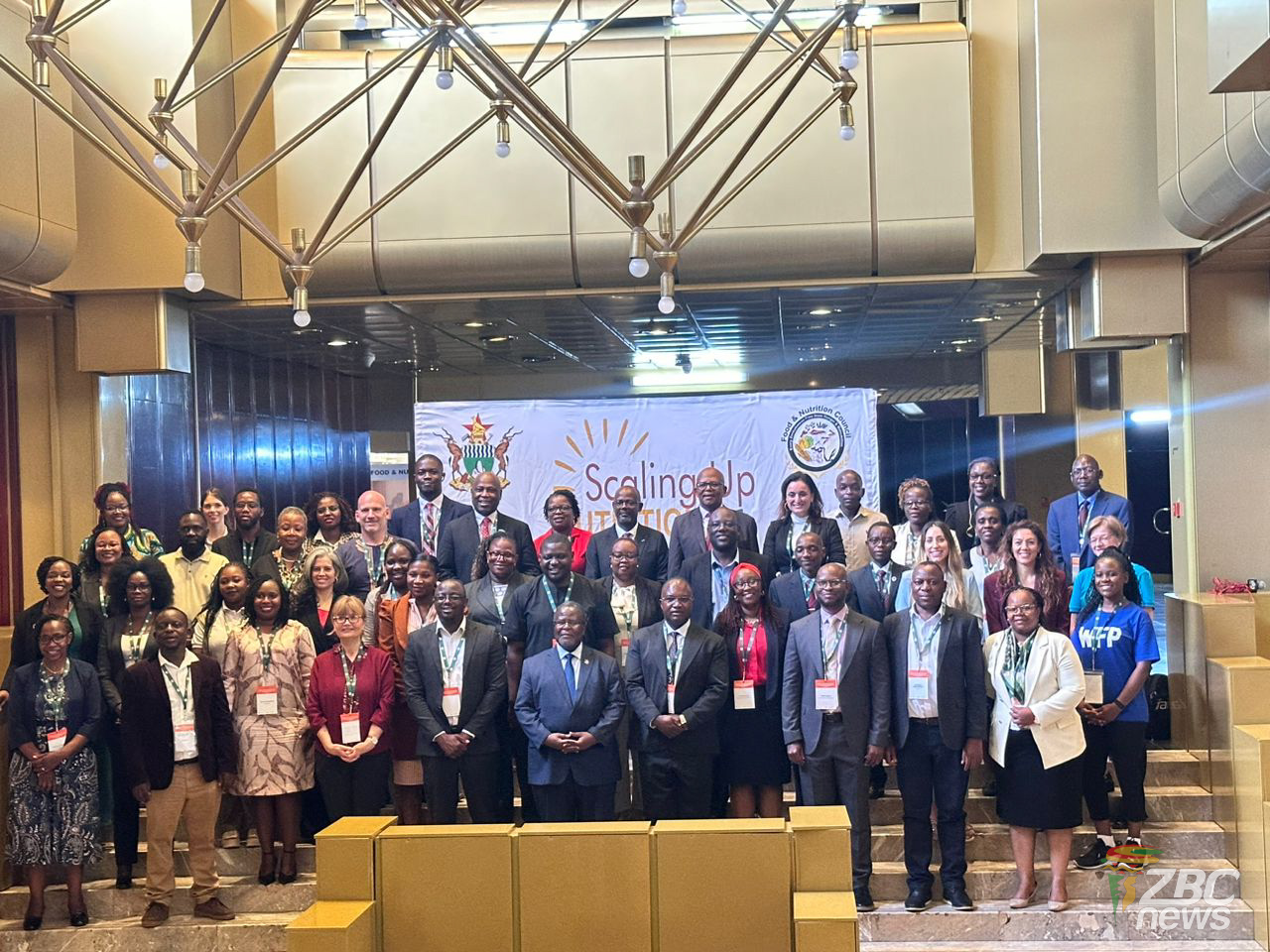
REGIONAL leaders have hailed Zimbabwe’s nutrition governance framework as a model worth emulating, as the country hosts a high-level Anglophone Africa Regional Learning Exchange on multisectoral coordination for sustainable nutrition outcomes.
Officially opening the event, Deputy Chief Secretary in the Office of the President and Cabinet, Reverend Paul Damasane said nutrition must be understood beyond the health sector, describing it as a cornerstone for national development
“Nutrition is not just a health issue, it is a fundamental pillar for sustainable development that intertwines with multiple sectors that include among many human capital development, agriculture, social protection and social development. Nutrition security in our view contributes to the development and achievement of our national development vision as enshrined in NDS2 that the cabinet approved last week,” he said.
“Since joining the Scaling Up Nutrition movement in 2011, Zimbabwe has made significant strides towards eradicating all forms of malnutrition. This alliance has strengthened our national strategies and galvanized what is called a wheel in investment in our nutrition. Furthermore, the establishment of the Food and Nutrition Council as the lead agency under the Office of the President and Cabinet has been pivotal in coordinating efforts across sectors and stakeholders, enabling us to address national food and nutrition security issues more effectively.”
Participants from across the region echoed similar sentiments, praising Zimbabwe’s progress and resilience in the face of economic and resource constraints.
“Some countries have a lot to learn from Zimbabwe as it is at a different stage. We have seen how the governance and coordination of food and nutrition in the country has been structured and already, it is yielding results. The resilience that Zimbabwe has shown in as far as food and nutrition is concerned is worth noting by most of the countries. A number of countries in East and Southern Africa, but also just in Anglophone Africa, are struggling when it comes to food and nutrition,” Zambia National Food and Nutrition Commission’s Deputy Executive Director, Mathew Mhuru said.
“My overall assessment is that Zimbabwe has done very well and we can learn from them in terms of the structural process as well as the evidence-led decision-making that supports food and the delivery of food. Nutritional meals, because we can talk about quantities and all kinds of things, but if the nutrition is not there, if the food does not fit into the culture, if it does not support or if it does not align with the person or is not understood in terms of the different components, then it is worthless. So the whole idea of making sure that communities are fed that which is consistent with their taste but has all elements of nutrition is key,” Permanent Secretary in the Ministry of Lands and Agriculture in Botswana, Kabelo Ebineng added.
SUN Movement Secretariat Regional Representative for Anglophone Africa, Ms Tendai Gunda reinforced the importance of a multisectoral approach, stressing that malnutrition cannot be addressed by one sector alone.
“Multi-sectoral action and coordination for nutrition is critical because no solution for nutrition is based in one sector or one stakeholder. For us to holistically address the problem of malnutrition, we need to look at things from a holistic and systematic perspective, which means we need to embrace all the different systems the health system, education, food system, social protection system.”
Director General of the Food and Nutrition Council in Zimbabwe, Dr George Kembo, said the learning exchange is designed to showcase Zimbabwe’s context-based solutions and hard-won successes in reducing food insecurity and malnutrition.
“This gathering is all about showcasing Zimbabwe’s success in fighting all forms of malnutrition and in addressing food insecurity in this country. It reflects a context-based solution to the food and nutrition insecurity and we have brought in a number of African countries to learn from Zimbabwe in terms of our mantra, and how we have been able to address food and nutrition in Zimbabwe. What motivated this is the reality that within the global financial space, there are going to be limited resources to implement a context-based solution,” Dr Kembo said.
“We have been able to implement programmes and activities that result in positive outcomes, reduce food insecurity from 56% to 15%, reduce malnutrition problems and improve quality of life as reflected by dietary diversity. So within the region, we are one of the few countries that are moving towards success in terms of fulfilling nutrition for growth commitments and aspirations.”
The high-level learning exchange has attracted nutrition leaders, policymakers and technical experts from Anglophone Africa, providing a critical space for peer-to-peer engagement, and strengthening regional collaboration in the fight against malnutrition.
As Zimbabwe builds on its progress, the forum has elevated the country beyond its role as host, firmly positioning it as a regional benchmark and knowledge hub in advancing sustainable, inclusive and nutrition-secure societies across the continent.

