



Story by Providence Maraneli
THE Second Republic’s rural industrialisation drive continues to gain momentum in Matabeleland South Province, with Zimbabweans in the diaspora turning their rural homes into agro-business ventures.
Village homesteads and ancestral lands are being set aside for massive cash crops and high-value animal breeding across the country.
Matabeleland South province is leading with people in the diaspora showing appetite in investing back home.
In Wanezi area of Insiza, Satenga Dube has set up a thriving horticulture and animal production that is driving fresh produce market in Insiza and beyond.
Another farmer, Sobala Ncube, beyond Simukwe River in Mangwe, has replicated the Jinjika Presidential Rural Horticulture Scheme at his rural homestead, employing more than 10 youths.
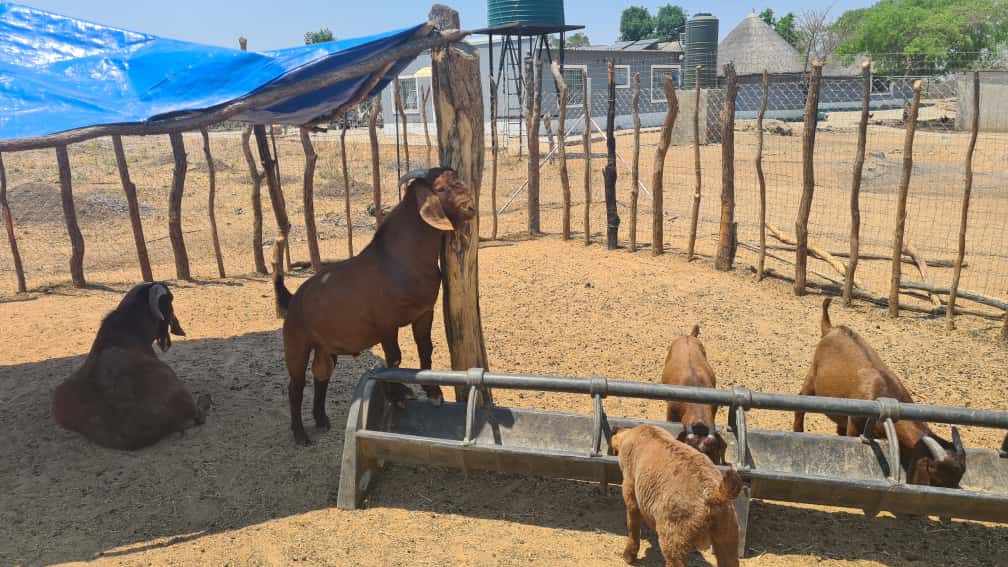
Of interest is a new player in the Mbalabala area of Umzingwane, with more than 100 Brahman cattle breeds and over 50 Kalahari red goats that have transformed the once-marginalised rural community.
“We have exotic chicken breeds, Kalahari goats, Matabele goats and more than 100 Brahman cattle. We sourced these breeds from South Africa, and we are pleased to contribute to employment creation in the community, currently employing 11 workers. We want to revive our rural areas,” Khalahari goats farmer, Mrs Ntokozo Mabhena said.
The agro-business venture has seen more than 10 youths getting employment.
“I have learnt a lot from working here, now I can mix the feed,” a worker said.
“I can now look after my family as I am now empowered, thanks to this project,” another added.
Under the Rural Development 8.0, government is on a drive to industrialise rural communities through the provision of water.
“What we are seeing speaks to our drive of rural industrialisation, we are urging other diasporans to invest back home in this manner. We are excited about the breeds they are introducing to the community. It will definitely transform this area,” Provincial Director in the Ministry of Lands, Agriculture, Fisheries, Water and Rural Development, Mrs Shupikai Sibanda noted.
The Second Republic is on a drive to create employment in once marginalised communities through creating opportunities for business growth.

