



Story by John Nhandara
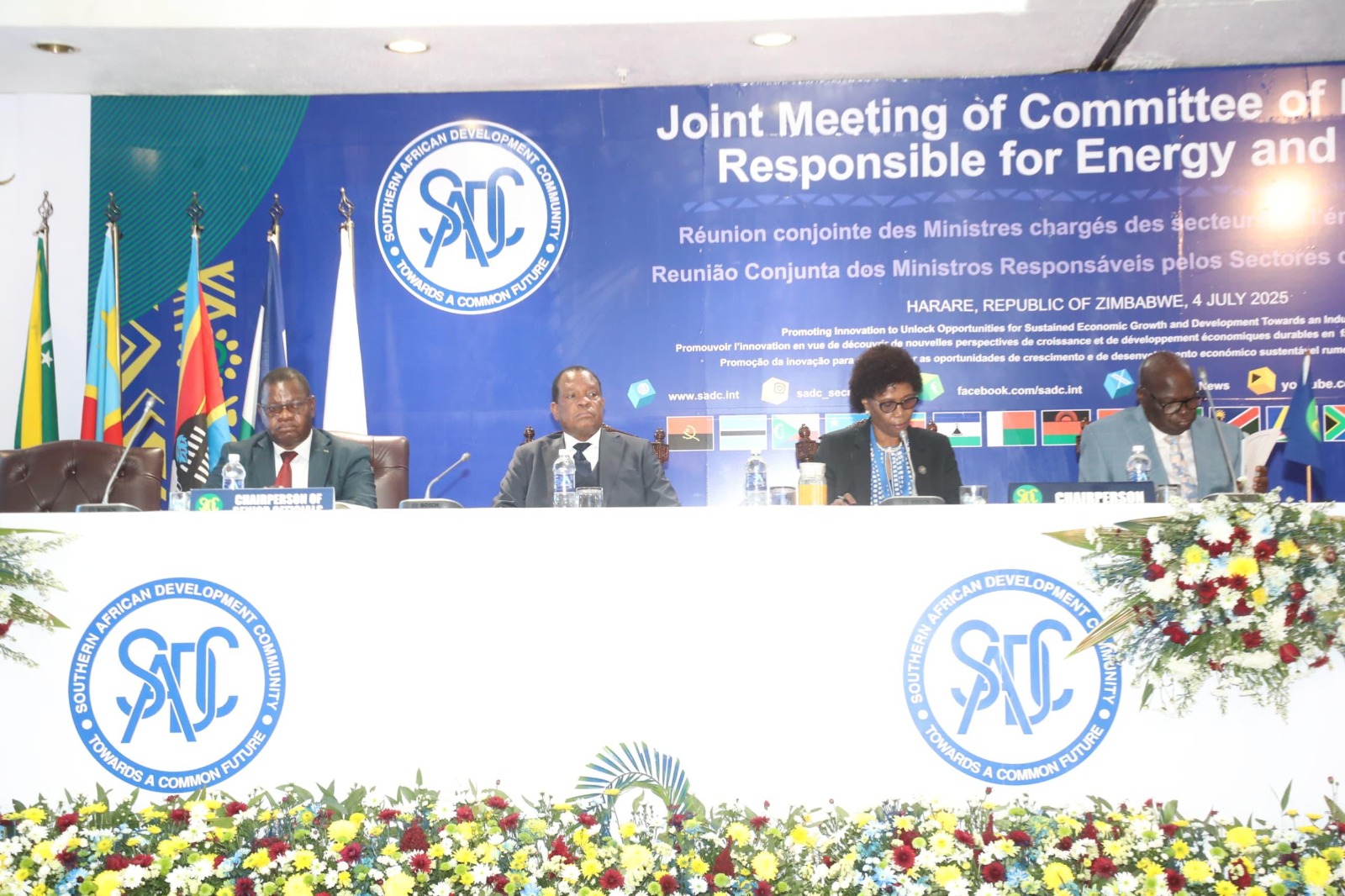
HARARE – THE Southern African Development Community (SADC) Ministers responsible for Energy and Water convened in Harare this Friday to deliberate on critical regional challenges that include persistent energy shortfalls, acceleration of clean energy adoption, and enhanced water security.
The joint meeting of Ministers responsible for Energy and Water concluded after five days of intensive discussions, with the energy deficit in the region and water insecurity featuring prominently on the agenda.
Zimbabwe’s Minister of Energy and Power Development, Honourable July Moyo, outlined the major challenges confronting the region.
“The major challenge in the SADC region is energy and water insecurity caused by population growth, ageing equipment and infrastructure, compounded by inadequate investment, technological changes, and climate change, among others. The other challenges limit the region’s use of its ample petroleum and gas reserves as well as variable renewable energy resources like wind and solar, among others.
“As guided by the SADC Treaty and the current Protocols on Energy and Water, Ministers responsible for Energy and Water should collectively identify short, medium, and long-term solutions to the current challenges. It is, therefore, my hope that this joint Energy and Water Ministerial meeting will strategically examine the issues and address challenges related to energy and water in the Region,” Honourable Moyo said.
Deliberations focused on the status of energy demand and supply across SADC, with recognition of the existing generation capacity shortfalls and regional water governance concerns.
SADC Executive Secretary, His Excellency Elias Magosi, highlighted the key focus areas.
“Today’s discussions centre on the status of energy demand and supply in the region, progress on the implementation of priority generation and transmission projects, the uptake and penetration of new and renewable energy sources, alongside efforts to promote energy efficiency.
“We also reviewed regional preparedness to implement the Dar es Salaam Declaration on Mission 300, which aims to accelerate energy access and the adoption of clean cooking systems. Additionally, recent developments in regulatory and institutional frameworks, including private sector participation in the energy sector, were considered, alongside the proposed approval of the SADC Water Policy Review and updates on the implementation of previous Council decisions,” Mr Magosi said.
The joint ministerial meeting concluded with recommendations and resolutions aimed at accelerating the attainment of regional objectives.
Zimbabwe’s Minister of Lands, Agriculture, Fisheries, Water and Rural Development, Dr Anxious Masuka, reaffirmed the urgency of decisive action.
“We need enough electricity and water in the region to realise our shared vision. Now is the time to boldly implement all resolutions and build the SADC we want,” he said.
The Harare summit provided a timely and strategic platform to reaffirm regional solidarity while adopting collective solutions to climate-induced challenges threatening energy security and water availability.
With firm resolutions now in place, the SADC region edges closer to building resilient infrastructure, sustainable energy systems, and enhanced water governance for all its citizens.

