



Story by Providence Maraneli, Matabeleland South Bureau Chief
GWANDA SOUTH-WHILE the modern world has embraced technologies such as geo-locking and satellite tracking to secure vehicles, mobile phones, and loved ones, in the rural heartlands of Matabeleland South, traditional knowledge continues to thrive preserving both heritage and livelihoods.
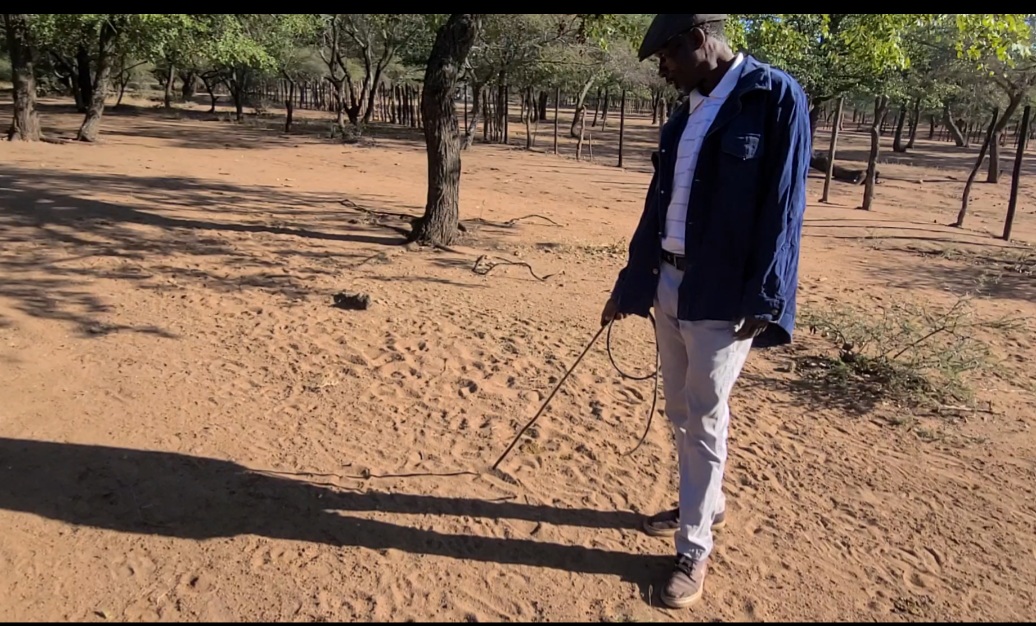
In the dense thickets of Sukwe area, Gwanda South, a seasoned herd-boy strides with purpose through the underbrush. With a leather whip in hand and trained eyes scanning the soil, Mr Lenzani Ncube confidently identifies spoor belonging to his oxen.
“This one passed here,” he says, pointing to an imprint. “There were fifteen of them. These are mine.”
Ncube is among a group of skilled villagers who have preserved the ancient art of animal and human tracking, an indigenous knowledge system that dates back generations. In areas plagued by cattle rustling, such expertise has proven invaluable.
“Even if I am with you in a scotch cart, I will know if my cattle have passed by, not by their bells, but by their unique tracks. Just like humans, every beast has its own footprint. I can follow them and show you where they are,” Mr Ncube said.
Beyond recognising animal tracks, Ncube and fellow villagers like Mr Zenzo Ndlovu, a respected community tracking leader, possess the rare ability to identify the footprints of nearly everyone within the community a remarkable feat developed through years of close observation.
“I know all the shoe prints and footprints of people who live in this area. Once a new shoe steps into the village, we quickly identify who it might belong to. No two people walk the same. It is a skill passed down through generations,” Mr Zenzo Ndlovu said.
Community members say they can determine gender, height, and even the physical state of a person based solely on their footprint or shoe impression.
“The bells may sound similar, but we can distinguish the sound of each animal by its gait and character. Make no mistake to think they are the same, they are determined by the height and the character of the animal. Just like the how humans talk they are different,” a villager said.
This form of traditional environmental knowledge not only plays a central role in livestock management but also contributes to community safety, helping detect intrusions and respond swiftly to cattle theft incidents.
In a world racing towards digitisation, the herdsmen of Gwanda South remain grounded in their craft proving that ancestral knowledge still holds value in the face of modern challenges.

