



Oleen Ndori, Foreign Desk Editor
Rebel groups in the Eastern Democratic Republic of Congo have declared a humanitarian ceasefire starting Tuesday to allow for aid to pass through.
This comes on the back of an announcement that a joint extraordinary Southern African Development Community (SADC) – East African Community (EAC) Summit will be held in Tanzania this week, a development that has been welcomed by analysts.
In a statement, the M23 rebels cited “humanitarian reasons” for the ceasefire which started this Tuesday, after capturing territory in eastern parts of the Democratic Republic of Congo.
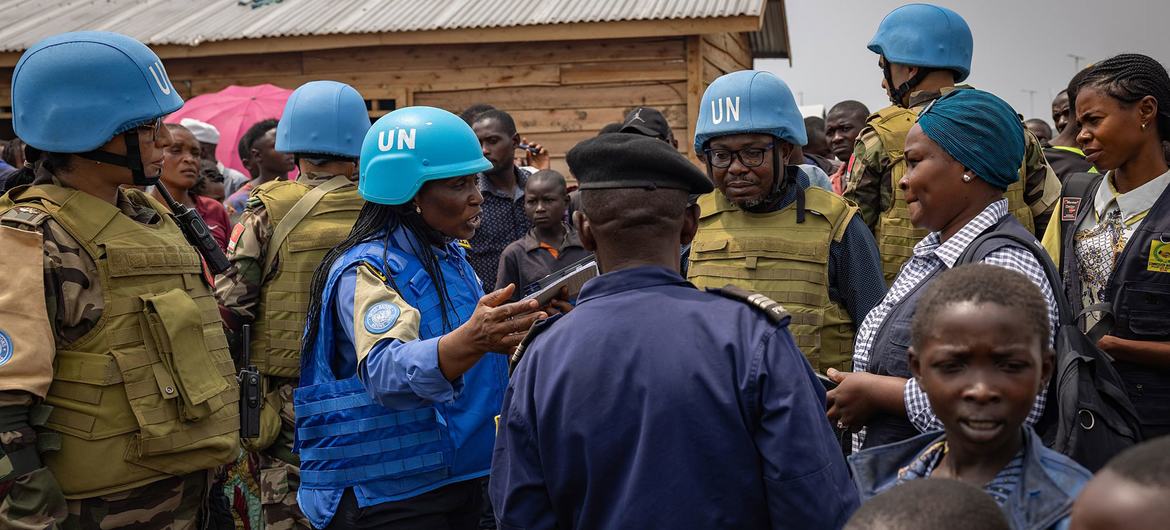
The United Nations says at least 900 people have been killed and close to 3000 injured in recent fighting in and around Goma, DRC’s largest eastern city.
Leaders from member states of the SADC and the EAC are scheduled to meet in Dar es Salaam between Friday and Saturday to discuss the ongoing hostilities and try to chart a way forward.
Analysts believe there is an urgent need for old rivalries to be put aside and for dialogue to ensure lasting peace in the Southern African nation.
“Lives are being lost and there is instability that is even threatening the whole Southern African region. That is why this unprecedented SADC and EAC Emergency Summit is so vital. For the very first time this year, that is 2025, these two key regional bodies are converging to tackle this crisis head-on. And this shows a recognition that we are interconnected and that the DRC’s problems are our problems.
“This development also highlights the critical role of regional cooperation in resolving complex conflicts. It also highlights the importance of upholding international law and the potential for African unity in fostering sustainable peace. We need a unified, long-term strategy addressing the root causes of the conflict, not just Band-Aid solutions. This summit I hope will deliver real results, a strengthened peacekeeping force, a genuine commitment to political reform in the DRC, and an end to the cycle of violence,” international law and relations expert, Mr Clive Chiridza said.
International relations analyst, Mr Richard Mahomva added, “When African leaders come together and say we want to speak together is a development that is positive and for all actors to be in one room it means all points of dissent are going to be rendered and dialogue in place and outlined and constructive point of dialogue and this is historical, as this the first time we are seeing regional collaboration around peacebuilding and it’s quite emphatic of the diplomatic maturity that Africa is tilting towards in a manner that consolidates the founding values of pan-Africanism.”
The emergency SADC Summit held last week in Harare directed the immediate dispatch of ministers of defence, chiefs of defence and troop-contributing countries to DRC with the regional Chairperson, President Emmerson Mnangagwa stressing the importance of silencing the guns.
“The realisation of the SADC Vision 2050 and the Africa we all want under the AU Union Agenda 2063, are intricately dependent on an unshakeable foundation of political stability, peace and security. As masters of our own destiny, we, therefore, remain relentless in our quest to create a SADC and an Africa that plays its part at the global stage, guided by the ideals of pan-Africanism and the spirit of African Renaissance. It is the individual and collective duty of all Member States, to do much more towards permanently silencing the guns if we are to succeed in achieving these aspirations.
“Together we must march forward, no one and no place must be left behind. Hence, bold and decisive measures must continue to be implemented to adequately resource and equip our Mission in the DRC (SAMIDRC) so that it continues to execute its mandate. Fundamentally, all parties to the conflict, are urged to pursue an encompassing dialogue and peaceful dispute-resolution mechanisms, guided by the spirit and letter of both the Luanda Ceasefire Agreement and the Nairobi Peace Process.
The international community is also being called upon to scale up the provision of requisite humanitarian assistance to the affected population as well as in augmenting ongoing peace and security efforts,” said President Mnangagwa.

