



Story by Tendai Munengwa
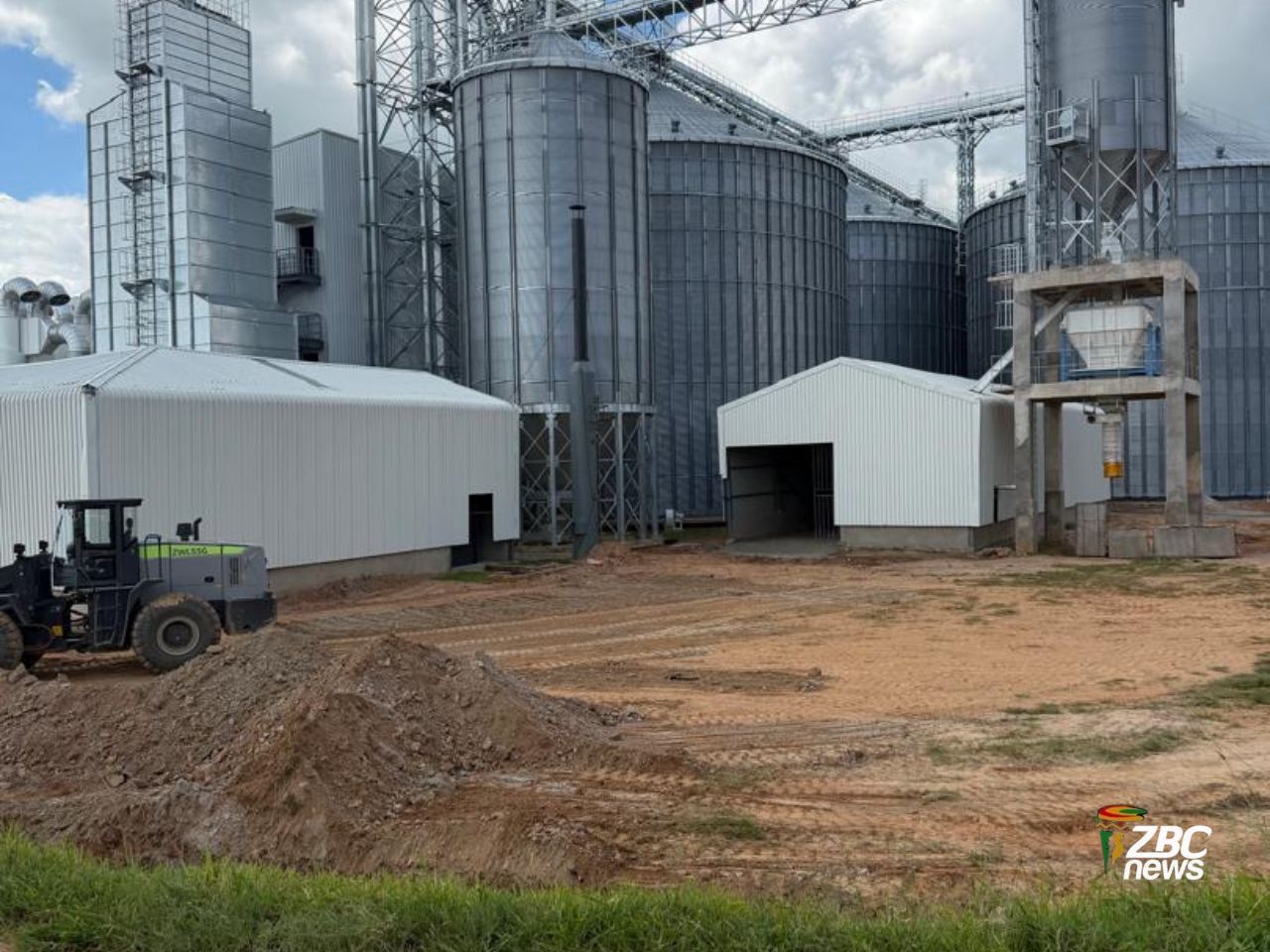
THE Government has intensified constructing 12 additional AI-powered smart grain silos across the country to boost national grain storage capacity, following the commissioning of similar facilities in Kwekwe and Mutare, officials have said.
The high-tech silos form part of the Second Republic’s rural industrialisation and food security drive and are expected to support farmers ahead of a projected bumper harvest by improving grain handling, storage efficiency and climate resilience.
Officials said the new silos will use artificial intelligence to automate grain monitoring, loading and drying, while decentralising storage facilities to make them more accessible to farming communities.
“We are now putting the final touches on these new automated silos. The silos are advanced as they are AI-powered, meaning there will be no more manual work, as the monitoring and loading of grain will be automatic,” said site engineer Tanaka Matondo.
“The silos also have driers, which process the grain to the recommended moisture content. At 94 percent completion, we will be done ahead of the maize deliveries this season,” he added.
The new facilities will add a combined storage capacity of 56 000 metric tonnes of grain, complementing existing infrastructure in Mashonaland West Province.
Mashonaland West provincial head for mechanisation and agricultural infrastructure development, Engineer Ignatius Ruzoza, said the new silos would significantly benefit farming communities in Mhangura and surrounding areas.
“We used to store our maize under stack tent silos with a capacity of 80 000 metric tonnes, and the installation of these 56 000-tonne silos will add to this capacity,” he said.
“The President, Dr Emmerson Mnangagwa, has already commissioned two such silos, and this will be the third one that is almost complete,” Engineer Ruzoza added.
In May last year, President Mnangagwa announced plans to construct 14 automated grain silos under the first phase of the programme, citing the need for modern, climate-resilient food storage infrastructure.
“Climate change is real, and these high-tech automated silos will provide up-to-standard food storage facilities which are climate-proof, make it easier for farmers to deliver their grain and ensure sustainable food security,” the President said at the time.
The rollout of the AI-powered silos comes on the back of the Second Republic’s agricultural mechanisation programme, which has increased productivity among farmers. Authorities say the new infrastructure will play a critical role in safeguarding harvests and supporting Zimbabwe’s push towards an upper-middle-income economy by 2030.

