



Story by Fairstars Mukungurutse
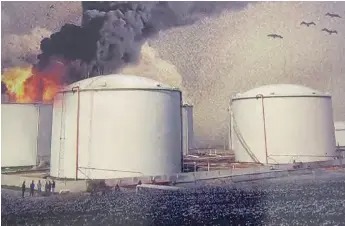
ZIMBABWE’S liberation war was marked by moments of daring that pierced the confidence of the colonial establishment. Among the most dramatic was the bombing of the BP Shell fuel depot on December 11, 1978, an attack that turned the skyline of the then Salisbury into a furnace and sent shockwaves through the Ian Smith regime.
In the industrial hub of Southerton, towering fuel tanks erupted into flames after being struck by freedom fighters at a critical stage of the war. What followed was not merely an explosion, but a prolonged inferno, a roaring blaze that consumed the horizon for days, its thick plumes of smoke blotting out the sky and settling like a dark shroud over the city.
For residents in nearby townships such as Mbare, the memory is as vivid as it is haunting. Streets once familiar were transformed into corridors of confusion, as sirens wailed and anxious crowds gathered at a distance, straining to comprehend the scale of what had just unfolded.
Eyewitnesses recall a city gripped by both fear and awe, a moment when the liberation struggle, long associated with rural battlefronts, announced its presence in the urban heart of the country.
“There was darkness everywhere; we could not see the neighbouring suburbs because of thick black smoke. People were not able to get closer because the place was already secured. When we heard the comrades were the ones who bombed the fuel tanks, we were happy because after that event, we shortly heard that the Ian Smith regime was willing to have talks with the freedom fighters,” Harare resident Gogo Ruth Matiki said.
The attack marked a psychological turning point. It signalled not only the operational reach of the guerrilla forces but also the fragility of colonial control in spaces once considered secure.
“We were filled with fear when we heard that BP Shell was bombed, but we knew that the war was coming to an end since the guerrillas had taken the war to the city; all along, the war had been concentrated in the rural areas. When Smith saw that the comrades had taken over the city, he later surrendered,” Harare resident Gogo Emily Chikavha said.
At dawn the following day, the scale of the event became unmistakable. A column of smoke stretched across the sky, visible for miles, as residents scrambled to make sense of the unfolding crisis. Some fled, fearing further attack, while others stood transfixed by the spectacle of a city under siege.
“When I woke up in the morning, I was shocked to see thick black smoke in the sky, and I just thought that maybe a fire had broken out somewhere nearby. But then I realised that something was amiss when I saw people running in the streets. We packed our bags and went to our rural area in Seke because we thought the city was no longer safe. However, we applauded the freedom fighters for that incident because we were not happy about how the whites were treating us,” Harare resident Gogo Mavis Dzviti said.
Beyond the flames and fear, the bombing carried a deeper resonance. It was a declaration that the liberation struggle had reached a decisive phase, one in which the balance of power was shifting, and the inevitability of independence was beginning to crystallise.
Decades on, the BP Shell bombing endures as more than a historical episode. It stands as a stark reminder of the risks taken and sacrifices made by those who fought to dismantle colonial rule, a moment when fire illuminated the path to freedom.

