



Story by Theophilus Chuma
THE Government plans to expand Zimbabwe’s wheat hectarage to more than 200,000 hectares within the next three years as it seeks to consolidate gains in production and strengthen national food security.
The target comes as the country projects a record winter wheat harvest of at least 662,000 tonnes, the highest output in its history.
The anticipated harvest forms part of the Government’s Agriculture Food Systems and Rural Transformation Strategy 2 (AFSRTS 2), which aims to enhance food security and self-sufficiency.
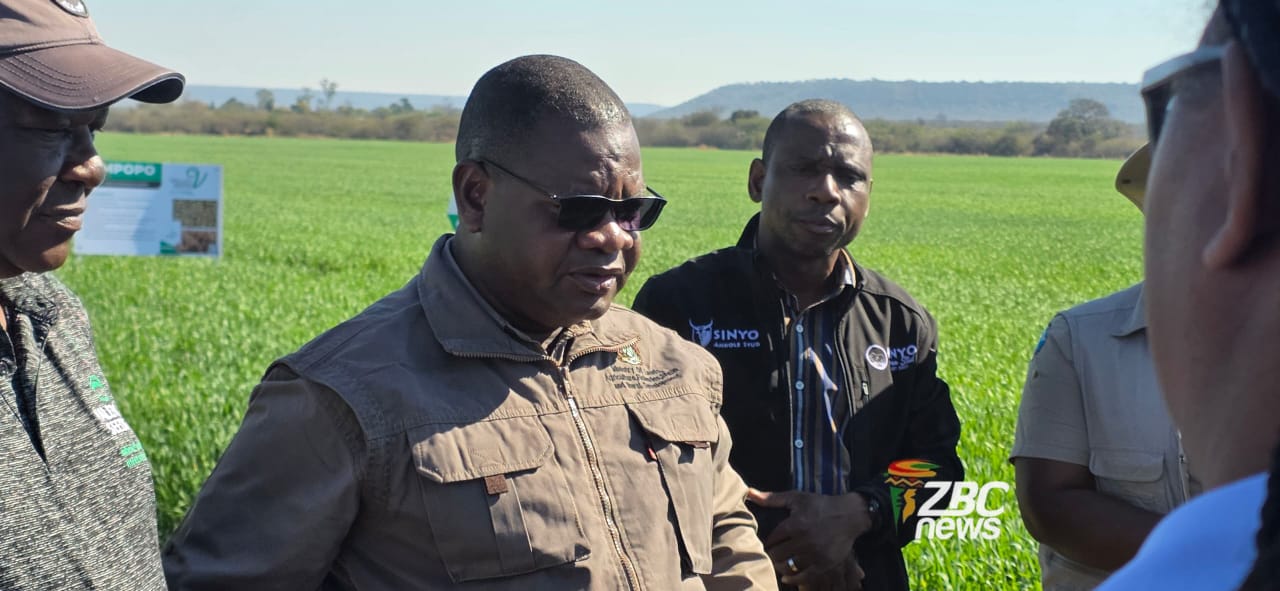
During a field visit to Matabeleland North Province on Friday, Permanent Secretary in the Ministry of Agriculture, Mechanisation and Water Resources Development, Professor Obert Jiri, said expanding irrigation infrastructure is central to achieving the production target.
“If we are to expand winter wheat production, we need irrigation. We are looking forward to developing a further 250,000 to 300,000 hectares within the next two to three years. If we can grow more than 200,000 hectares of wheat, we will meet all the country’s requirements and also produce enough for export,” he said.
Agricultural experts say increased wheat production has already reduced imports, saving Zimbabwe an estimated US$300 million.
Interest in wheat farming is also growing in Matabeleland North Province.
Deputy Provincial Director in the Ministry of Agriculture, Mechanisation and Water Resources Development, Ms Zenzele Ndlovu said the number of wheat farmers had risen significantly.
“Last season we had 38 farmers, and this year the number has risen to about 58. We are indeed witnessing growing interest in wheat production across the region,” she said.
Local seed companies are supporting the sector by developing climate-resilient wheat varieties.
Valley Seeds Commercial Director, Mr Tichaona Maponga, said:
“We have developed varieties that are suitable for this region to help mitigate the effects of climate shocks and other production risks.”
The introduction of drought-tolerant wheat and maize varieties is strengthening food security in the largely arid Matabeleland North Province.
Mars Farm Manager in Umguza, Mr Peculiar Moyo, said yields had been encouraging.
“We are achieving yields of about 6.5 tonnes per hectare. Last season, this translated to about 120 tonnes from the area under cultivation,” he said.
Government support measures, including ring-fenced electricity supplies for wheat production, continue to play a key role in sustaining growth in the sector.

