



Story by Yolanda Mayo
CURE Children’s Hospital has operationalised its prosthetics and orthotics unit, bringing faster and more comprehensive care closer to patients. For years, children in need of artificial limbs faced long waiting periods as the Bulawayo-based hospital relied on an external local supplier for fittings and repairs.
However, since the launch of the in-house unit in November this year, the hospital says service delivery has significantly improved.
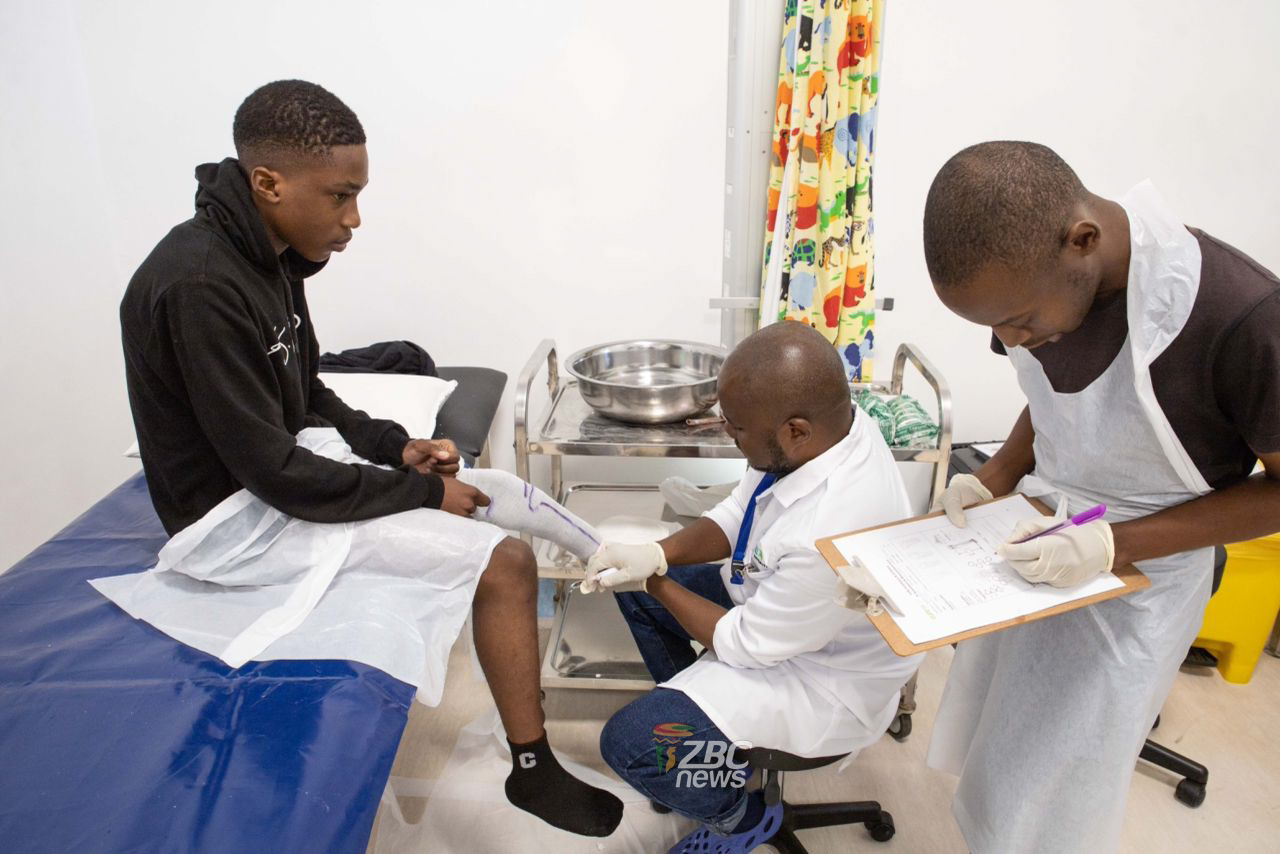
Born with a congenital limb deformity, Kudakwashe is coming in for his first fitting for a fully customised prosthetic. As the news crew watches, the prosthetics officer carefully adjusts the device, checks alignment, and guides him through his first short walk, a process that now happens entirely within the hospital.
For the young lad, the device is more than a medical intervention it represents independence, dignity, and the possibility of a future he once thought unattainable.
“When I was in primary school, other children used to laugh at me and bully me because of the way I walked. I had two prosthetic legs before, but they were not strong enough for sports or for walking long distances. I love soccer, but I could not run. I was later transferred to the CURE Children’s Hospital from the local orthotics unit, where I had surgery as my limb had developed a bone that was protruding, and I stayed out of school for two months, but I worked hard and still managed to pass. My mother passed away, but I know she would have loved to see me running and playing football. Today I am very happy because this new leg gives me hope that I can live like other people,” he said.
For Kudakwashe’s family, the impact has been deeply personal.
“The family had long worried about his future, but the new development has given them renewed hope and relief. We are very thankful. To see him walking like other children is something we prayed for. This hospital has changed his life,” his grandmother, Mrs Natalia Musekiwa said.
The prosthetics and orthotics officer says with the new unit at the hospital, they can now intervene earlier, monitor progress closely, and ensure each child receives a device that not only meets their condition, but also suits their ambitions.”
“The ability to design, fit and adjust prosthetics on site means children like Kudakwashe no longer face long delays, repeated referrals, or interrupted rehabilitation. We have cut the waiting period to only two days compared to when it would take time,” Prosthetics and Orthotics Manager, Mr Dumisani Ngulube said.
Hospital Chief Executive Officer, Mr Jonathan Simpson, said the new unit forms part of a broader strategy to strengthen rehabilitation services alongside surgical care.
“Our core work is orthopaedics and plastic reconstruction, but surgery alone is not enough. Rehabilitation is critical,” he said.
“We are steadily expanding support services, including prosthetics, and looking ahead to further strengthening speech therapy and audiology services, particularly for children undergoing cleft palate surgery, as we move into 2026.”
As Zimbabwe’s health sector continues to evolve, CURE Children’s Hospital stands as an example of how targeted investment and partnerships can deliver specialised, world-class care to vulnerable children, restoring not only mobility, but dignity and opportunity.

