



Story by Margaret Matibiri, Online Executive
A CHIKOMBA farming enterprise is emerging as a model of Zimbabwe’s modern agricultural transformation, with Mudoti Farm projecting maize yields of 12 tonnes per hectare on a 212-hectare rain-fed crop while simultaneously expanding livestock production, creating jobs and embracing technology-driven farming methods.
The diversified farming operation, which employs 85 workers, has emerged as a growing example of increased productivity and commercial viability within Zimbabwe’s agricultural sector.
Speaking during the Provincial Seed Co-Mudoti Farm Field Day in Chikomba, farm patron Mr Joshua Nyamweda said strategic planning, reinvestment and Government support had been central to the farm’s growth.
“We thank the President Dr Emmerson Mnangagwa for the peace prevailing in the country. Farmers are now working without fear of losing their land because of land deeds. These deeds are helping many to access loans and expand production,” he said.
Mudoti Farm currently has 212 hectares under maize expected to yield 12 tonnes per hectare, while 40 hectares are under potato production.
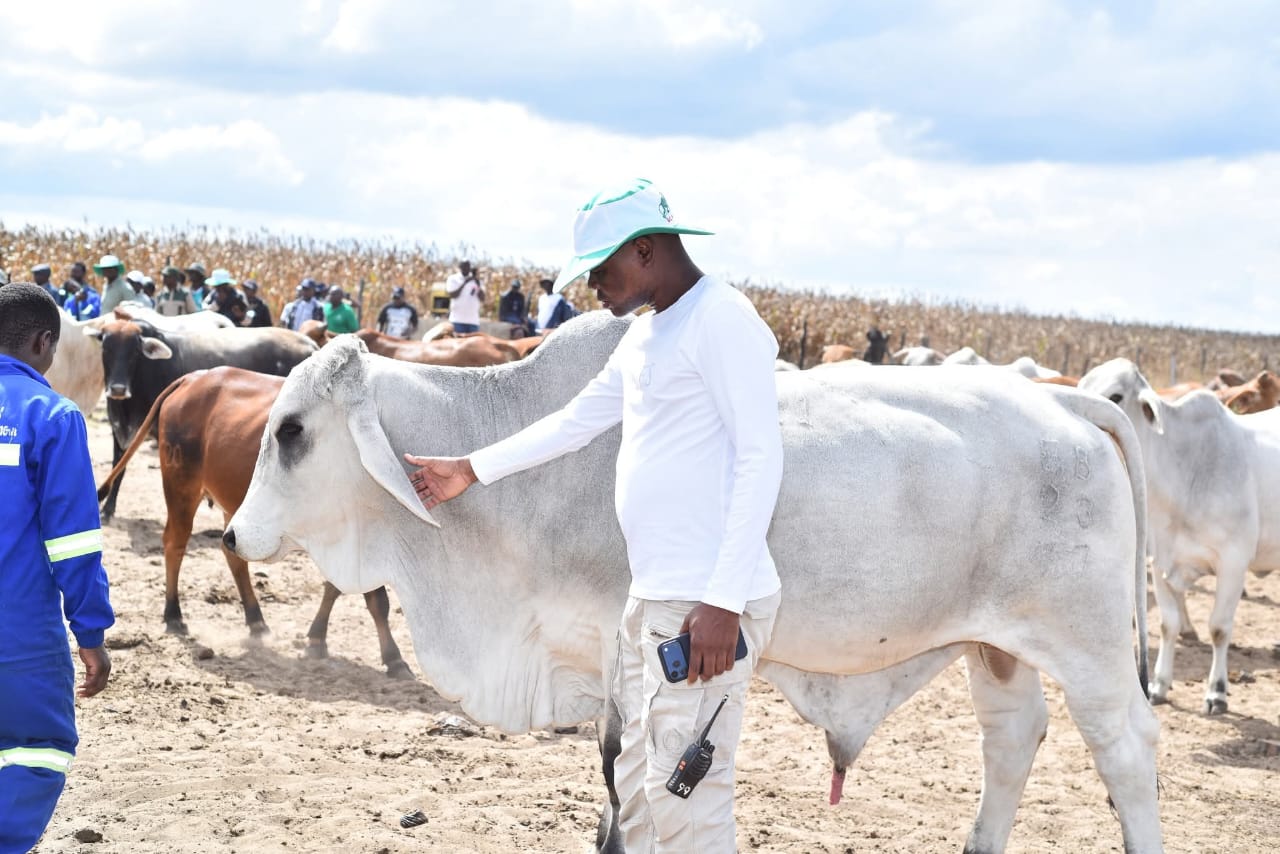
The livestock section comprises 250 cattle, including Brahman, Beefmaster and Afrikaner breeds under supplementary feeding, alongside 300 Dorper sheep and 200 Boer goats.
The farm is also integrating drone technology into its operations as part of efforts to improve efficiency and productivity.
Mr Nyamweda said agriculture was increasingly becoming a vehicle for youth empowerment and economic transformation in rural communities.
“Through youth empowerment on farms, drug and substance abuse has gone down. Young people are now seeing agriculture as a business and a source of livelihood. As farmers, we urge our youths to prioritise planning and reinvestment so that every harvest strengthens future production,” he said.
He also commended Government for deploying capacitated agricultural extension officers to support farmers with technical expertise and modern farming methods.
“Government has continued to provide capacitated agricultural extension officers who are assisting us as farmers to improve productivity and farming methods,” he said.
Mr Nyamweda said the land reform programme had enabled indigenous Zimbabweans to actively participate in commercial agriculture and increase productivity.
“As black Zimbabweans, we were greatly empowered by the land reform programme. Our farms have become more productive and more established than they were during the colonial era,” he said.
Acting Chikomba District Development Coordinator, Ms Monica Mutimba, reaffirmed Government’s commitment to supporting farmers through various agricultural programmes spearheaded by the Ministry of Agriculture.
“As Government, we are supporting farmers through various programmes and encouraging them to embrace irrigation and modern farming methods instead of relying solely on rainfall. This is a critical time for production and development,” she said.
Agricultural experts attending the field day underscored the importance of scientific farming methods in improving yields and strengthening climate resilience.
“For good yields, farmers must adopt scientific methods such as soil testing, understanding ecological regions and adapting production systems to changing climatic conditions,” Agritex officer Ms Vera Madzinga said.
The field day focused on sustainable farming methods, climate resilience and strategies to enhance productivity as Zimbabwe intensifies efforts to modernise agriculture and strengthen national food security.

