



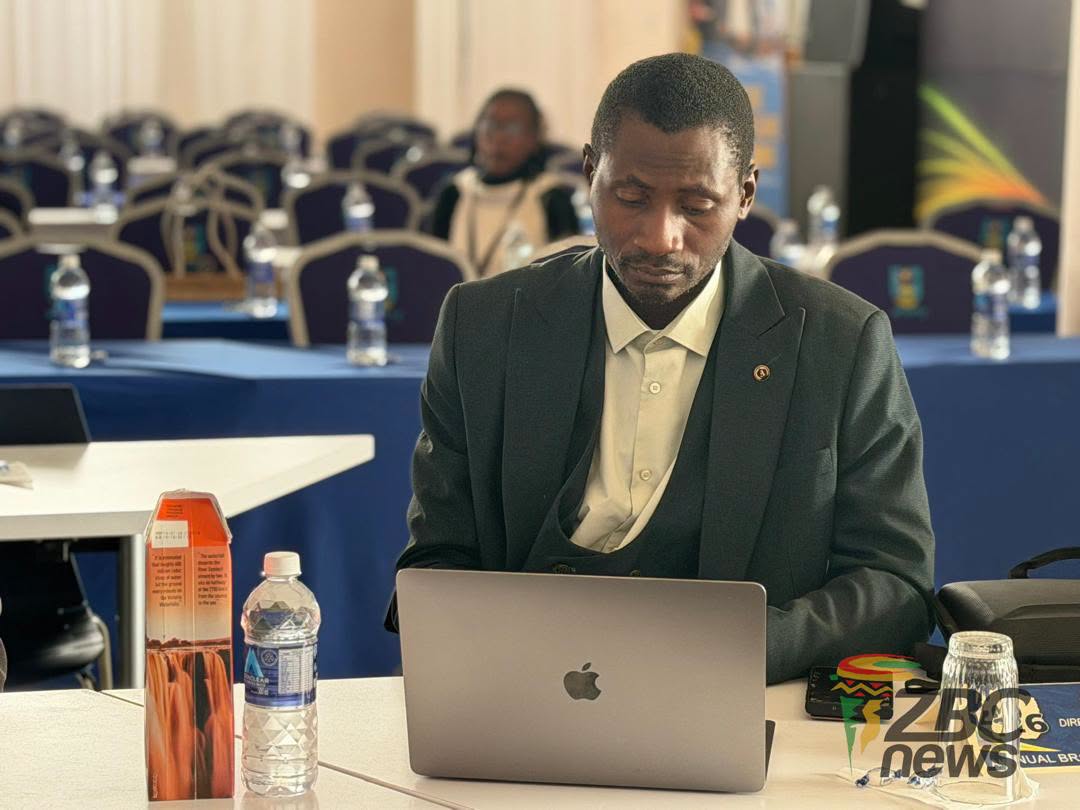
Story by Lisa Masuku-Kurira
STAKEHOLDERS attending the annual Broadcasters Convention in Bulawayo have urged media practitioners to embrace Artificial Intelligence (AI) as a tool for improving information dissemination, strengthening fact-checking and enhancing operational efficiency.
Deliberations on the second day of the convention focused on the need for African countries to adopt generative AI while ensuring its development and application reflect local cultures, values and heritage.
Software Engineer at Jamii Africa Tanzania, Ziada Omary said the future of AI presents significant opportunities.
“My take on AI and the future is extremely positive. I see AI as bringing many advantages. AI is going to provide,” she said.
Programme Manager and Team Lead at International Media Support, Simbiso Marimbe, highlighted AI’s role in improving efficiency and reducing costs.
“AI is improving the way we do things, and it is also promoting cost-cutting initiatives. We need to work on localising our AI tools,” she said.
Participants identified cloud computing and data analytics as among the technologies that will play a critical role in safeguarding the future of broadcasting in Zimbabwe.
Chief Operations Officer of Transmedia Corporation Pvt Ltd, Engineer Rufaro Zaranyika said AI is already being deployed to enhance operational efficiency.
“We are using AI to retain our transmission infrastructure. We are using AI to remotely monitor and rectify faults while we are not on the ground,” he said.
At the Zimbabwe Broadcasting Corporation, Chief Operations Officer Engineer Tapiwa Mudzamba said investment in data analytics has improved content production and audience engagement.
“Our first investment was in data analytics. We are using AI to analyse data, and that information is helping us to come up with content that resonates with the audience. We are now Able to produce an episode within a short space of time,” he said.
While acknowledging the opportunities presented by AI, stakeholders also raised concerns about its potential impact on gender representation in the media.
Director of Gender and Media Connect, Patience Zirima warned that the technology could exacerbate existing disparities if not implemented inclusively.
“AI presents a lot of challenges for female journalists, female sources, and even those involved in news production. At the moment, we have fewer female voices in the newsroom and even sources, and AI is going to completely wipe out the representation of women in newsrooms,” she said.
The convention concluded with a call for African countries to safeguard their digital sovereignty by investing in locally developed technologies and AI solutions.

