



Story by Providence Maraneli
THE Second Republic’s rural industrialisation drive continues to gain momentum, with communal farmers in Gwanda South investing in modern irrigation systems to boost agricultural production and diversify income streams.
While government and its development partners have invested millions of dollars in irrigation development, established village business units and constructed dams to climate-proof agriculture, communal farmers are also embracing irrigation farming, transforming previously dry areas into productive green belts.
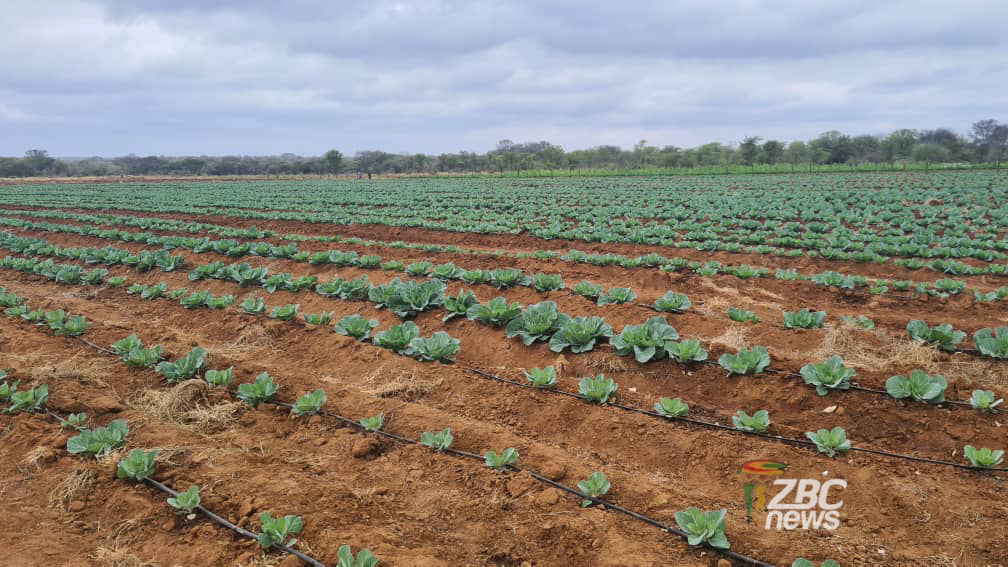
One such farmer is Mr Sibangani of Tshanyaugwe, whose thriving potato and cabbage fields at Doddieburn Range have become a source of employment for local communities.
“I established this irrigation scheme and it has helped me a lot. I have eight permanent workers and during harvesting we employ more than 100 casual workers. If more people invest in irrigation farming, we can transform this region into a green belt and create more employment opportunities. My message, especially to Zimbabweans returning home, is that we should work together to develop our country,” he said.
With ready markets in Gwanda and Beitbridge, horticultural produce from the area has significant potential to create more employment opportunities across the agricultural value chain.
Irrigation manager, Shamiso Ndlovu, said the project has improved livelihoods in surrounding communities while demonstrating the importance of irrigation in drought-prone regions.
“We grow cabbages, potatoes, and we are now planting watermelons and tomatoes. This project has positively impacted the lives of many people, especially those in Zendele and surrounding communities. Given that our region receives low rainfall, irrigation is the way forward,” she said.
Government, working with its development partners, has established 15 Village Business Units in Gwanda District, rehabilitated more than 10 irrigation schemes in Matabeleland South under the Smallholder Irrigation Revitalisation Programme, and rehabilitated Wanezi Dam as part of efforts to climate-proof agriculture and strengthen food security.

