



Story by Thembinkosi Mangena, Assistant News Editor
ZIMBABWE and several other African countries are set to benefit from a new technical cooperation programme with China aimed at strengthening artificial intelligence (AI) capabilities and modernising the preservation of national archives through advanced digital technologies.
The initiative seeks to equip professionals with AI skills while supporting the digitisation, restoration and long-term preservation of historical audiovisual records, providing African countries with new tools to safeguard their cultural and historical heritage.
The development comes as China continues to deploy AI technologies to restore ageing audio, photographic and video archives affected by deterioration, including background noise, blurred images, scratches and other forms of degradation.
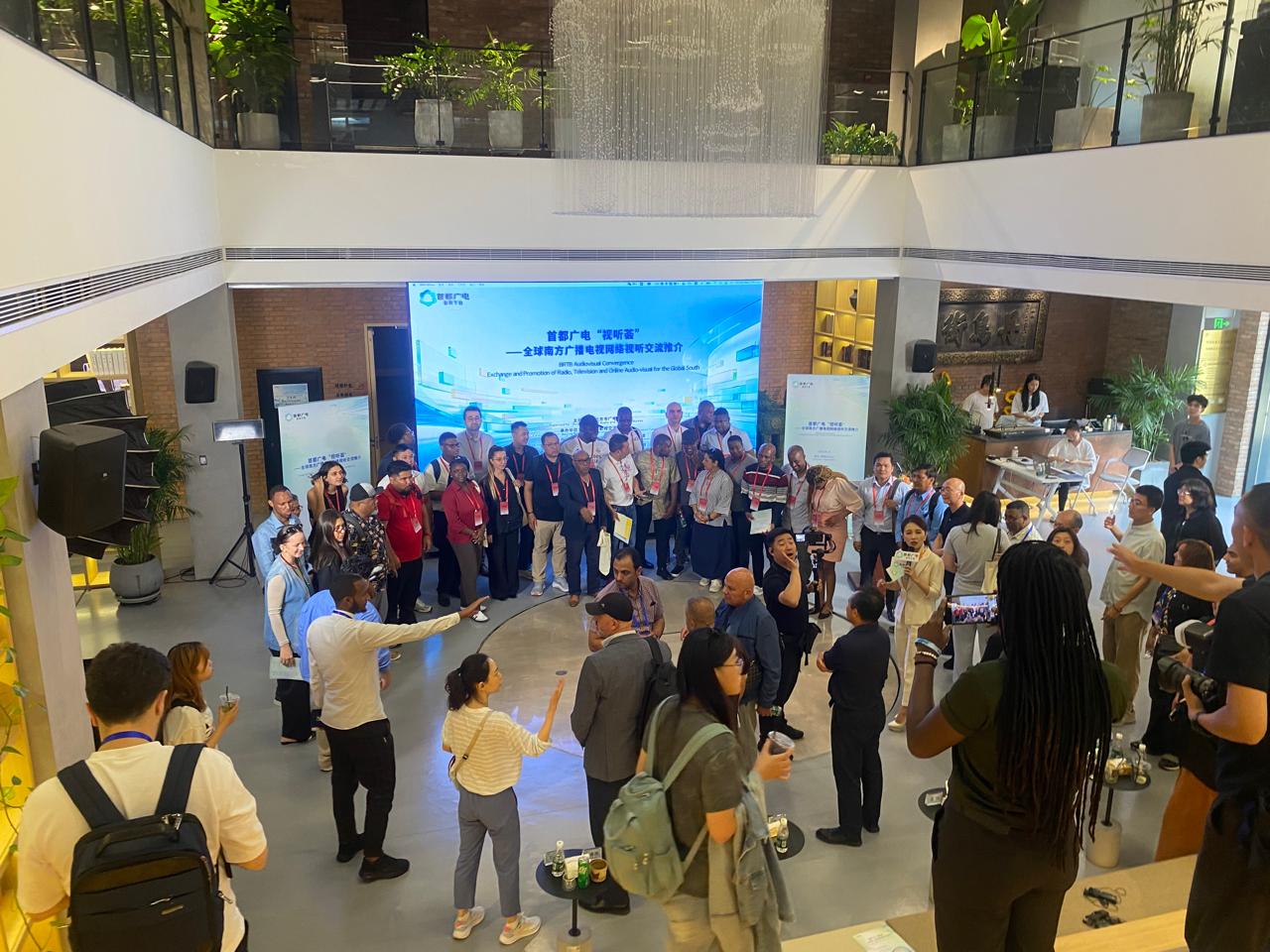
Journalists from the Global South on Friday toured a Chinese museum, the AI-Generated Content Exhibition Centre and the Beijing Radio and Television Station (BRTB) Audiovisual Convergence Centre in Beijing, where they witnessed how AI is being used to restore, enhance and preserve historical audiovisual content.
Addressing media officials and journalists, Senior Engineer at the Academy of Broadcasting Science under China’s National Radio and Television Administration, Mr Liu Chenming, said China is expanding cooperation with developing countries facing similar archival preservation challenges.
“Over the course of history, nations around the world have accumulated vast troves of AV materials. These carry each nation’s memory, representing humanity’s shared cultural heritage. Vast quantities of precious footage still exist in analog tapes and film reels. Limited preservation conditions lead to quality degradation and media deterioration. The preservation window is closing fast, and irreversible physical decay continues to erode audiovisual memory. join us in our journey towards preserving archives, elevating content quality and developing local talent,” Liu said.
China has already rolled out the Digital Restoration and Enhancement of Archives and Media (DREAM) initiative in several developing countries after its successful launch in Egypt.
In Senegal, the China–Senegal Joint Laboratory is supporting intelligent historical archive restoration, audiovisual production and media asset management.
A similar partnership in Benin has seen Chinese AI specialists install eight professional equipment systems, train local engineers and restore hours of nationally significant video content.
In East Africa, the Academy of Broadcasting Science is working with the Kenya Broadcasting Corporation to provide specialised on-site AI training for broadcast personnel.
The initiative presents significant opportunities for Zimbabwe as the country intensifies efforts to preserve its liberation history, cultural artefacts and intangible heritage through digital technologies.
The programme also complements Zimbabwe’s ongoing construction of the Museum of African Liberation at Heritage Village in Harare, where AI technologies could play a key role in preserving and enhancing Africa’s historical collections and cultural assets.
Zimbabwe and China continue to enjoy strong bilateral cooperation, with partnerships spanning infrastructure development, including the construction of the Parliament Building in Mt Hampden, the expansion of the Robert Gabriel Mugabe International Airport and the Hwange Thermal Power Station Units 7 and 8.

