



Story by Yolanda Moyo
ZIMBABWE is intensifying efforts to maximise returns from its vast mineral wealth through value addition, beneficiation, and increased local processing, as government and industry move to reduce reliance on raw mineral exports.
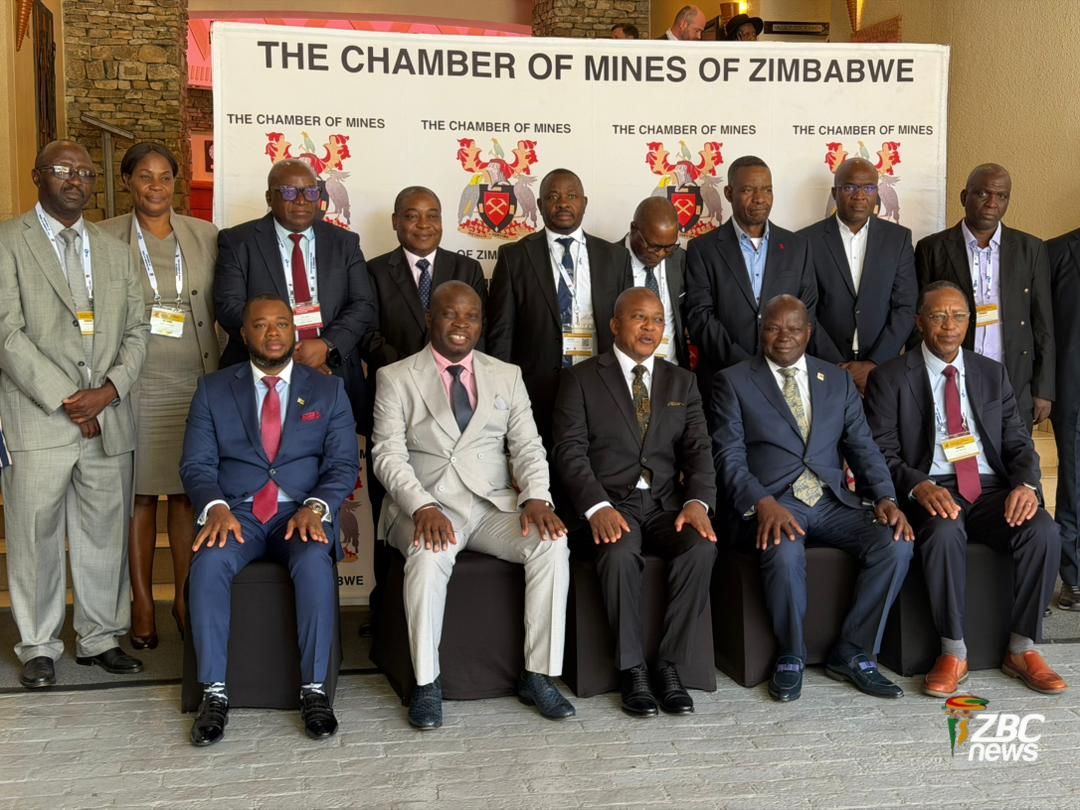
Speaking at the Annual Mining Conference in Victoria Falls, mining executives and government officials said retaining more value within the country through domestic processing is critical to accelerating industrialisation, attracting investment, and boosting national revenue.
The Chamber of Mines of Zimbabwe said beneficiation initiatives are already gaining momentum in the platinum and lithium sectors, with companies investing in processing facilities in line with government policy.
Outgoing Chamber of Mines President, Mr John Musekiwa said production and export earnings are expected to strengthen further in 2026.
“Output for 2026 is expected to increase to 3 million tons from around 2.5 million tons in 2025, with lithium exports anticipated to reach US$700 million.”
He said platinum group metals (PGMs) production is projected to grow by an average of five percent next year, supported by improving international prices.
“PGMs exports in 2026 are projected to reach US$2 billion, up from US$1.9 billion in 2025.”
Mr Musekiwa said the industry has made notable progress in local processing.
“The PGMs industry has adequate smelting capacity and that predominantly all concentrates are now being processed locally.”
He added that some lithium producers have already commissioned lithium sulphate plants, while others are progressing towards meeting agreed beneficiation targets.
“We continue to appeal to the government for policy support for the lithium industry. That will assist in ensuring that the producers meet their agreed beneficiation targets.”
The shift forms part of Zimbabwe’s broader strategy to move up global mineral value chains and expand downstream industrial activity.
Minister of Mines and Mining Development, Engineer Polite Kambamura said the sector must transition from exporting raw materials to producing higher-value products that support national development.
“The first chapter was premised on the extraction and exportation of ores and concentrates. The next chapter must be real value-driven, transformative, and polarized towards industrialization.”
He stressed that mineral wealth alone would not guarantee development without meaningful investment and innovation.
“We cannot build a railway, we cannot build industries, we cannot build infrastructure by exporting concentrates.”
The minister also highlighted the role of technology and artificial intelligence in improving mining efficiency and competitiveness.
“Zimbabwe must position itself as a leader, not only in mineral production, but also in mining innovation.”
To support continued growth in the sector, government is encouraging miners to invest in captive power generation.
Minister of Power and Energy Development, Honourable July Moyo said energy self-sufficiency is becoming increasingly important for mining operations.
“We are calling on all miners to think of what they can do about captive power.”
He noted that mining companies with dedicated power generation facilities have strengthened both their operations and contributions to the national grid.
Meanwhile, Treasury says domestic capital should play a greater role in financing mining projects and industrial expansion.
Deputy Minister of Finance, Economic Development and Investment Promotion, Honourable Kudakwashe Mnangagwa said significant local capital remains underutilised.
“There is a lot of capital sloshing around within our economy that is failing to find a home and ends up being spent on luxuries instead.”
He urged mining companies to broaden their financing options and tap into domestic capital markets.
“Our capital markets are the only way we can bridge that gap.”
With lithium exports forecast to reach US$700 million and platinum group metals exports expected to exceed US$2 billion next year, Zimbabwe is banking on beneficiation, expanded processing capacity and industrial investment to transform its mineral wealth into sustainable long-term economic growth.

