



Story by Gay Matambo
GOVERNMENT has reaffirmed its commitment to formalising and regularising the informal sector as part of broader efforts to drive economic growth, strengthen social protection systems and reduce poverty across the country.
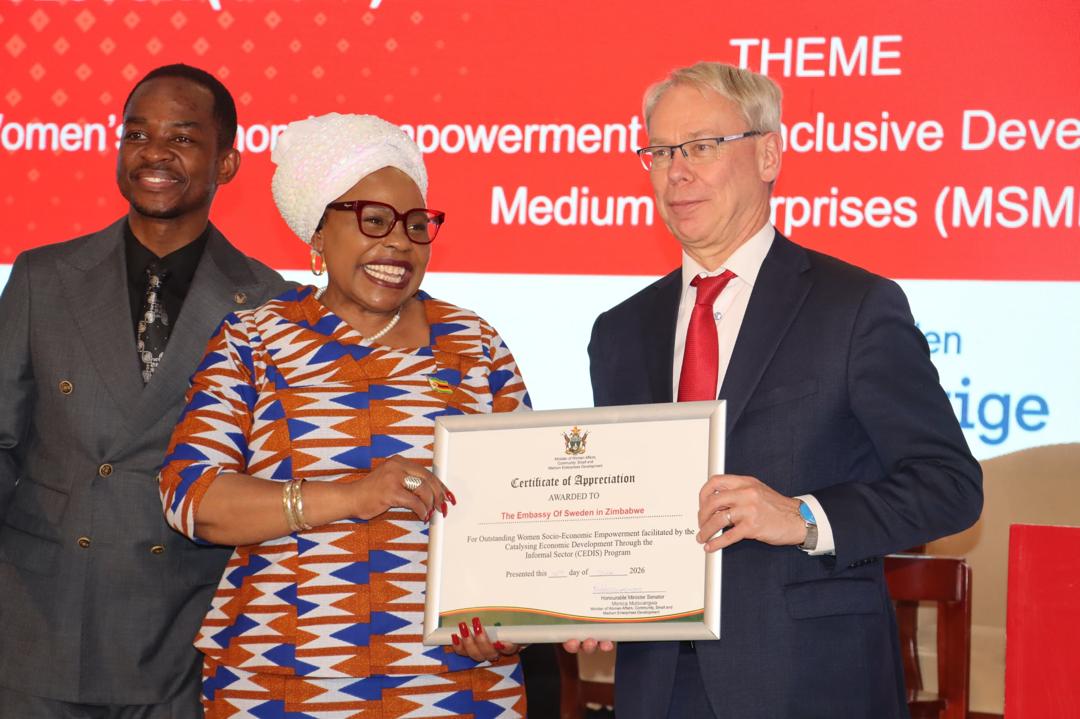
The commitment was highlighted during the national close-out ceremony of the Catalysing Economic Development through the Informal Sector (CEDIS) project held in Mutare.
Implemented over the past four years by Mercy Corps with funding from the Swedish International Development Cooperation Agency (Sida), the programme empowered more than 30 000 women operating in the informal sector in major urban centres, including Mutare and Bulawayo.
The initiative focused on enhancing business resilience, financial inclusion and entrepreneurial skills among women-led enterprises.
Beneficiaries said the programme had transformed their businesses through training in financial management, asset management and risk mitigation.
One entrepreneur involved in recycling said the project had helped her expand her operations.
“The programme has taught me to be productive. I am into recycling, and I started off as a picker; now I am a buyer,” she said.
Another participant who trained as a financial advisor said the programme had enabled her to support other women seeking access to finance.
“I now help women in my area who want to access loans to grow their businesses,” she said.
A women’s detergent manufacturing group also reported significant growth following participation in the programme.
“We used to make small amounts of money from our business, but after this programme we are now earning much more and the business has become sustainable,” a beneficiary said.
Mercy Corps Zimbabwe Country Director Ms Mildred Makore said the project demonstrated the critical role women play in economic development and community resilience.
“Through targeted support to women entrepreneurs, women-led cooperatives and women participating in key value chains, CEDIS has demonstrated the important role women play in driving economic growth, strengthening households and building resilient communities,” she said.
Swedish Ambassador to Zimbabwe, His Excellency Per Lindgärde, highlighted the importance of access to sustainable energy solutions in improving productivity among micro, small and medium enterprises (MSMEs).
“The programme supports renewable energy solutions for productive use. Access to affordable and reliable energy is critical for improving productivity, reducing business costs and enhancing the competitiveness of MSMEs,” he said.
Speaking at the event, Minister of Women Affairs, Community, Small and Medium Enterprises Development, Senator Monica Mutsvangwa, said the project’s success underscored the value of partnerships in promoting inclusive development.
“The lessons emerging from the CEDIS Programme demonstrate that sustainable development outcomes are achieved when government, development partners, financial institutions, the private sector and communities work together towards a common goal,” she said.
The CEDIS project aligns with the National Development Strategy 2 (NDS2), which prioritises financial inclusion, economic resilience and the formalisation of informal economic activities.
Government is also reviewing the Broad-Based Women’s Economic Empowerment Framework to enhance women’s participation in productive sectors and place them at the centre of Zimbabwe’s economic transformation agenda.

