



Story by Abigirl Tembo, Health Editor
ZIMBABWE’S fight against brain tumours and other neurological disorders is being strengthened by a quiet revolution in specialised healthcare, with a growing number of neurosurgeons, advanced surgical technology and expanding cancer treatment services giving patients a far greater chance of survival than was possible just over a decade ago.
Yet specialists say one challenge continues to threaten outcomes: patients are still arriving too late.
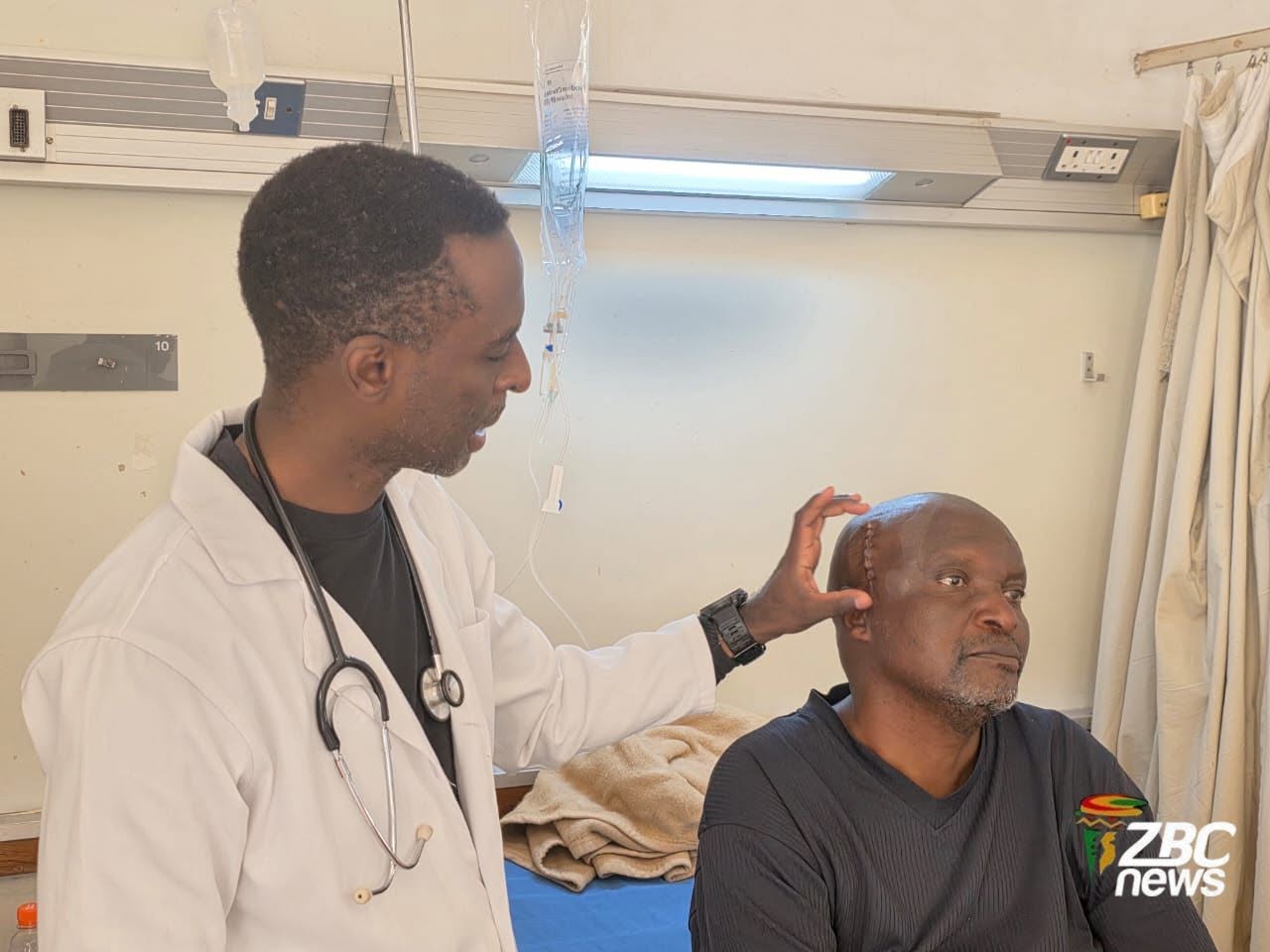
For 64-year-old Langton Makumbe from Sanyati, years of severe headaches eventually revealed a potentially life-threatening condition that could have ended in blindness or sudden death.
What began as persistent headaches gradually escalated into memory loss, dizziness and behavioural changes.
“I started experiencing persistent, severe headaches several years ago. Then, in 2019, my behaviour also changed,” said Mr Makumbe.
After being referred to Parirenyatwa Group of Hospitals, a CT scan revealed a cyst in his brain. Fearful of surgery and encouraged by a temporary improvement in his condition, he returned home.
“I was scared to undergo an operation and thought I was getting better,” he recalled.
But the respite was short-lived.
“The headaches later returned, this time more aggressively. I also started experiencing memory loss and dizziness.”
As his condition worsened, Mr Makumbe was admitted to hospital and underwent surgery days later.
“Before the operation, I was very fearful because of the misconceptions I had heard about brain surgery, but I had no option because I was in severe pain. After speaking with the doctors, I gained confidence and agreed to proceed with the operation. Now I feel much better. The headaches have subsided, and I am optimistic about my recovery,” he said.
His case highlights both the dangers of delayed treatment and the growing capabilities of Zimbabwe’s neurosurgical services.
At Parirenyatwa, a team of specialists used modern navigation technology to carry out a minimally invasive procedure that relieved pressure on his brain and restored normal fluid flow.
Neurosurgeon Dr Nathaniel Zimani said scans revealed a growth located in the centre of Mr Makumbe’s brain, causing a dangerous build-up of pressure.
“Our objective was to drain the excess fluid and relieve the pressure. By doing so, we restored the normal flow of fluid within the brain,” said Dr Zimani.
He explained that the use of advanced navigation systems allowed surgeons to perform the operation with precision through a small opening.
“The navigation system enabled us to perform the procedure through a small opening with great precision. This allowed us to effectively decompress the pressure, which is why the patient experienced relief very quickly.”
The technology, he added, is transforming outcomes for patients who once faced far greater surgical risks.
“Advancements in medical equipment and technology have made it possible for us to perform such procedures much more safely and effectively.”
However, Dr Zimani warned that delayed treatment remains one of the biggest obstacles to successful recovery.
“Had he delayed for a few more months, the condition had the potential to cause sudden death. It could also have resulted in blindness,” he said.
“One of the major challenges we face is that patients often present late, when they are already very ill. This can significantly affect treatment outcomes and reduce the chances of a full recovery.”
Brain tumours remain a significant health concern in Zimbabwe, although specialists say the true scale of the problem is difficult to determine because many cases go undiagnosed.
Persistent or worsening headaches, seizures, memory loss, confusion and changes in behaviour are among the warning signs that should prompt urgent medical attention.
Despite those challenges, the country’s neurosurgical landscape has undergone a remarkable transformation.
Zimbabwe Association of Neurological Surgeons president Dr Aaron Musara said the sector has expanded dramatically over the past 15 years, increasing access to life-saving care beyond Harare.
“We have made significant progress in the care of brain tumours in Zimbabwe over the past 15 years,” he said.
“We have moved from having only four neurosurgeons capable of performing neurosurgical operations to about 30 neurosurgeons who can carry out brain tumour surgeries across the country.”
What was once largely confined to Harare’s major referral hospitals is now available in several urban centres.
“Previously, such surgeries could only be performed at Harare Hospital and Parirenyatwa Hospital. Today, neurosurgeons are providing these services in cities such as Gweru, Mutare, Chitungwiza and Masvingo,” Dr Musara said.
He also pointed to major investments in equipment and cancer treatment services.
“More than four private hospitals in Harare are now conducting brain tumour surgeries using modern equipment.”
The oncology sector has also expanded, with more specialists now providing chemotherapy and radiotherapy services.
“There has been a notable growth in the number of specialists in this field,” said Dr Musara.
“Radiotherapy services have expanded, with a private centre in Highlands already offering treatment, while new radiotherapy machines are currently being installed by the government in Harare and Bulawayo.”
For patients such as Mr Makumbe, those advances have proved life-changing.
His story is both a cautionary tale and a sign of progress, a reminder that while modern medicine is opening new possibilities, timely diagnosis remains the difference between recovery and tragedy.
As Zimbabwe continues to strengthen specialised healthcare through advanced technology, expanded treatment centres and a growing pool of experts, doctors say the most powerful tool in the fight against brain tumours may still be the simplest: seeking help before it is too late.

