



Story by Abigirl Tembo, Health Editor
A tax on sugary beverages introduced in recent years is beginning to yield tangible results in Zimbabwe’s health sector, with the arrival of the second batch of advanced cancer treatment equipment marking a significant milestone in efforts to strengthen diagnosis and treatment services nationwide.
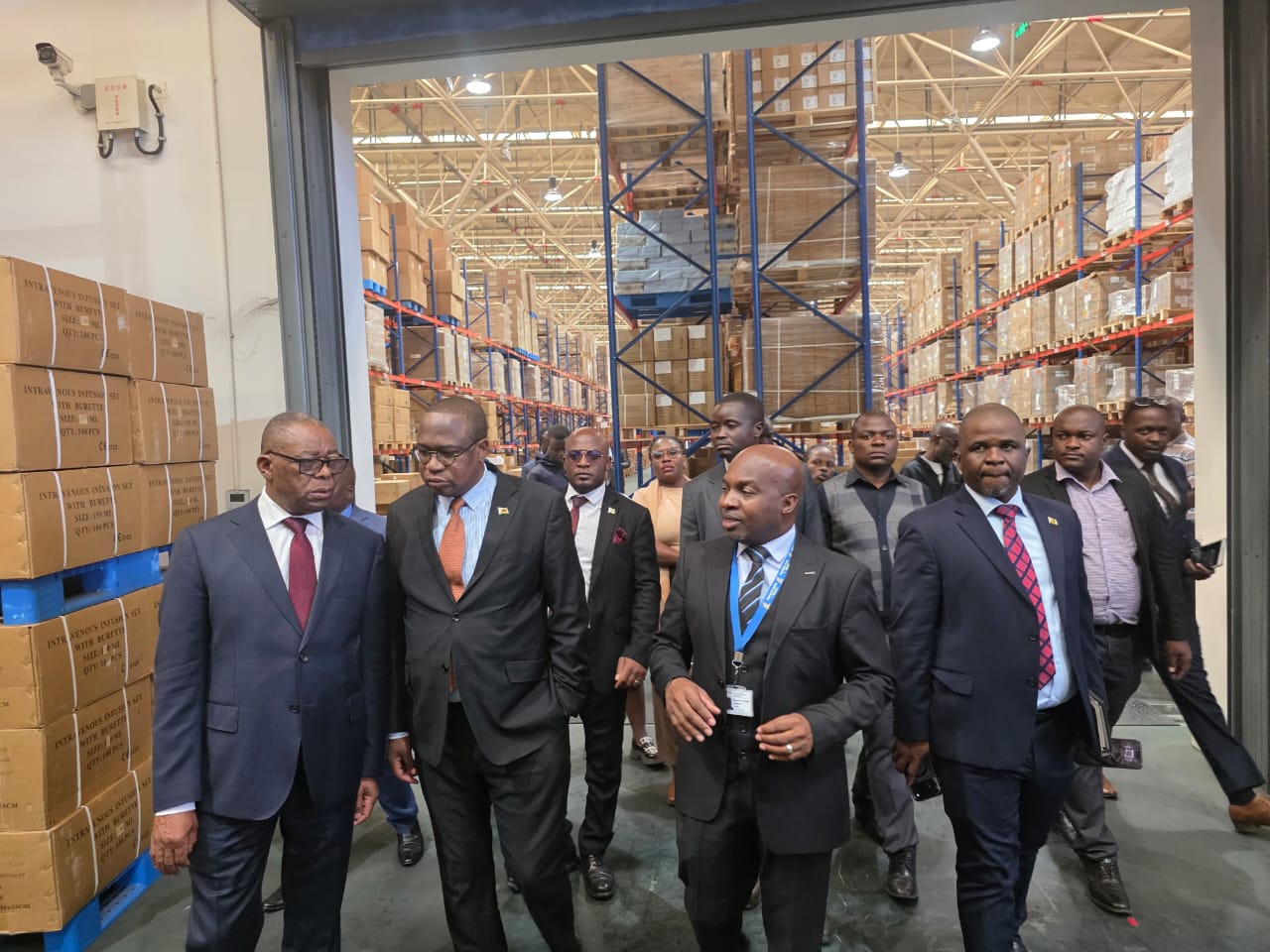
Health and Child Care Minister, Dr Douglas Mombeshora and Finance, Economic Development and Investment Promotion Minister, Professor Mthuli Ncube, this Monday, inspected the consignment at the NatPharm warehouse in Harare, reflecting the government’s commitment to modernising healthcare in line with Vision 2030.
The arrival of the sophisticated radiotherapy machines signals a major step in Zimbabwe’s ongoing cancer care transformation programme.
The high-energy LINACs are designed to deliver precise radiation treatment to cancers located deep within the body, improving treatment accuracy while reducing damage to surrounding healthy tissue.
Dr Mombeshora says the country is moving from ageing technology to modern cancer treatment systems, capable of improving patient outcomes and increasing treatment capacity.
“We have effectively leapfrogged from a situation where only one machine was operational at Parirenyatwa. We have completed phase one and are now moving into phase two, which focuses on procuring diagnostic equipment to support early cancer detection,” he said.
“In the third phase, we are looking at creating other cancer treatment centres outside these metropolitan provinces. We are moving closer to the group where we have targeted provinces like Mashonaland West, Chinhoyi Hospital, Midlands Hospital and Masvingo. Then we will see as we go and as we get more funding to make sure that we also increase our reach out there in general.”
Professor Ncube says the development demonstrates how domestic resource mobilisation can massively transform healthcare infrastructure.
“A couple of years ago, we proposed that a sugar content tax on beverages be introduced. It is introduced, and we are delighted to see the results of that tax. Out of the 30 million that we have used so far, we have managed to procure the first set of machines under this programme. It means that what we set out to do is being achieved, and I want to thank the citizens for agreeing to pay this tax,” he said.
He added that the initiative reflects Government’s response to declining external funding for health systems.
“One of the key pillars of our NDS2, and also Vision 2030, is to support our citizens and improve their health and well-being. So this speaks to health and well-being. What we are seeing is a drop in overseas development assistance to the health sector, not just to Zimbabwe, but across the world. This is part of what we call domestic resource mobilisation, which is meant to fill the gap that is being left behind by the declining ODA. This is in line with our vision, domestic resource mobilisation and having healthier citizens. After all, investment in health is an investment, not just expenditure. Healthier human beings work harder.”
From policy to patient care, the journey of the sugar content tax is becoming visible. What began as a public health measure is increasingly funding specialised equipment, diagnostic services and treatment infrastructure that could reshape cancer care in Zimbabwe for years to come.

