



Story by Panashe Nagoli
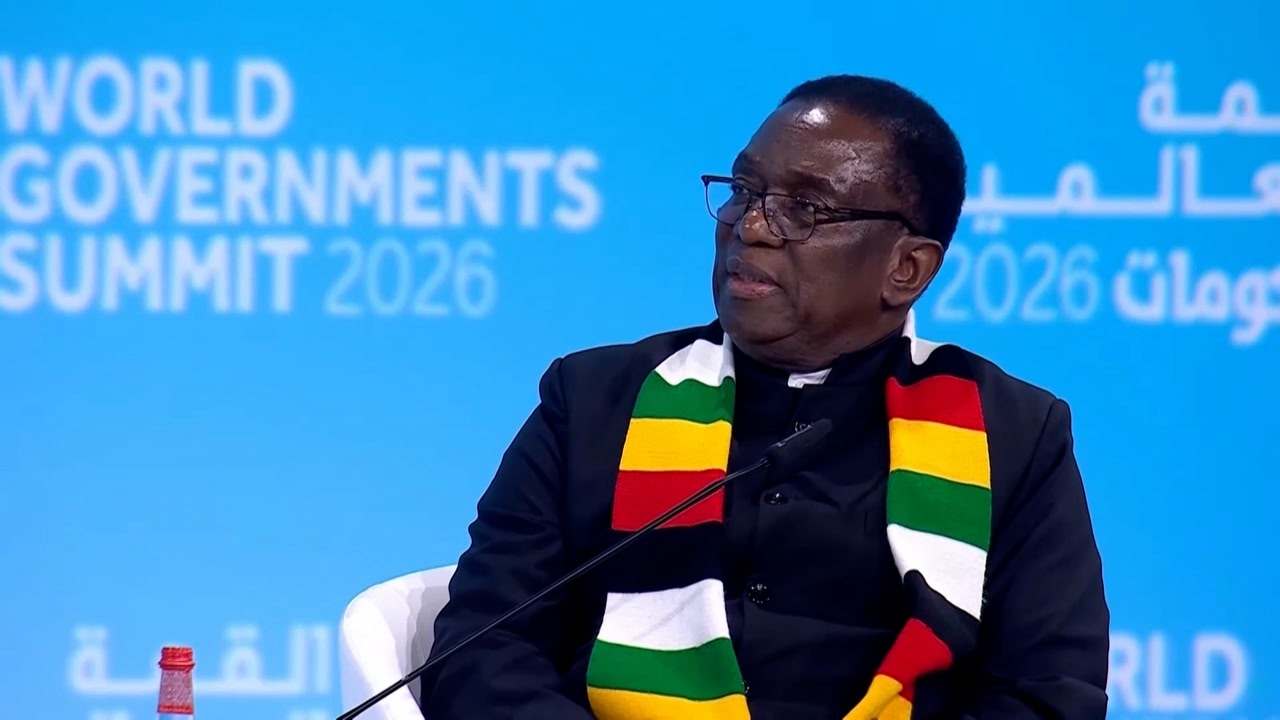
THE President, Dr Emmerson Mnangagwa, continues to steer Zimbabwe into the matrix of global leadership, with the country’s influence in world politics set to reach new heights later this year when the head of state takes over the chairmanship of the Common Market for Eastern and Southern Africa (COMESA).
The development comes at a time Zimbabwe won a non-permanent seat in the United Nations Security Council in New York, last week.
“On the international front, our Party-led Government remains anchored on the philosophy, ‘a friend to all and an enemy to none’ as we advocate for multilateralism, shared development, sustainable peace and security, as well as uninterrupted global supply chains,” President Mnangagwa said.
Zimbabwe under the Second Republic continues to strengthen its position as a critical and influential voice in regional and global politics.
As for President Mnangagwa himself, his leadership has been characterised by various triumphs for the country in the region and beyond.
During Dr Mnangagwa’s tenure as the SADC Chairperson between August 2024 and August 2025, Zimbabwe’s influence on the regional landscape was strongly felt across the socio-political spectrum, with Dr Mnangagwa spearheading diplomatic engagements meant to find lasting peace in the DRC.
Zimbabwe has ridden on this experience in its successful bid to secure a non-permanent seat in the United Nations Security Council.
With its influence now set to be felt at the global level during the 2027 -2028 UNSC term, more is still to come as President Mnangagwa will assume the COMESA chairmanship from his Kenyan counterpart, H.E William Ruto, this October.
For international relations analysts, Zimbabwe’s growing global influence is not by coincidence but rather a testament and a result of Dr Mnangagwa’s domestic success.
“Look, it is important to understand that every global milestone achieved stems from domestic success. This President has achieved a lot domestically through intentional policy initiatives, and now, after that, the region and afterwards the globe is witnessing and respecting this administration after seeing what they are doing back home, and then from there, our voice and influence have been cemented in the region and global landscapes,” International Relations Analyst Mr Motion Mbano said.
Political Scientist Dr Richard Mahomva says the strategic recalibration of the nation’s foreign policy framework by President Mnangagwa has gained Zimbabwe much deserved respect from global powers.
“For years, Zimbabwe’s Foreign policy was more rhetoric than scientific and strategic, and when President Dr Mnangagwa took office, he recalibrated it into a document that is sound, scientific, and strategic. It is that recalibration that has revived the image of the country and gained respect from all powers across the region, and under his SADC leadership, a historic resolution which led to an inaugural SADC-EAC joint summit, which in turn de-escalated tensions in the DRC, so when a foreign policy in intentional such rewards,” Political Scientist Dr Mahomva said.
Out of a possible 190 votes, Zimbabwe garnered 182 in New York last week, a nod of confidence in the country’s ability to meaningfully contribute to the UNSC.
South African International Relations Expert, Dr Levy Ndou, says the expectation is that Zimbabwe will ensure that the voice of SADC is heard in the body.
“It is good news for Zimbabwe to be in the UNSC, it is not easy for countries to be there and for Zimbabwe to be there is significant because the voice of SADC will be here and the expectation is that it will raise issues that talk to our situation in the region and indeed the uneven nature of the organs of the UN,” he said.
The Second Republic continues to implement what many view as a diplomatic masterstroke, the ‘Friend to All, Enemy to None’ philosophy working hand in glove with the Engagement and Re-Engagement foreign policy stance, which has been credited for the nation’s growing influence on the global arena.

