



Story by Fairstars Mukungurutse
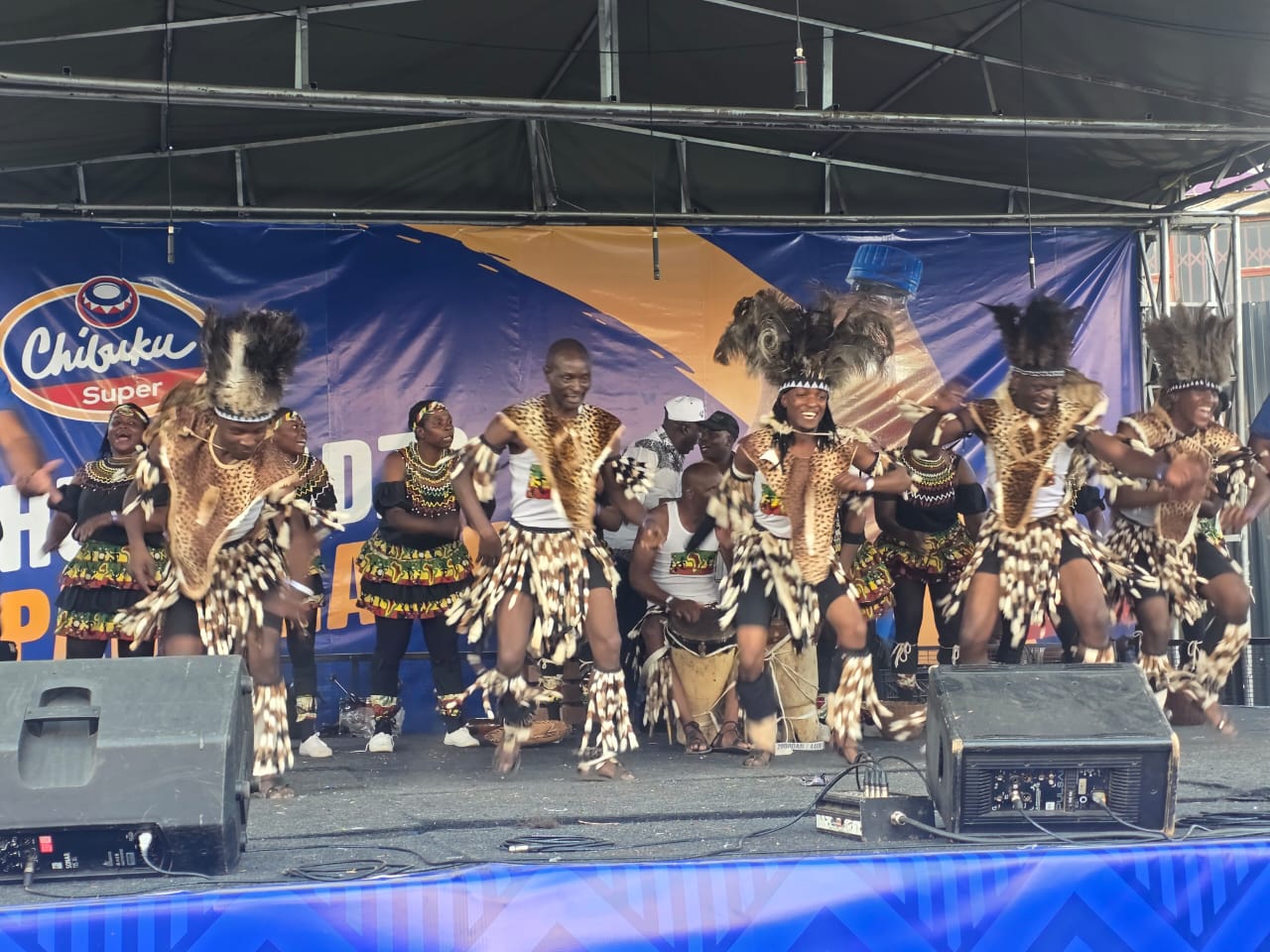
ZIMBABWE’s rich cultural heritage took centre stage in Harare this Saturday as dance groups from across the capital competed in the final round of the Provincial Chibuku Neshamwari Traditional Dance Festival, showcasing the vibrancy and diversity of the country’s indigenous traditions.
The colourful competition, held at Werras Park, featured captivating performances of traditional dances including Mbira, Jerusarema, Muchongoyo, Mhande and other cultural expressions as groups battled for honours and a place at the national finals set for next month.
The festival continues to serve as a key platform for preserving Zimbabwe’s cultural identity while promoting indigenous knowledge and artistic excellence.
Participants used the event to educate audiences about the historical and cultural significance of the dances they performed.
“We performed Chinyambera from Manicaland Province. It is a hunter’s dance performed by both men and women, but men dominate the dance as hunters while women welcome their husbands for bringing their prey home,” representative of Karingazuva Dance Group, Exhibit Simango, said.
“We performed Mbira, which is a spiritual dance performed to appease ancestors. Mbira is also a rain-making dance. We are here as an educational institution to teach learners our cultural heritage,” representative of the ZOU Dance Group, Nicholas Mangezi, said.
“The dance we performed is Gule Wamkulu, which originates from the Chewa tribe. Many people are scared of Gule Wamkulu, but we are just ordinary people; it is a culture just like any other culture,” representative of Club Achewa Dance Group, Elizabeth Phiri, said.
“We showcased Mbakumba dance, a harvest dance performed when people want to appreciate the ancestors for a bumper harvest,” representative of Shingai Dance Group, Musa Lejala, said.
Organisers said the festival remains an important vehicle for safeguarding and promoting Zimbabwe’s indigenous dances for future generations.
At the close of the competition, Shingai Dance Group emerged as the overall winner with its Mbakumba performance.
Pasichigare Dance Group secured second place with a Muchongoyo performance, while Karingazuva Dance Group finished third with its Chinyambera showcase.
As the provincial contests draw to a close, attention now turns to the national finals on July 11, where the country’s finest traditional dance groups will compete for top honours.
The message from Werras Park was unmistakable: traditional dance remains a vibrant expression of Zimbabwean identity, uniting communities through culture, heritage and artistic excellence.

