



Story by Bruce Chahwanda, Political Editor
THE Constitutional Amendment Number Three Bill (CAB 3) has moved to the Second Reading stage in Parliament, paving the way for full debate by legislators after other parliamentary business was suspended.
The Minister of Justice, Legal and Parliamentary Affairs, Ziyambi Ziyambi, said the Bill seeks to “recalibrate the architecture of the country’s democracy”, placing emphasis on strengthening institutions rather than individuals.
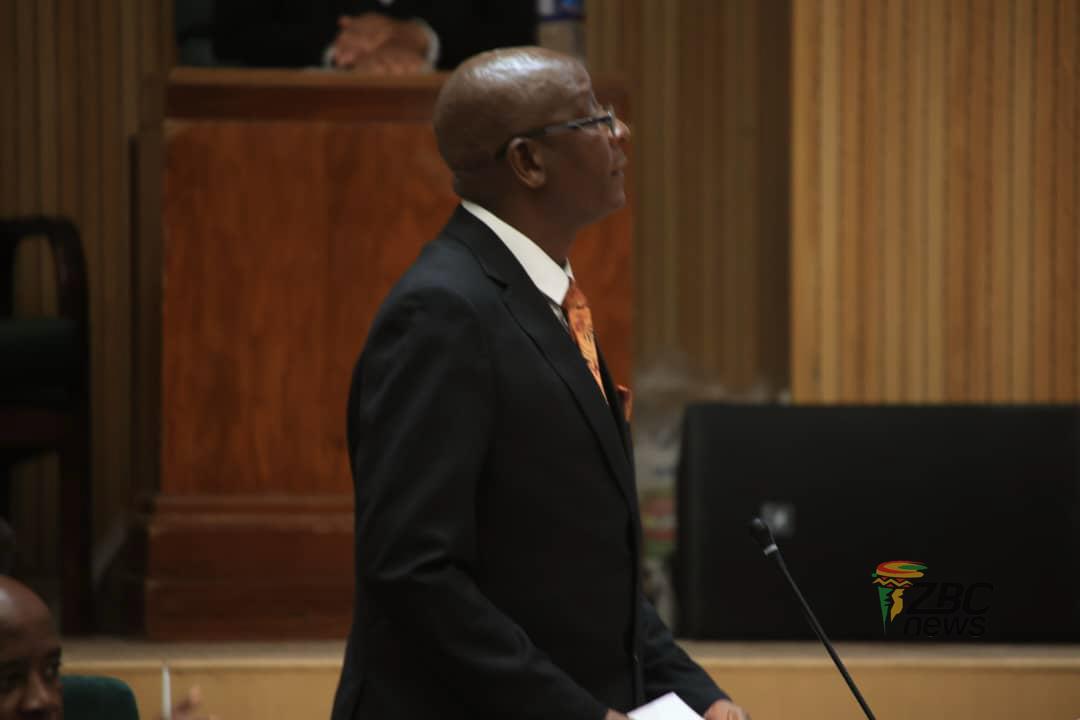
Presenting the Second Reading of the Bill in the National Assembly on Wednesday, the Minister moved to address what he described as widespread misconceptions circulating in the public domain and on social media.
“Mr Speaker, Sir, there have been many claims about this Bill circulated in the press and in the public square, especially on social media platforms, which are simply not true. Before I commend a single clause to this Honourable House, I want to place those claims beside the text and answer them plainly. Let me state, clearly and without qualification, five things this Bill simply does not do,” he said.
He clarified that the Bill does not seek to extend the presidential term, does not alter the right to vote, does not deal with political party succession, does not postpone elections, and does not concentrate electoral powers in the office of the President.
“First, it does not give the President a term extension or a third term. Second, it does not take away the right to vote, which is enshrined in the time-honoured principle of universal adult suffrage. Third, it does not at all concern itself with succession in any political party. Fourth, it does not postpone the nation’s elections to some distant or unknown year. Fifth, it does not concentrate power, or the running of our elections, in the hands of the President. None of these things is true of the Bill before this Honourable House,” he said.
The Minister said the proposal to utilise a parliamentary process in the election of the President is aimed at addressing historical governance challenges.
“Since the introduction of direct presidential elections in 1990, our public life has been gripped by five connected afflictions that have stood between this country and the development and progress its people deserve,” he said.
He cited disputed electoral processes, allegations of violence and rigging, and what he described as declining public trust in electoral outcomes, referencing observer reports from the African Union (AU), the Southern African Development Community (SADC), and the Commonwealth.
He also linked these challenges to broader economic consequences, claiming that significant investment opportunities had been lost over the years.
“The direct election opens the door for an ‘independent candidate’ even one potentially sponsored by the country’s adversaries who commands no seats whatsoever in this House to capture the presidency,” he said, adding that such a scenario could destabilise governance structures.
The Minister further argued that the current electoral framework risks over-representing certain provinces due to population distribution, citing voter registration figures from the 2023 electoral roll.
He noted that Harare, Manicaland, Mashonaland West and Midlands collectively account for more than half of the country’s registered voters, warning that this could result in unequal national representation if not addressed.
The Second Reading of CAB 3 now clears the way for detailed parliamentary debate, with all other business temporarily suspended to prioritise consideration of the Bill.

