



Story by Abigirl Tembo, Health Editor
ZIMBABWE is scaling up efforts to place nutrition at the centre of national development planning, with the Government and its partners intensifying investment and multisectoral collaboration to strengthen human capital development, productivity and economic growth.
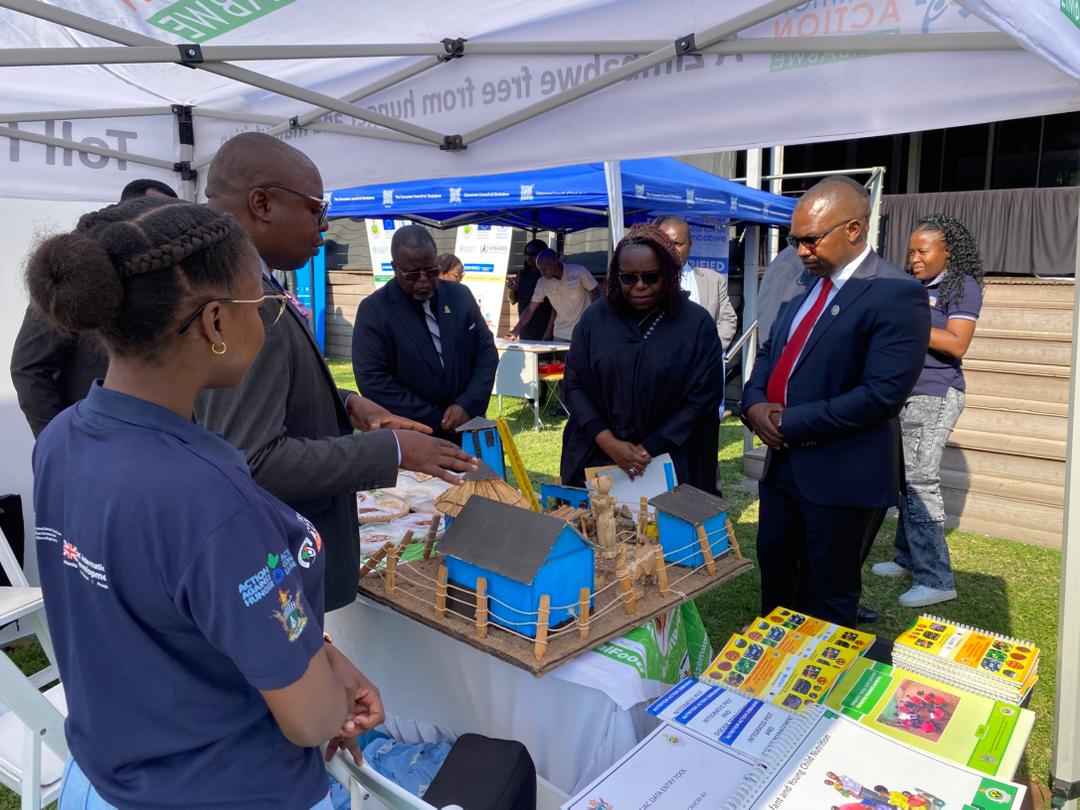
These issues dominated discussions at the High-Level Nutrition Advocacy Meeting convened by the Food and Nutrition Council under the Office of the President and Cabinet, including development partners, the United Nations, academia, civil society and the private sector in Harare this Wednesday.
With Zimbabwe pushing towards Vision 2030, the Government and its partners are intensifying efforts to position nutrition as a key driver of human capital development, resilience and economic growth.
Addressing delegates during the official opening ceremony, Deputy Chief Secretary for Social Services in the Office of the President and Cabinet Reverend Paul Damasane said the government continues to prioritise nutrition through national policies and development strategies.
“Nutrition remains a key priority and central to the National Development Strategy and broader Vision 2030 agenda, which seeks to build an empowered upper-middle-income society through strengthened human capital development, food security, resilience and inclusive economic growth. If we invest in nutrition today, we invest in better education outcomes, stronger economic growth, reduced healthcare costs and a more prosperous future for Zimbabwe,” he said.
United Nations Nutrition Chairperson and UNICEF Country Representative, Ms Etona Ekole, commended Zimbabwe for recognising nutrition as a key pillar of economic transformation and sustainable development.
“When nutrition improves, children learn better, communities become more resilient, productivity rises, and economies grow stronger,” she said.
Food and Nutrition Council Director General, Dr George Kembo, said Zimbabwe has made notable progress in improving food security and child health indicators.
“We have managed to reduce food insecurity from about fifty-seven percent to around fifteen percent, which is a major achievement. However, we still have issues with food consumption. There are people on the borderline, which is about 35 percent , which might skew to the left or right, but we also have serious issues with those whose food consumption is six percent, who are in poverty. But what is more important is that women, especially of childbearing age, only 47 percent are meeting their data requirement.
“We are talking about 53 percent not meeting the data requirement, but we know it is what you feed in your mouth that is also contributing to the baby’s development within the womb, so we are worried about this in terms of standing using a global cutoff. The map is general, why, because we are at 20 percent where we are saying it is very high time we need to address it and we have certain areas where we are between 10 to 19 percent so stunting is still a major problem we also have to pay greater attention to underweight and overweight to which we need to address that when you look at infant and young child feeding practices we are doing very well,” he said.
Participants also called for stronger domestic financing, innovative partnerships and coordinated action across key sectors, including health, agriculture, education, social protection and local government, as the meeting concluded with renewed commitment to accelerate investment in nutrition programmes while ensuring no community is left behind.
Stakeholders say sustained investment in nutrition will be critical in building a healthier, more productive population and accelerating Zimbabwe’s drive towards Vision 2030, while laying the foundation for long-term economic growth and national prosperity.

