



Story by Wellington Makonese
STAKEHOLDERS have described the commissioning of the New Glovers Solar Plant as a major milestone in Zimbabwe’s drive towards energy self-sufficiency and sustainable industrial growth.
The facility is now feeding clean energy into the national grid benefitting mining, agricultural and industrial sectors.
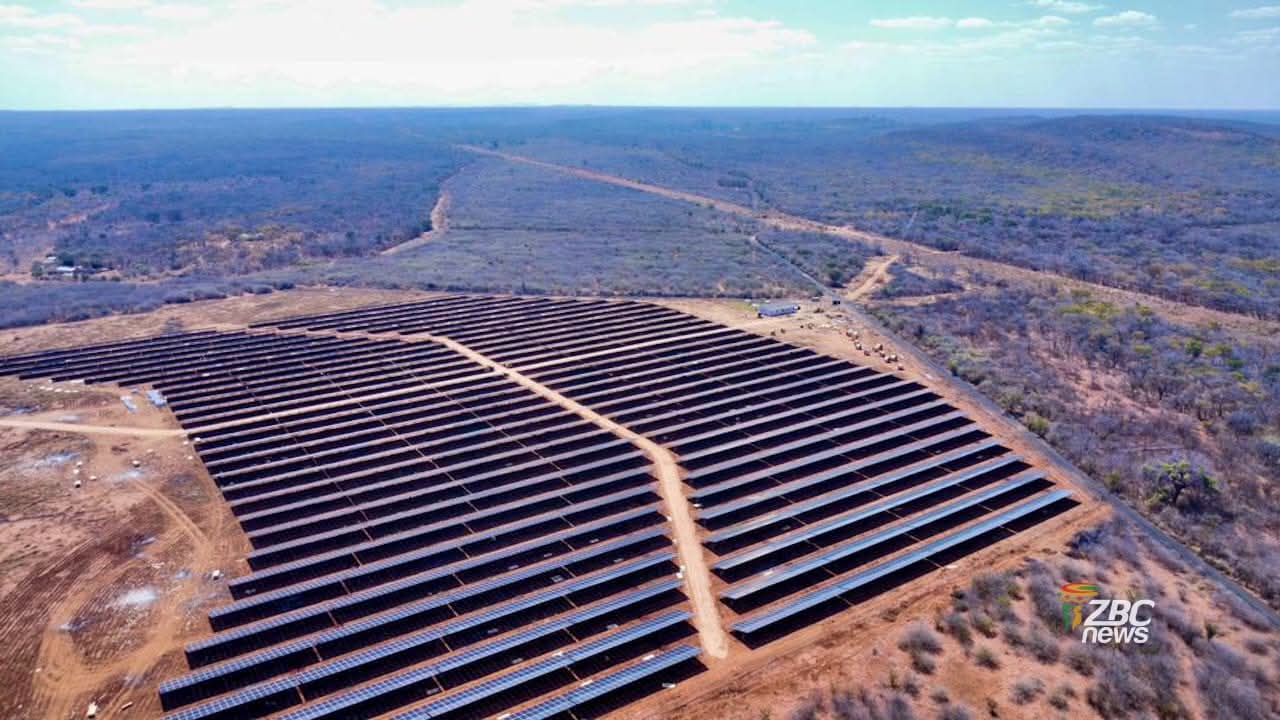
Spread across a vast landscape, the plant comprises more than 18 000 solar panels.
Phase one of the New Glovers Solar Plant is now generating 10 megawatts of clean energy, building up to a total of 110 megawatts when completed.
It is a significant milestone in Zimbabwe’s transition towards sustainable energy production and industrial growth.
The plant is supported by 31 inverters, two smart transformers and a six-kilometre transmission line connected directly to the national grid, a prime example of the efficiency in public-private partnerships that serves mining and agricultural industries.
“This is a phased project moving towards almost 20 gigawatt and in terms of electricity. It is clean in terms of carbon emissions,” New Glovers Solar Company’s Acting Chairperson, Mr Ainos Ngadya stated.
“What we can see is government doing a project that supports mining industries, which are benefitting the whole industry, unlimited power supply benefitting communities,” a miner, Samuel Tinashe Rusike said.
It is a powerful model of inclusive development between the Private sector and government.
“With the stable electricity coming from this project, we are now able to operate our irrigation systems and processing plants more efficiently without frequent interruptions. This is a major development for production and productivity in mining, agriculture and industry,” Minister of Public Service, Labour and Social Welfare, Honourable Edgar Moyo noted.
The Minister of Energy and Power Development, Honourable July Moyo said the development is welcome as it supports rural industrialisation, ensuring no place is left behind.
From government’s side, the project demonstrates that renewable energy investments can unlock economic opportunities and support industrialisation.
“The multitude of people demonstrates the appreciation of your vision to industrialise. This is a great project that catapults the province’s GDP, supporting downstream industries,” Midlands Minister of State for Provincial Affairs and Devolution, Honourable Owen Ncube said.
With this phase complete, attention is now turning towards the next expansion stage, leading towards 110 megawatts to further boost Zimbabwe’s renewable energy capacity, a long-term vision to strengthen local production, while reducing dependence on electricity imports.

