



Story by John Nhandara
AFRICAN nations must recalibrate their strategic positioning within a rapidly shifting global order to safeguard both national and continental sovereignty, participants at a high-level dialogue in Harare have said.
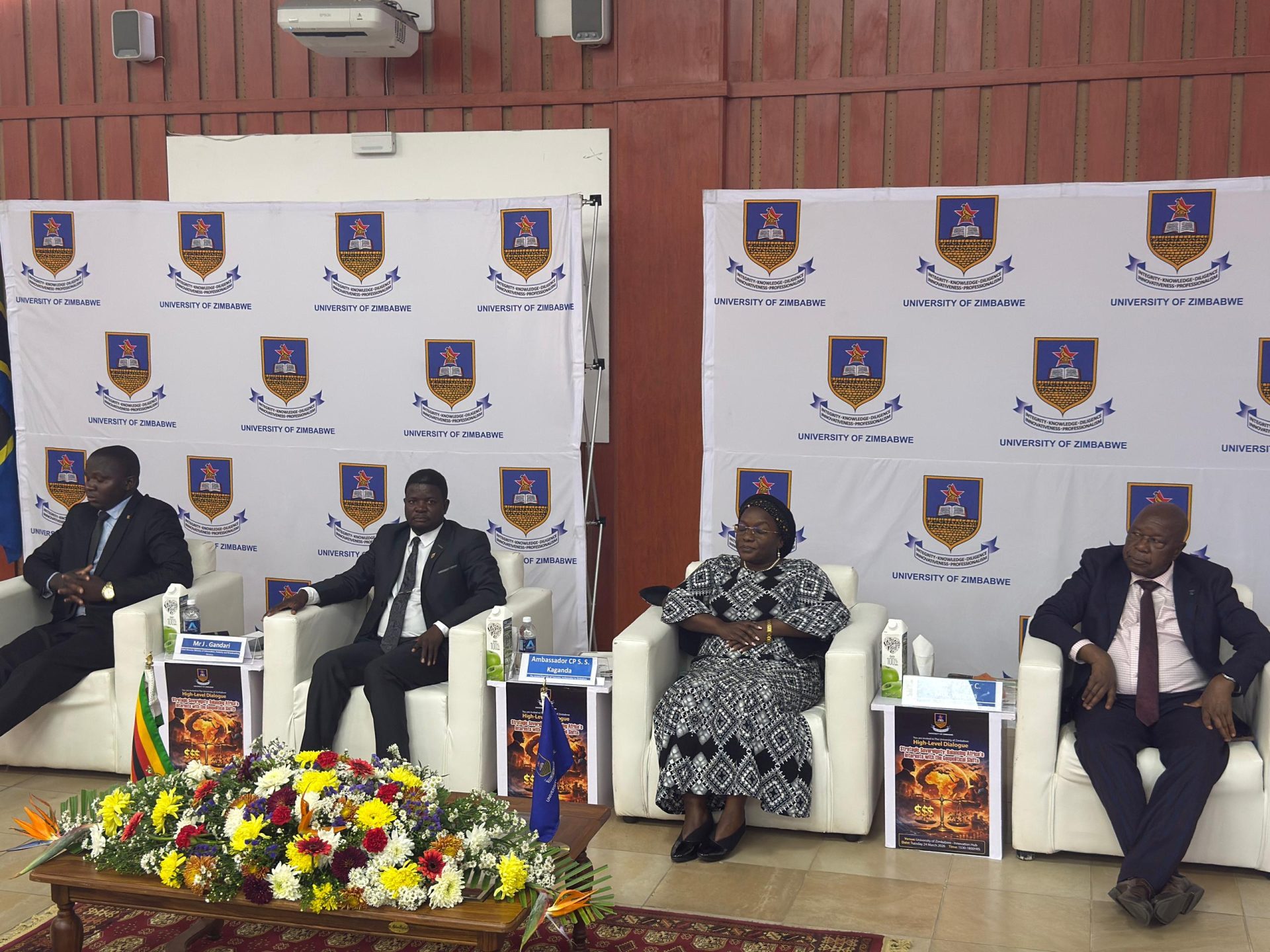
The University of Zimbabwe (UZ) hosted the forum this Tuesday under the theme “Strategic Sovereignty: Balancing Africa’s Interests with Geopolitical Shifts,” drawing academics, policymakers, diplomats and industry leaders.
Deliberations centred on how Africa can navigate intensifying geopolitical pressures while advancing its own development agenda and protecting its strategic interests.
“We need to interrogate the complexities surrounding how the geopolitical factors affect our strategic sovereignty,” said Cde Tatenda Muzadzi of the Chitepo School of Ideology.
ZANU PF Secretary for Information and Publicity, Ambassador Christopher Mutsvangwa, underscored the role of capital mobilisation in translating ideas into economic output.
“All we need is capital to implement our ideas. Capital changes ideas into goods and services. We are glad that the second republic has focused on the attraction of capital,” he said.
Participants emphasised the need for a coordinated continental approach to global challenges, anchored on African-led solutions.
“We need a stronger unified African front to challenge unilateral measures imposed on us and assert Africa’s solutions to African problems. That is what Agenda 2063 is all about,” said Ambassador Suzan Salome Kaganda, Tanzania’s ambassador to Zimbabwe.
The dialogue also highlighted the growing importance of information and digital control in shaping sovereignty in the modern era.
“We need to think about the architecture of information at the regional level and infrastructure for information sovereignty. We need digital sovereignty to build robust information systems that also speak to our sovereignty,” said Jonathan Gandari, Chief Director in the Ministry of Information, Publicity and Broadcasting Services.
UZ Vice-Chancellor, Professor Paul Mapfumo, said universities have a critical role in shaping policy through research and evidence-based discourse.
“This dialogue is aimed at delivering evidence-based narratives that help us pursue national and continental interests while also navigating through external pressures. The dialogue will also be complemented by a public lecture series for replicable solutions with a focus on positively impacting the students, the nation and the continent at large,” he said.
The engagement forms part of broader efforts to interrogate global power shifts and articulate Africa’s pathway towards strategic autonomy.

