



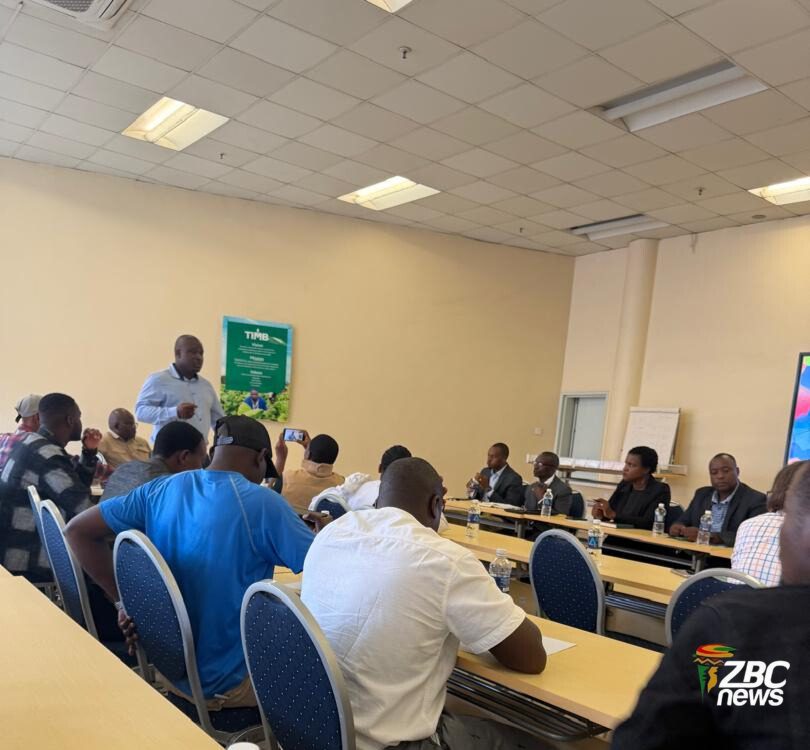
Story by Tendai Munengwa
MORE than 40 tobacco contractors have been licensed ahead of Zimbabwe’s 2026 marketing season, with authorities confirming that farmers will not be permitted to sell their crop without biometric registration.
The measures were announced on Monday during a media briefing in Harare by the Tobacco Industry and Marketing Board (TIMB), as preparations intensify for the official opening of the selling season this week.
TIMB Chief Executive Officer Emmanuel Matsvaire said the regulatory framework for the season was now in place, with three auction floors licensed and 48 contractors approved to participate in the market.
“The market is ready to open. We have three licensed auction floors and 48 contractors, including Shisha cigars. We have five companies that have not been licensed; Inter Africa, Leaf Exchange Africa, Voedsel, Moroz Tobacco Company and Tobacco Company of Zimbabwe. This year, the Minister of Lands will officially open the floors,” Mr Matsvaire said.
In a significant policy shift aimed at curbing side marketing, TIMB confirmed that biometric grower registration will be mandatory for all sales during the 2026 season.
Head of Information, Communications and Technology at TIMB, Mr Edson Nhemachena, said 147 000 growers are currently on the regulator’s register and have been enrolled under the biometric system.
“We have 147,000 growers in our register, and so far, all have registered under biometric, which is a milestone towards curbing side marketing. We have resolved that no farmer will sell without registration,” Mr Nhemachena said.
The official opening of the 2026 marketing season will take place at the Tobacco Sales Floor and will coincide with the launch of Phase Two of the Tobacco Value Chain Transformation Plan, a framework aimed at strengthening value addition and improving sector sustainability.
Zimbabwe’s tobacco industry remains the country’s largest agricultural export earner, and regulators say tighter compliance measures are intended to safeguard both growers and contractors as the sector continues to expand.

