



Story by Tendai Munengwa
FARMERS across parts of Mashonaland West are increasingly adopting drone technology to improve crop management, marking a significant shift towards innovation-driven agriculture in line with the National Development Strategy 2 (NDS2).
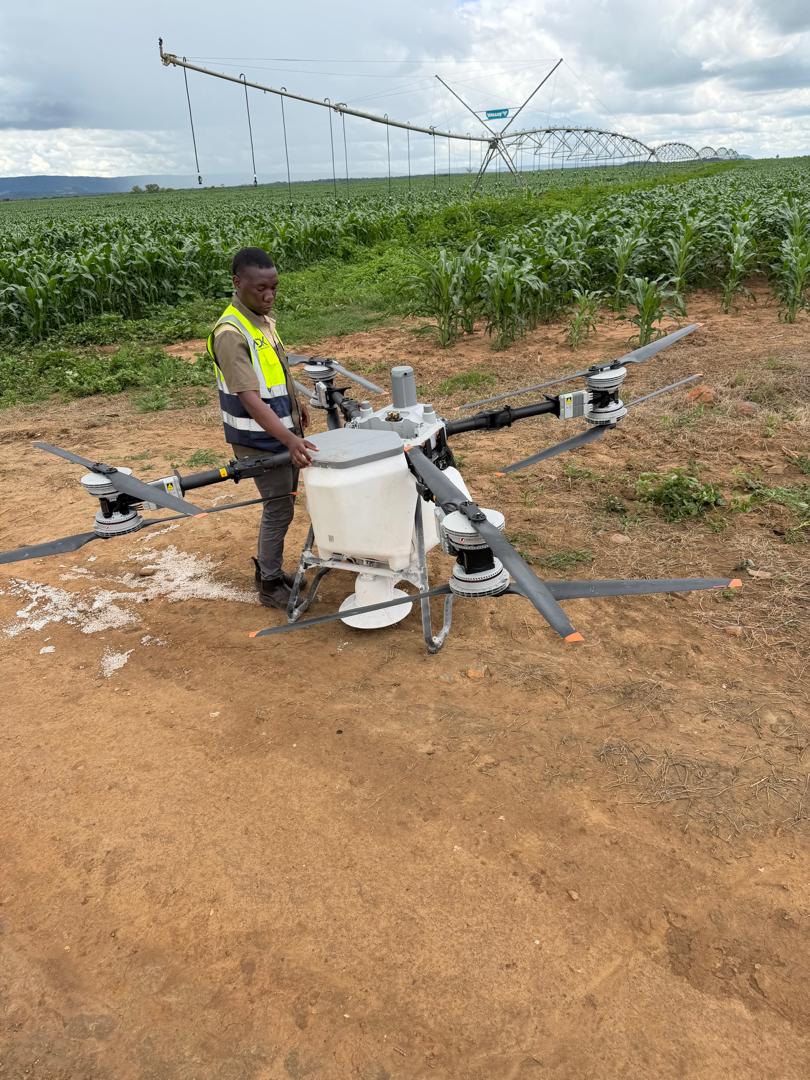
The use of drones for fertiliser application, pest control and chemical spraying is gaining traction among farmers in Banket, where indigenous technology firms have partnered with producers to modernise farming operations. The initiative reflects government’s broader push to harness innovation and technology as key drivers of productivity and food security.
Unlike conventional boom or knapsack sprayers, drones can cover large areas within a short time, offering both cost and time efficiencies. Operators say the technology is particularly effective during periods when heavy rains restrict the movement of tractors in the fields.
Africa Drone Kings operations leader Mr Munashe Hera said the adoption of drone technology was informed by global best practices and the need to improve efficiency in local agriculture.
“We have taken head of NDS 1 and now NDS2 is advocating for innovation and technology. As indigenous players, we have learnt that other countries have moved ahead and are no longer using boom sprayers, napsak sprayers to apply chemicals and fertilisers. We introduced drones to do weed control and fertiliser and pest control. With these drones, we can do 10 hectares in 30 minutes and we are able to spread fertiliser on 100 hectares per day as compared to five or more days with conventional methods,” Mr Hera said.
Young commercial farmer, Mr Lenon Mugariri, who has planted more than 270 hectares of maize and sorghum, said drone technology had transformed his operations.
“My field is big and I have put over 270 hectares of grain including maize and sorghum. The beauty of this technology is that it is very effective in time and cost. On dealing with pest, you do the night and even where the tractors cannot move due to rains the drone can do the magic,” he said.
Beyond improving productivity, the initiative is also creating opportunities for skills development, with farmers involving youths from local colleges and neighbouring communities to expose them to modern agricultural practices.
Farmers believe that wider adoption of drone technology could play a critical role in boosting yields, reducing input losses and strengthening national food security.
As Zimbabwe pushes ahead with NDS2 implementation, stakeholders in the agricultural sector say embracing digital and precision farming tools will be key to building a resilient, competitive and sustainable farming industry.

