



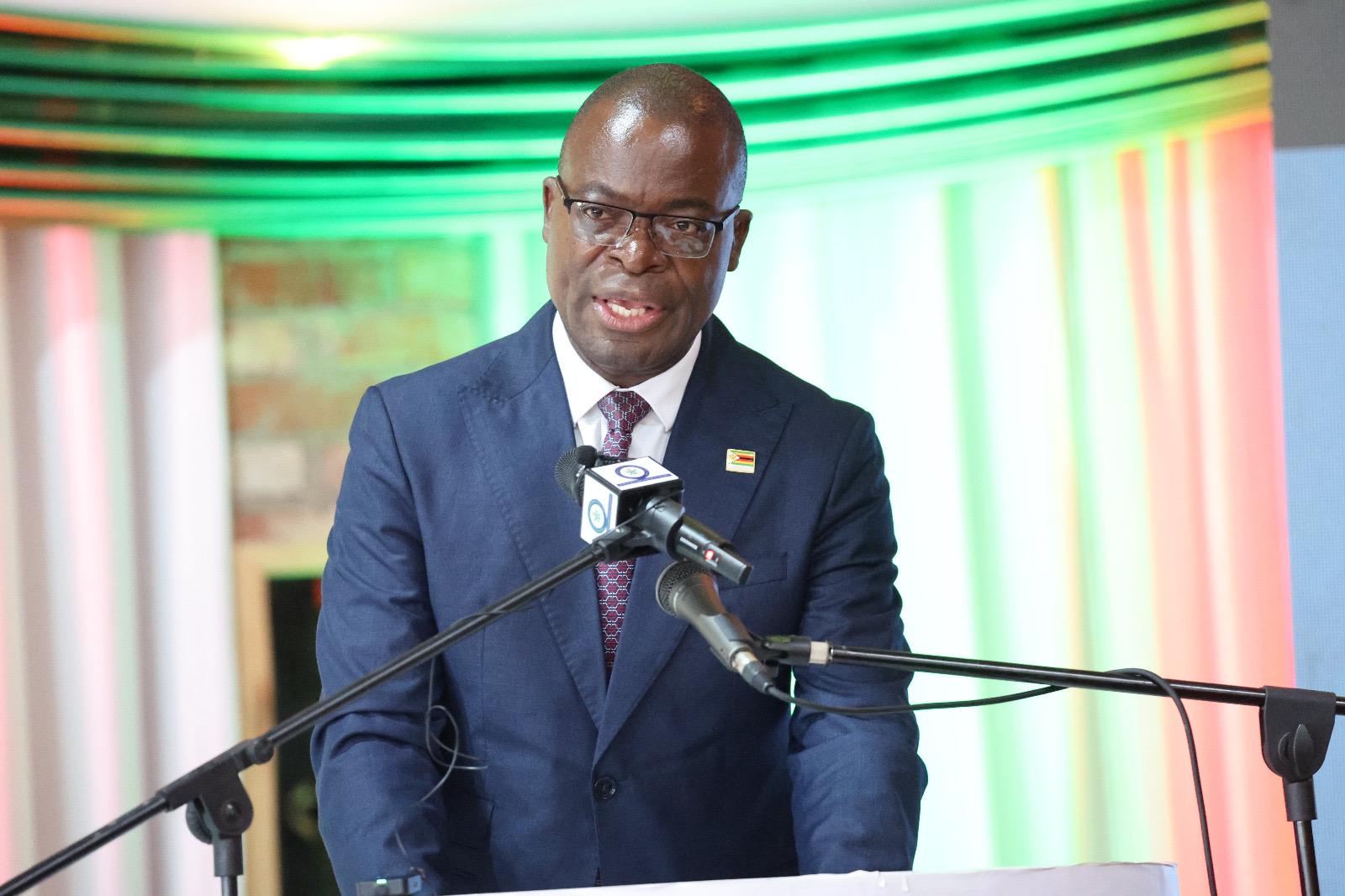
Story by Oleen Ndori, Foreign Editor
ZIMBABWE has recorded significant achievements in its foreign policy under the National Development Strategy 1 (NDS1), translating into economic gains that are crucial for sustainable development. Since 2020, the government has actively pursued international engagement to enhance the country’s global standing, leveraging strong political relationships to secure tangible economic partnerships.
These efforts are aimed at advancing Zimbabwe’s ambition of becoming an upper-middle-income economy by 2030.
Five years down the line, the foreign policy thrust has yielded positive results that have seen the country re-engaging with the European Union in debt clearance, thawing relations with the United Kingdom and participation at the World Economic Forum, among other notable strides.
“In NDS1, His Excellency the President made it a point that image building becomes a focus point and also building relations with the diaspora became a focus point. Why am I talking specifically about the diaspora? Because in the past, the diaspora was being perceived as anti-government and Excellency, the President’s job was to turn it around, and Zimbabwe was able to attract a lot of international attention on the positive side. His Excellency says, we are a friend to all and an enemy to none, and we are open for business, and we build our image around that,” Minister of Foreign Affairs and International Trade, Professor Amon Murwira said.
“The relations with the European Union improved drastically. Relations with the United Kingdom improved drastically. Improvement with even the rest of the world, including the ones who still maintain sanctions which we condemn as illegal, but we can see some movement. This is a result of the efforts of His Excellency, the President. So Zimbabwe’s image has improved to the extent that in 2025, Forbes magazine voted Zimbabwe the best destination in the world. These are all image-building issues, and you will see that in terms of tourism arrivals in the country, they’ve improved drastically. In terms of investment in the country, it has improved drastically. We are housing, at this moment, the largest plant in sub-Saharan Africa.”
Over the past few years, the country has chaired notable regional and international bodies, including SADC, deputising at the COMESA, while Zimbabweans also chaired institutions such as the Pan African Parliament, International Telecommunications Union, and former Permanent Secretary Dr Judith Kateera is Deputy Executive Secretary for Corporate Affairs at SADC.
“Every positive vibe on Zimbabwe benefits Zimbabweans because this positive vibe translates into economic goods and services. Right now, the president of the International Olympic Committee is a Zimbabwean, Dr Kirsty Coventry. Right now, the Deputy Secretary of SADC, as you said, is a Zimbabwean. We are there amongst the giants doing the Zimbabwean image. The president was the chairman of SADC, his incoming chair for COMESA.
“We are the deputy president of the WTO, the deputy president of CITES, we are in the ITU, and we are the president of PAP, which means the world is accepting Zimbabwe as an integral part of the international community. We have something to contribute. So this to me is a sign that Zimbabwe is coming, and it benefits everyone. On the diplomatic front as well, the president has undertaken various state visits in re-admitting the country into the global community of nations and some of the ones that we can talk about, the UK, China and Japan, we saw this happening in the last five years,” Professor Murwira said.
He further notes that in the past five years, the country has taken part in numerous exhibitions meant to position the country well on the international platform.
“We were the chairperson of SADC, and His Excellency did his best to make sure that SADC industrialise self-belief, and to make sure that Zimbabwe becomes an innovative place. And as we speak, Zimbabwe is the incoming chair for COMESA, Zimbabwe is vice chair or vice president for UNWTO, Zimbabwe is vice chair for CITES, Zimbabwe is a member of the UNESCO Bureau, all this year.
“When you look at the Zimtrade, Zim has been winning in its international expositions in Osaka, in Algeria, in Rwanda, in Zambia, in Botswana, in Eswatini, in Madagascar, which is the apex time for NDS1, which means this is when you can see the results of NDS1 within the last five years. The image of Zimbabwe as we speak, we keep on working, but the image of Zimbabwe is drastically different from the way it was in 2017,” Minister Murwira said.
Under the second phase of the National Development Strategy, the Image Building, International Relations and Trade cluster aims to enhance global engagement, attract investment, promote tourism, and advance diplomatic and trade development.

