



Story by Vivian Bangamu
Zimbabwe’s banking sector has been urged to move beyond resilience and actively adopt agility, innovation and artificial intelligence in order to remain competitive in an increasingly digital global financial environment.
The call was made at the Zimbabwe Agile Banking Conference held in Harare, hosted by ECB International in partnership with Finastra and Octanexus, where industry leaders warned that failure to modernise could leave local banks trailing regional and global peers.
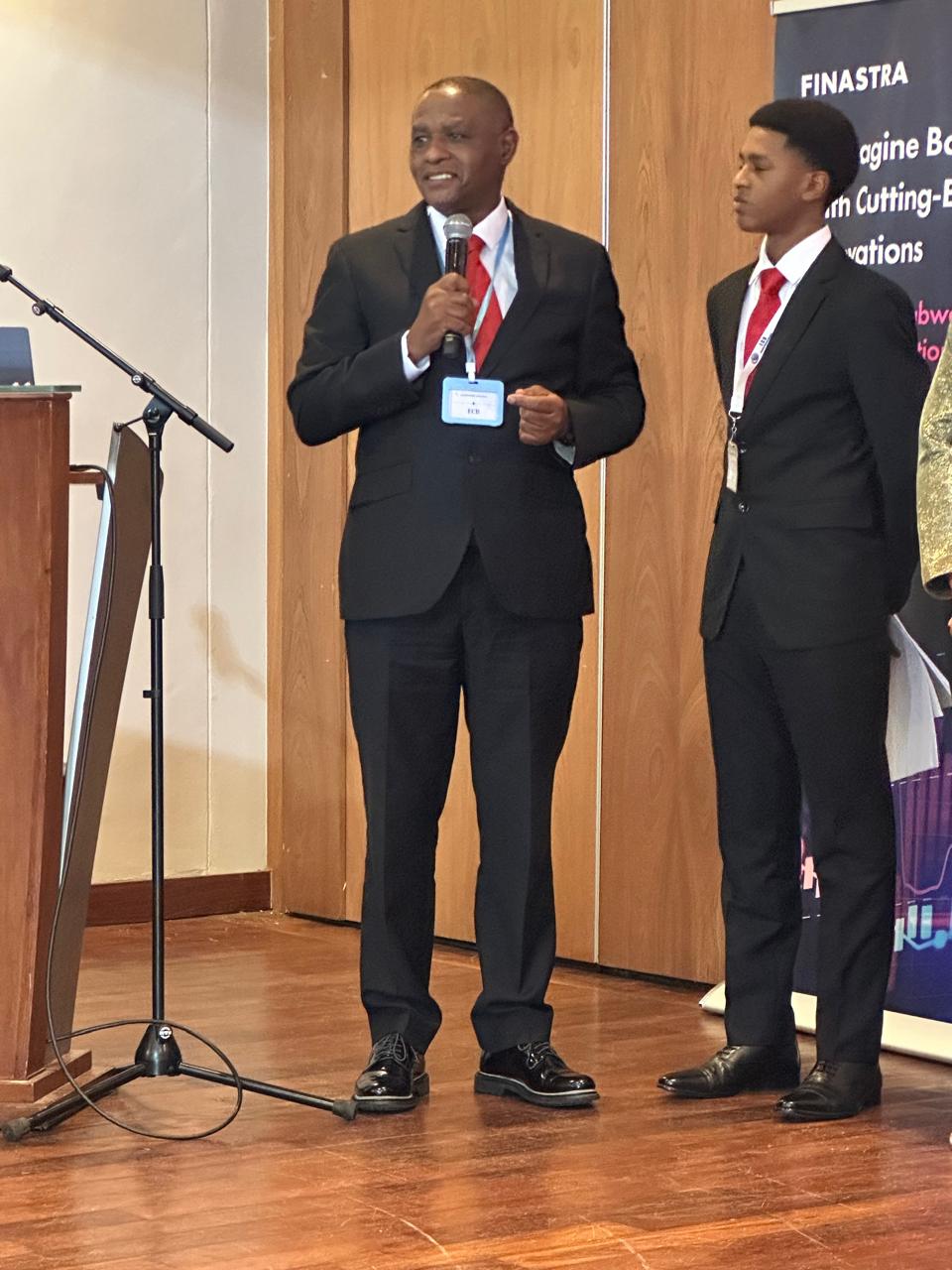
Speaking at the conference, Mr Chitima said there was an urgent need for banks to overhaul legacy systems, deepen financial inclusion and adopt emerging technologies such as artificial intelligence, open banking and composable core platforms.
He said the gathering marked a critical moment for the sector, emphasising that technological disruption was fundamentally reshaping banking worldwide.
“This is not simply another entry in the industry calendar, nor is it just another networking event. It is a defining moment, a conference designed to spark dialogue, ignite collaboration, and set in motion the transformation of our financial ecosystem. We are living in an era where banking is being rewritten daily by technology. Artificial intelligence, open banking, and composable systems are no longer distant concepts. They are realities shaping how billions of people interact with financial services across the globe,” he said.
Mr Chitima said Zimbabwe could no longer afford to observe global banking innovation from the sidelines, arguing that decisive action was required to shape the country’s digital financial future.
“The future of banking is not about more paperwork or longer queues. It is about speed, intelligence, and agility. It is about systems that anticipate customer needs rather than react to them,” he said.
He noted that while Zimbabwe has demonstrated economic resilience and comparatively strong GDP performance in the region, the banking sector continues to lag behind due to limited digitisation and the dominance of the informal economy.
Citing global trends, Mr Chitima said investment in artificial intelligence within the banking sector is projected to reach US$34.5 billion by 2025, with more than 80 per cent of financial institutions worldwide already deploying AI in areas such as fraud detection, customer personalisation and operational efficiency.
He added that mobile-first banking models have enabled more than 1.2 billion people globally to access formal financial services, highlighting the role of technology in advancing financial inclusion.
The conference placed emphasis on several priority areas, including the use of generative AI to modernise legacy systems, the adoption of composable core banking platforms to improve scalability, the expansion of open banking through application programming interfaces (APIs), mobile-first strategies, and strategic partnerships with fintech companies.
Mr Chitima cautioned that innovation without inclusion would not amount to meaningful progress, stressing that technological transformation must benefit all citizens, including the unbanked and underserved.
Describing the conference as a launchpad rather than a talk shop, Mr Chitima said the objective was to move banks from vision to execution and from legacy systems to leadership positions.
“We are here to walk with you, step by step, bank by bank, journey by journey. Some of you in this room are already our valued clients. You have trusted us to modernise your operations, digitise your policy systems, and rethink your customer journeys. You have allowed us to help you move from legacy processes to digital-first solutions. And for that trust, we sincerely thank you. But today we go further. Today we extend an invitation to every bank in Zimbabwe to join us in building a digitally agile, AI-powered, customer-centric banking ecosystem that is not only fit for the present but ready for the future,” he said.
The conference brought together bankers, regulators, insurers, fintech firms and technology experts, marking a significant step towards repositioning Zimbabwe’s financial sector as a regional leader in digital banking innovation.

