



Story by Oleen Ndori, Foreign Editor
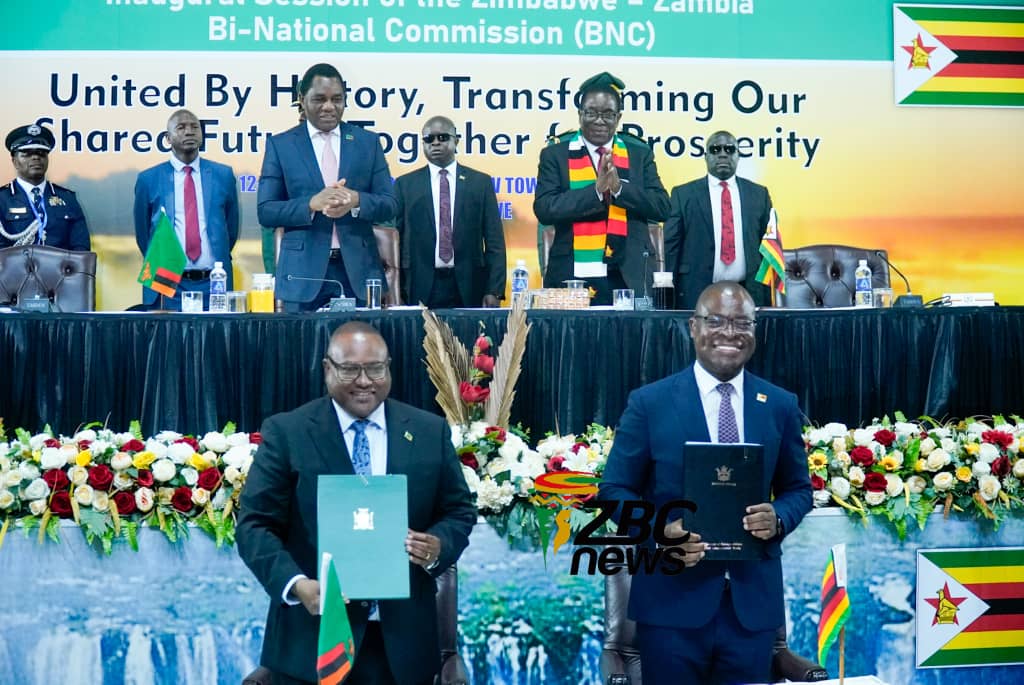
THE inaugural Zimbabwe-Zambia Bi-National Commission has culminated in the signing of five Memoranda of Understanding (MOU), a development expected to enhance cooperation between the two sister countries and promote sustainable development.
The agreements covering diplomacy, labour, immigration, agriculture and youth development further solidify a 45-year fraternal relationship rooted in the shared struggle for independence, marking a new phase in bilateral collaboration.
Zimbabwe’s Finance, Economic Development and Investment Promotion Minister, Professor Mthuli Ncube, believes these agreements are vital for Harare-Lusaka ties, particularly on issues relating to scrapping trade tariffs.
“An MOU was signed between the two countries to share experiences, support each other, support our youth in the area of vocational training, for example, how to run effectiveTechnical and Vocational Education and Training(TVETs), vocational education, imparting entrepreneurship skills, give the right skills to our youth, after all, they are the future. This, again, will be supported by this kind of MOU. Also, we have an MOU to support trade in the agricultural sector, because both countries are quite strong in agriculture. There are times when you go through tough times. Here in Zimbabwe, we have a drought, or in Zambia, vice versa, we will not be able to trade freely, whatever we produce for the benefit of each other’s countries.”
“There is a need to remove the tariff barriers, and we have already agreed in terms of surcharges, taxes, customs duties, in line with the African Continental Free Trade Area, but also, we want to support each other. We also want to do away with non-tariff barriers. These are regulations that slow down the movements of goods and services. So also all this will go a long way in deepening our economic relations, supporting economic growth for the betterment of our citizens,” he said.
With a US$4.5 billion Batoka Hydro power project in the cards, Professor Ncube says this will be a massive win for both countries.
“The Batoka project, basically, we produce about 2 500 megawatts in terms of power. Both countries, Zimbabwe and Zambia, are in need of extra power. Zimbabwe needs at least 800 megawatts to 1 000 megawatts. In Zambia, we have seen the situation that they are in, in terms of power cuts. It is quite severe. Sometimes they are down to one or two hours of power a day, and we clearly need this project. The two countries are working together with the African Development Bank and other partners and advisors. We want to accelerate this project. 2 500 megawatts will make a big difference between the two countries.
‘As we think about the two countries, we will not forget Mozambique when it comes to power, because we get power from Caborabassa, and there are three gorges on the Zambezi River on the Mozambican side. Which, again, in the future, if developed, we will be able to supply hydropower, but because we are all part of the Southern Africa power pool, whether the power comes through Zimbabwe or Zambia, it can be accessed as excess power through the power pool because of the common infrastructure for wheeling or transmitting this power. We are looking forward to it and we will accelerate it, as we need that extra power,” he said.
With the second session of the BNC slated for Lusaka in November 2027, the countries will now begin working on implementing agreed areas that range from politics and diplomacy, defence and security, as well as economic cooperation.

