



Story by Farai Gwaze
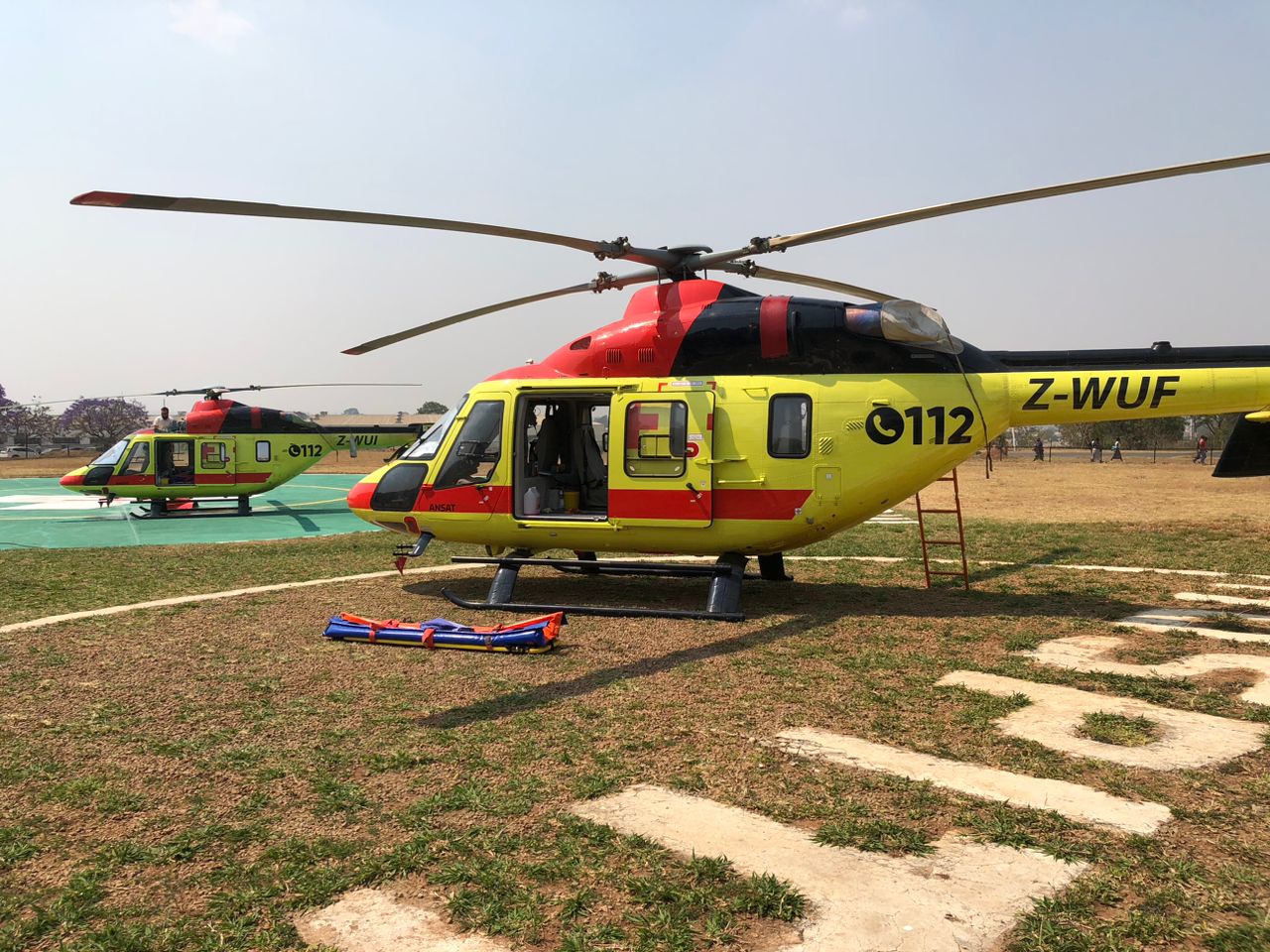
ZIMBABWE’S air ambulance service, launched in August last year as part of the Second Republic’s efforts to strengthen emergency healthcare, has successfully saved more than 900 lives to date.
Operating from Sally Mugabe Central Hospital in Harare, the service has rapidly become an essential part of the country’s emergency response system, offering swift medical evacuation and treatment for critical cases across the nation.
“We have assisted over 900 people, most of whom are referred from provincial district hospitals that need specialist care. You are looking at people who are coming from a hospital where they do not have a general or orthopaedic surgeon, and you want them to come to the central hospital,” Medical doctor, Dr Clara Kunyarimwe said.
“Here we have everything to provide intensive care, it is like an ICU in a helicopter. Here we have a ventilator so we can help lung patients, we have full monitoring of BP, heart rate, and ECG,” Anaesthesiologist and Intensive Care Specialist, Dr Ekaterina Balandina said.
Complementing this medical expertise, Helidrivezim’s operational team maintains an impeccable safety record along with the government’s commitment to providing this life-saving service free of charge to the citizenry.
“We have been in existence since August 2024 up to now, and so far, we have done over 900 cases and all of them, I am happy to say, have been successful and have not experienced any deaths during our flights,” Head of Operations, Helidrivezim, Mr Charles Manyonga said.
“This service has been brought by the government of Zimbabwe free of charge, to be able to make sure that every citizen of this country has access to elevated health care and in the quickest time possible as well,” Flight Dispatch, Helidrivezim, Mr Tinotenda Kadziyanike said.
This air ambulance service represents a significant step forward in Zimbabwe’s healthcare system, reducing emergency response times and providing life-saving transport for critical patients from remote areas to specialised medical facilities, aligning with the Second Republic’s commitment to leaving no one and no place behind.

