



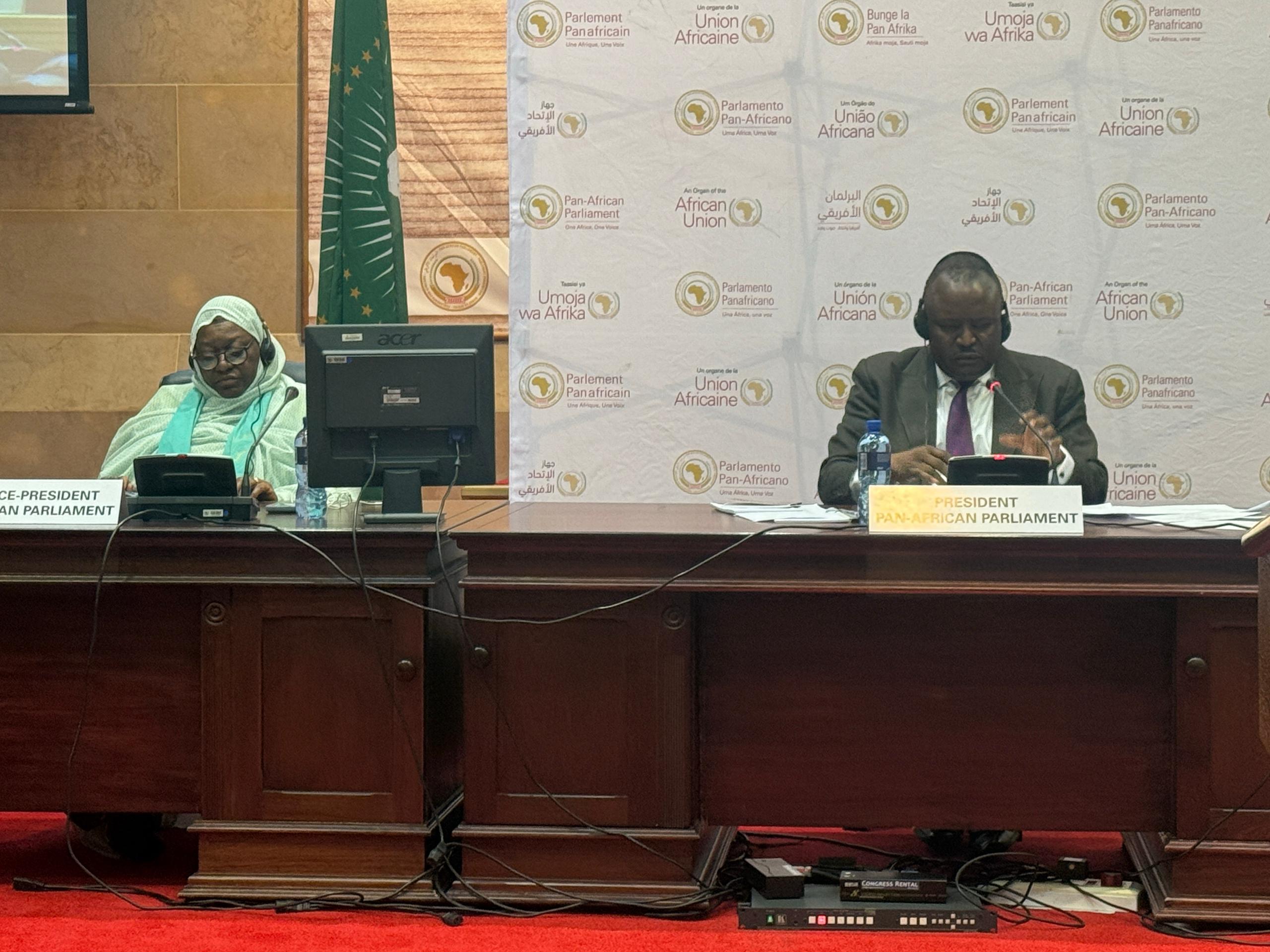
Story by John Nhandara
THE fifth ordinary session of the sixth session of the Pan-African Parliament (PAP) is underway in Midrand, South Africa, focusing on regional integration, intra-African trade, peace, and security.
Key matters under discussion include the acceleration of the African Continental Free Trade Area (AfCFTA), regional integration, artificial intelligence, repatriation, and justice for people of African descent.
Speaking after a Joint meeting of the bureau of the Pan African Parliament, bureaux of the permanent committee, regional caucuses, women’s caucus, and youth caucus, PAP president, Chief Fortune Charumbira, underscored the commitment of the continental legislative body to address the most pressing challenges facing the African Continent.
“One major issue is part of ensuring that we have our people benefit from their resources. So we have the issue of AFCTA on trade among Africa, among Africans. This is an important issue, more than 60 percent of the population of Africa is youth, but there are no opportunities for the youth on the continent. And the quick win, if you want to win at the age of youth, is to expand our economies, on the continent,” he said.
Chief Charumbira also stressed that persistent challenges to peace and security across many African regions and the imperative issues of gender equality and equity would be prominent on the agenda during the session.
“The Pan-African Parliament is working on a model law to ensure gender equity and equality. We are inviting several stakeholders, not only from within the African Parliament but from outside as well, to contribute towards a comprehensive legal framework. There will also be a debate on the African Charter on the Elimination of Violence Against Women and Young Girls during the upcoming women’s conference,” he added.
The plenary session, running under the theme 2025 year of Justice for Africans and people of African descent through reparations, will also address pressing issues such as climate change, the implications of artificial intelligence, and the broader agenda of reparatory justice.

