



Story by Tafara Chikumira, Midlands Bureau Chief
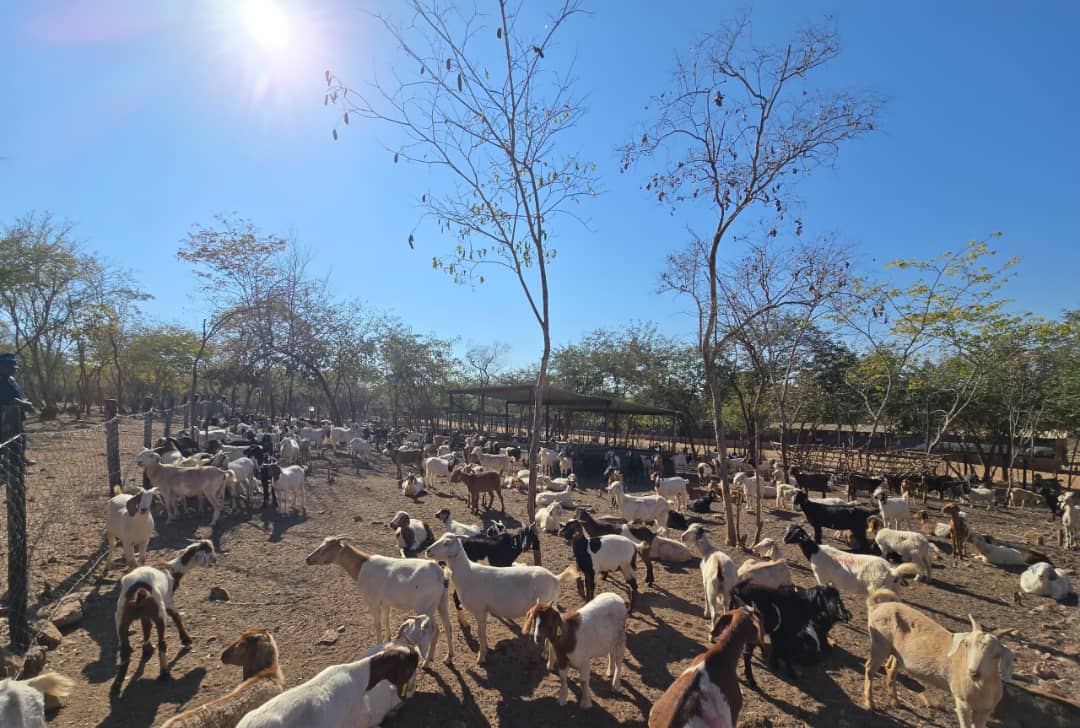
KWEKWE-GOAT farming is fast becoming a lucrative venture in Zimbabwe, with Woodlands Farm, a Kwekwe-based breeding entity, positioning itself at the forefront of innovation in the livestock sector.
The enterprise, which recently imported high-quality Boer goats from Namibia, currently manages a herd of over 2 000 goats and has set its sights on expanding to 5 000 by year-end.
This growth is being driven by the adoption of artificial insemination and an upgraded feeding system, aimed at boosting productivity and improving breed quality.
Woodlands Farm Managing Director, Mr Onius Mutetwa, said the introduction of artificial insemination aligns with national objectives to modernise the livestock sector.
“We have now upgraded our facilities to introduce artificial insemination. This latest move is aimed at improving our breeds and contributing towards shaping the national herd. We are also implementing a refined feeding scheme to ensure we meet our monthly breeding targets. Currently, we are working to increase our herd by an average of 800 goats per month. This puts us on track to reach our 5 000-goat target while also servicing the market demand,” he said.
Woodlands Farm is also exploring export opportunities, particularly in the Middle East, where demand for halal-certified meat is high.
Dr Paul Chatikobo, Board Chair of Woodlands Farm, highlighted the farm’s readiness to tap into these international markets.
“You can see that we are keen on growing our herd. We have realised that the Middle East is a good target. However they have their specifications for halal meet. As such there are specialists to be engaged who will certify that the required standards are met. We have also acquired the facilities for the meat to reach such markets,” he said.
The growth of goat breeding at Woodlands Farm reflects the broader objectives of the Second Republic’s Livestock Recovery and Growth Plan, which seeks to revitalise and commercialise the livestock sector through technology and investment.
As the farm scales up, it is also contributing to knowledge sharing and employment creation within the Midlands Province, setting an example of how rural industrialisation and modern farming methods can go hand in hand to support national development under Vision 2030.

