



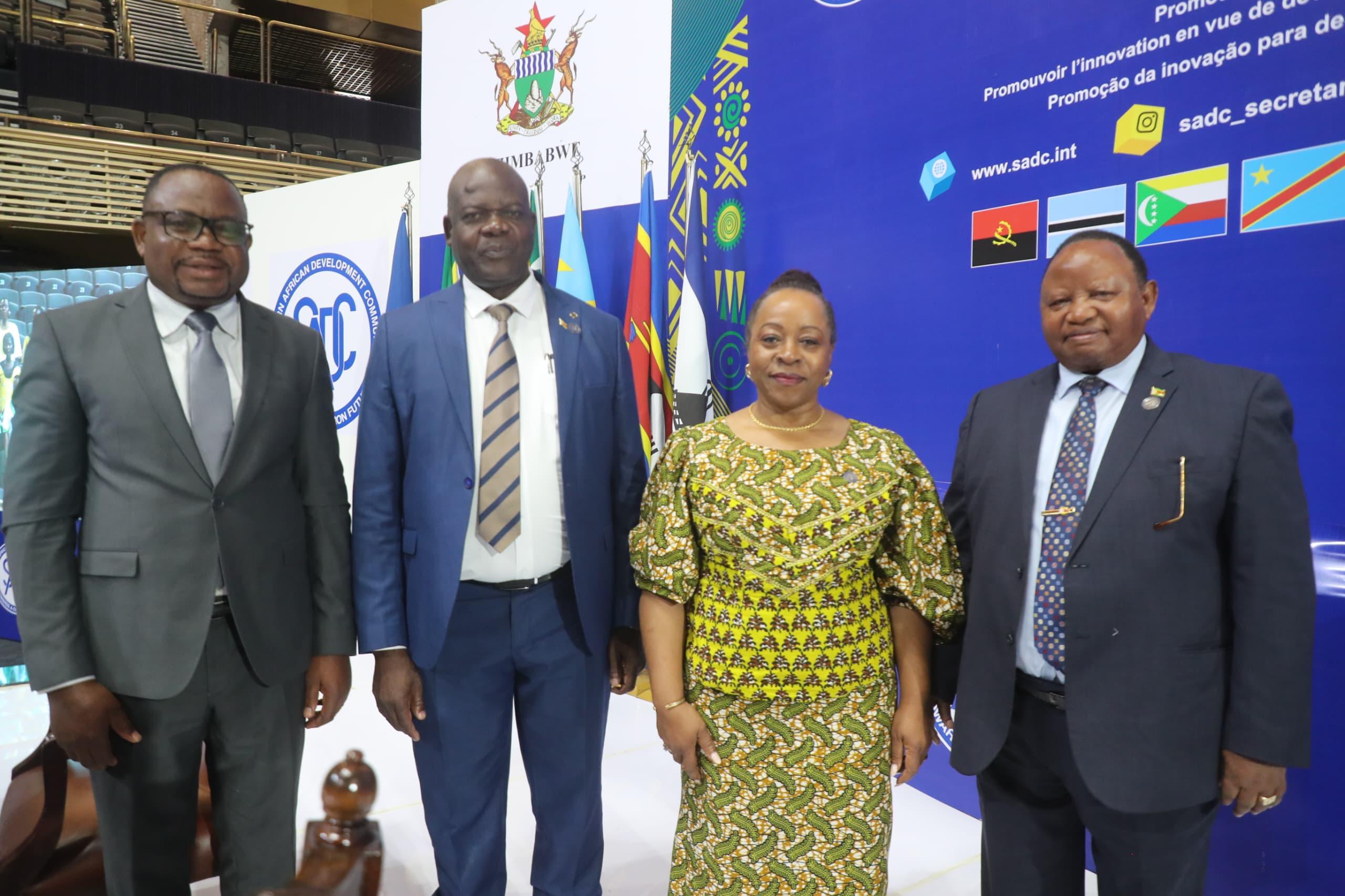
Story by John Nhandara
HARARE – SOUTHERN African Development Community (SADC) member states have concurred on the need to develop actionable strategies and harmonise policies for the region to develop a robust education system.
This comes as SADC education ministers and senior delegates convened in Harare for a High-Level Ministerial Roundtable Dialogue, placing a spotlight on the significance of foundational literacy and numeracy as a cornerstone of regional educational development.
Speaking during the proceedings, SADC Deputy Executive Secretary for Regional Integration, Ms Angele Makombo Ntumba, stressed that basic literacy and numeracy are indispensable building blocks for academic progression and socio-economic advancement.
“For children to succeed, they must first acquire the fundamentals of reading, writing, and basic mathematics. These skills are preconditions for accessing secondary, vocational, technical, and higher education. Foundational competencies contribute significantly to human capital development and bring wide-ranging benefits to health, employment, poverty reduction, and social participation.”
The roundtable also reaffirmed the importance of aligning national education frameworks with the SADC Regional Indicative Strategic Development Plan (RISDP) and the United Nations Sustainable Development Goal (SDG) 4, which focuses on inclusive and equitable quality education.
Zimbabwe’s Minister of Primary and Secondary Education, Honourable Torerai Moyo, commended the progress made by member states but stressed the need for sustained efforts, particularly in early grade learning.
“The SADC region has made commendable strides in education, but our work is far from complete. As ministers and policymakers, we must promote strategies that prioritise early-grade learning, invest in teacher training, and harness innovation to reach marginalised communities. This roundtable is a vital platform to share best practices and foster partnerships,” he said.
The Minister of Skills Audit and Development, Professor Paul Mavhima, highlighted the role of data-driven decision-making and equitable deployment of educators in closing learning gaps, especially between urban and rural communities.
“Scaling up professional development and addressing rural-urban disparities in teacher deployment is critical. We must also embrace data-driven approaches and strengthen monitoring frameworks to track learning outcomes, particularly for marginalised groups. Strengthening public-private partnerships is also key to bridging infrastructure and technology gaps,” Professor Mavhima said.
The ministers further agreed on the necessity of aligning national education strategies with the SADC Protocol on Education and Training to ensure regional coherence, shared accountability, and mutual reinforcement of efforts.

