



Story by Abigirl Tembo, Health Editor
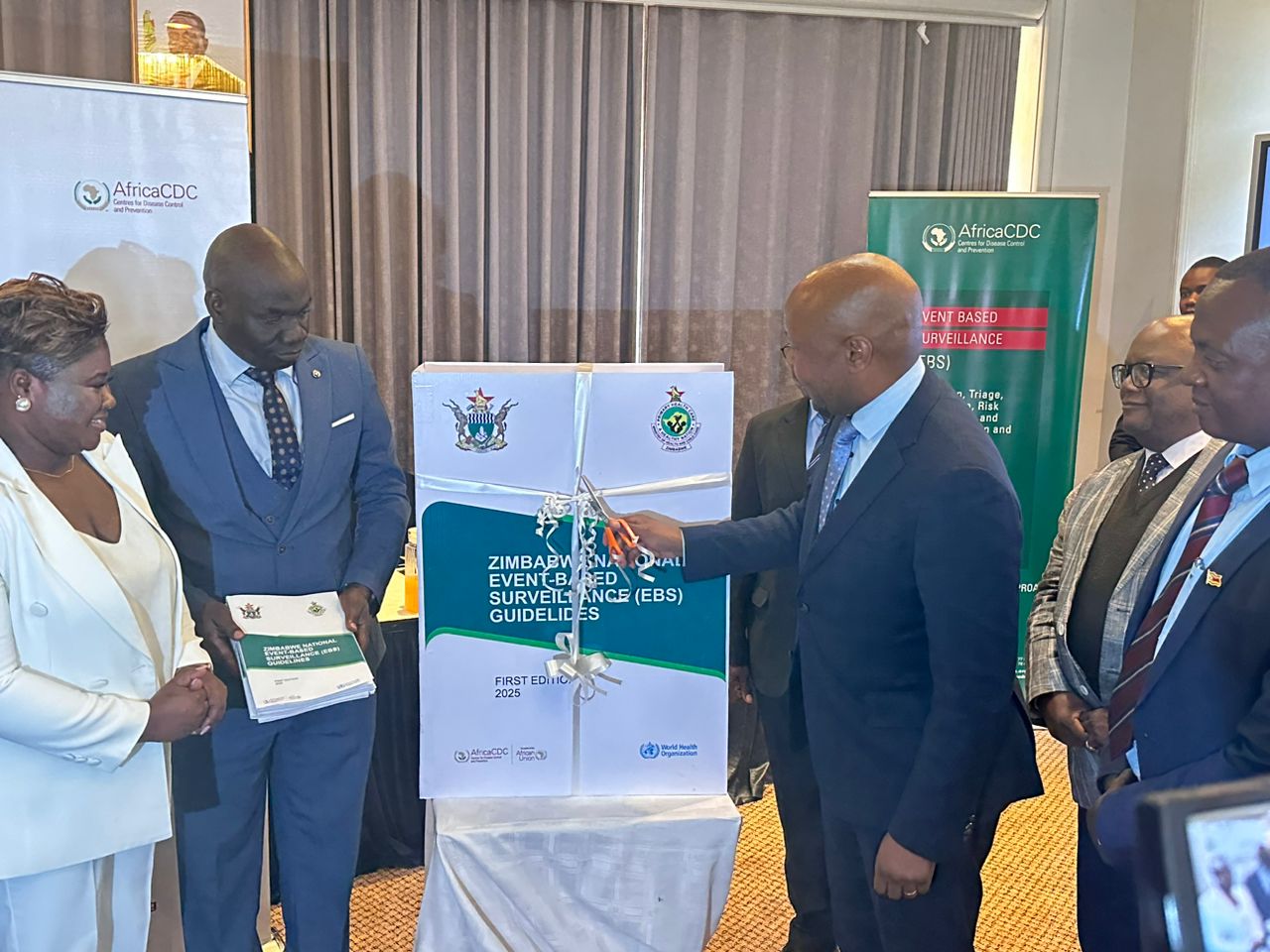
ZIMBABWE has taken a significant step towards improving its ability to detect and respond to public health threats, with the official launch of the National Event-Based Surveillance (EBS) Guidelines in Harare this Thursday.
The guidelines are expected to play a crucial role in building a real-time and people-centred early warning system for disease outbreaks.
Speaking at the launch, the Permanent Secretary in the Ministry of Health and Child Care, Dr Aspect Maunganidze described the guidelines as more than just a policy document but rather a bold national commitment to protecting the health and safety of all Zimbabweans.
The launch was attended by regional and global health partners, who reaffirmed their commitment to Zimbabwe’s public health journey.
“At Africa CDC, we firmly believe that early detection serves lives. We know that health threats know no borders, whether they are infectious or environmental, so that is why event-based surveillance is a core pillar of the Africa CDC’s vision for a safer, healthier, and a more resilient Africa,” the Regional leader for Africa Centre for Disease Control and Prevention, Ms Batsirai Mbodza said.
“We are proud to have walked this journey with you, from technical support during the guideline development process and capacity building, as well as validation and now officially launching. Guidelines alone, ladies and gentlemen, are not enough to stop outbreaks from happening. The real impact lies in the implementation.
“These tools must reach as far as the health workers in the clinics and the surveillance officers in the field. Allow me on behalf of Africa CDC to reiterate our commitment to support member states from the African Union in safeguarding health security embarking on this journey to ensure that these guidelines are not just launched but fully operationalised.”
UNICEF representative, Mr Daouda Diop, highlighted how the activity will aid in reinforcing Zimbabwe’s commitment to international health guidelines.
“This activity will demonstrate Zimbabwe’s commitment to the core capacity required under the international health regulation and to build a resilient, responsive, equitable health system. UNICEF is proud to stand with the Ministry and other partners in this transformative project,” he said.
“For us, surveillance is not just a technical intervention, it is a tool to protect every child, every woman and every community that we serve from the devastating impact of disease outbreaks as we saw during cholera, COVID-19, polio, mumps and malaria.
“Early detection and rapid response can mean the difference between containment and crisis. So this system brings us closer to the community that we serve, empowering frontline health workers, village health workers, and even local leaders to be the first eyes and ears in our collective efforts to take part in our activities,” he said.
World Health Organisation (W.H.O) representative, Dr Lincolin Charimari reaffirmed his organisation’s commitment to strengthening the resilience of the health system.
“W.H.O stands ready to work with the Ministry of Health and Child Care and partners to strengthen the resilience of the health system to deal with public health emergencies the work that we have done together with the Ministry and partners at national and sub-national level to strengthen public health surveillance through cascading IDSR is testament to our commitment to strengthen our system resilience.”
The Event-Based Surveillance Guidelines are part of Zimbabwe’s broader efforts to meet global health security targets and achieve early detection and response capabilities for both known and emerging diseases.
The event brought together experts, development partners, and local authorities, united in their vision of building a stronger, safer, and more responsive public health system.

