



As the 4th China-Africa Economic and Trade Expo gears up to open in Changsha, Hunan Province, from June 12 to 15, Hunan is taking center stage in China-Africa cooperation. Once seen as a landlocked inland province, Hunan is now a trailblazer in building new models of sustainable and diversified engagement with Africa.
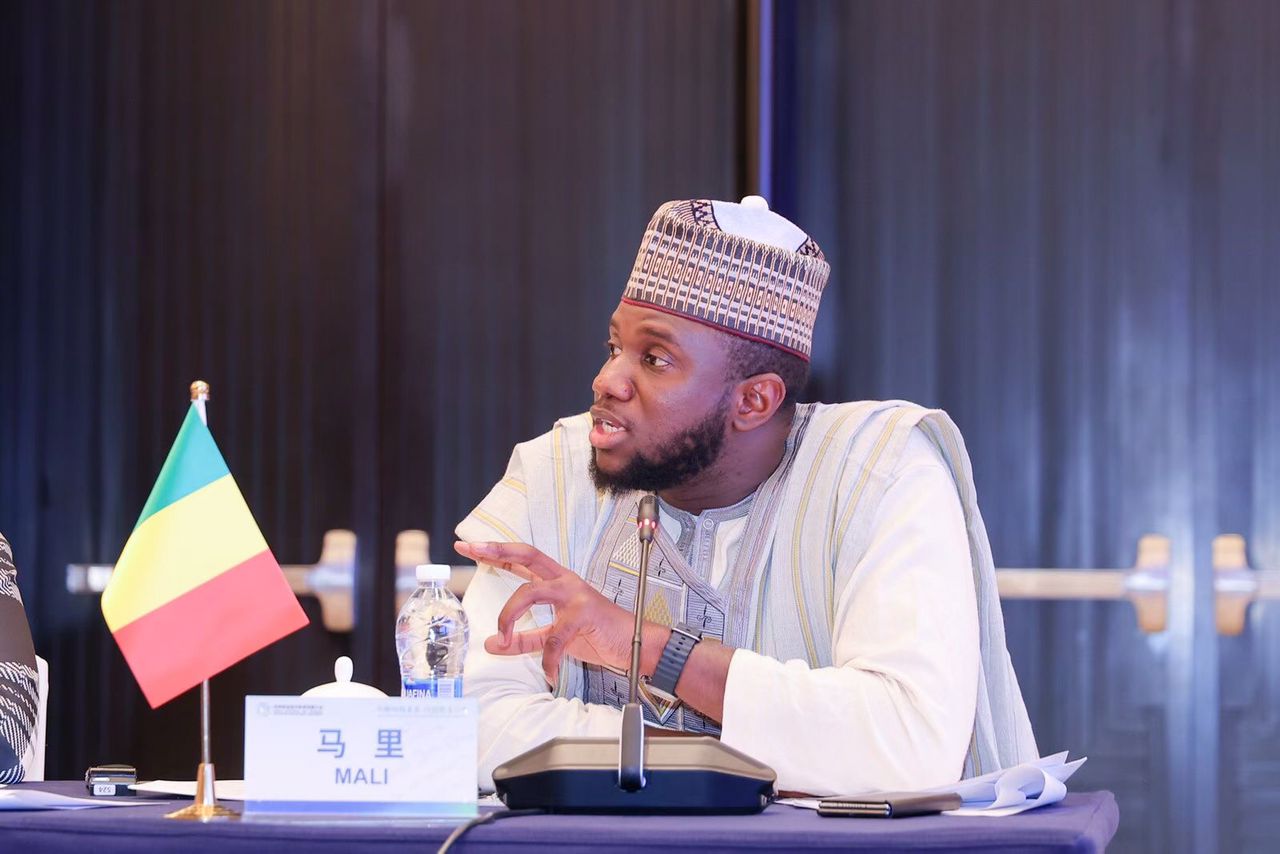
To explore what makes Hunan uniquely attractive to African partners, China Africa Talk spoke with Zou Hongyan, Director of the Legal Center of the China-Africa Economic and Trade Cooperation Promotion Research Society, and Khalifa Sy Diop, member of the Changsha People’s Association for Friendship with Foreign Countries and Director of the Mali (Hunan-Changsha) Business Center.
China Africa Talk: What makes Hunan stand out when it comes to China-Africa cooperation? Could you outline some of the steps that Hunan has taken to expand practical cooperation with Africa?
Zou Hongyan: As is well known, Chairman Mao was born in Hunan. It is also the birthplace of Yuan Longping, the father of hybrid rice and a famous scientist. Hunan has also created several flagship cooperation initiatives, such as the China-Africa Innovation Demonstration Park, as well as industrial transfer zones. Hunan also facilitates outbound investment sectors specifically for foreign and local partnerships with African countries.
Thus, Hunan has positioned African cooperation as a core part of its opening-up strategy. Hosting the China-Africa Economic and Trade Expo (CAETE) permanently in Changsha is a milestone and symbolic achievement. Permanently hosting the China-Africa Economic and Trade Expo and designating Hunan a pioneer zone for in-depth China-Africa economic and trade cooperation reflect long-term, policy-backed strategies rather than one-off efforts.
Additionally, Hunan has built overseas warehouses, trade hubs, and logistics centers in countries such as Kenya and Nigeria. These hubs facilitate two-way trade. Hunan helps African products reach China and Chinese products reach African markets faster and more reliably.
China Africa Talk: When you think about flagship cooperation projects between Hunan and your country Mali, or Africa broadly, what stands out to you?
Dr.Sy Diop: Guangzhou and Yiwu, as well as other places like Wenzhou and Fujian, have been part of China-Africa cooperation for a long time. However, this cooperation was based on traditional trade. Since the first China-Africa Economic and Trade Expo in 2019, Hunan has offered us more opportunities.
We have seen China-Africa cooperation primarily in the area of trade. Hunan is introducing a new model. It answers the question of how we can transfer technology to Africa. How can we transfer industries to Africa? How can we ensure that companies thrive in the long term? This is what Hunan is offering. Kilimall, for example, is from Hunan, and you can see what Kilimall is doing in East Africa. This is the direction in which we are moving now.
Many earthmoving machinery companies operating in Africa, such as SANY and Zoomlion, are from Hunan. Yuan Longping, the father of hybrid rice, and Chairman Mao are both from Hunan. These are historical figures from Hunan. China has a couple of free trade zones, each with a specific responsibility. The zone lined up to develop China-Africa cooperation is Hunan. We’re talking about the CAETE and the Pioneer Zone, both of which are doing very well. Hunan is a place of opportunity for young Africans who want to grow their businesses. It is the gateway to China for Africa.
China has created programs to industrialize Mali, improve its health sector, modernize agriculture and mining, and train talent. And Hunan is leading many of the programs. The agricultural production training programs teach how to acquire the best seeds and farming equipment. This is what we are doing in Mali: reaching out to rural areas, small cities, and towns to train our people in production. In China, for example, none of the clothes, handbags, phones, or cameras that we import is made in big cities. We are also trying to educate our people to emulate this kind of production, and Hunan is a good example.
China Africa Talk: China has maintained its position as Africa’s largest trading partner for 16 consecutive years. While Hunan is not among China’s largest provincial economies, how has it contributed to mutually beneficial economic outcomes in China-Africa trade?
Zou Hongyan: Looking at the average annual growth rate explains why. From 2021 to 2024, Hunan’s trade with Africa maintained a rapid growth momentum, reaching an average annual growth rate of 14.3 percent—5.3 percentage points higher than the national average.
During the same period, Hunan’s trade volume will remain the largest in the central and western regions. Africa is Hunan Province’s third-largest trading partner. A key focus has been on two-way circulation, bringing African products into Hunan and expanding Hunan’s goods into African markets. A notable achievement of Hunan’s leadership is enabling African agri-food products to enter China under the guidance of the General Administration of Customs. Changsha Customs participated in 27 access studies for African agricultural products. One outcome was recognised at the head-of-state level, and eight were signed during the FOCAC Beijing Summit. This is not just trade, nor is it only a market. It’s systematic integration, which I think is very important for cooperation between China and Africa. Furthermore, Hunan established China’s only technical trade barrier review base for Africa. It has already helped five East African countries revise technical standards, facilitating 3.3 billion RMB worth of Chinese exports. This represents not only trade but also the export of rules and standards—a new stage in China-Africa cooperation. I believe this greatly contributes to mutually beneficial economic outcomes in China-Africa trade.
China Africa Talk: Agriculture has been a key area of cooperation. Hunan is the birthplace of hybrid rice. How has Hunan leveraged its expertise to promote agricultural development in Africa?
Zou Hongyan: Hybrid rice technology, agricultural machinery, and agritech training from Hunan have been implemented in several African countries, yielding tangible results. In 2004, the Hunan Provincial Government released the Implementation Plan for the 10 China-Africa Cooperation Programs, which provides a concrete roadmap for deepening agricultural collaboration. A major focus is expanding agricultural technology exchanges to help African nations address food security challenges. A key innovation is the “8 Plus Industrial Chain Collaboration” model. Beyond providing technical assistance, Hunan supports value chain development, including processing, logistics, and distribution, to ensure long-term agricultural sustainability. Between 2025 and 2027, Hunan plans to dispatch around 50 agricultural experts to Africa. These experts will promote hybrid rice cultivation and introduce mechanised farming practices in more than five African countries.
China Africa Talk: The theme for this year’s China-Africa Economic and Trade Expo is “China and Africa Take Action to Pursue Modernisation.” What tone does this theme set for participating governments and businesses this year?
Dr. Sy Diop: Modernisation is a very broad concept, and the decision to modernise did not come from just one word; it represents a lot. If you want to modernise any sector of Africa today, it means total transformation. For example, if you want to modernise agriculture, you first need to regroup the land, so that one small piece produces a large harvest. To modernise agriculture in Africa, for example, farmers need quality seeds, fertilisers, and machinery. They also need drones that can hover over large areas of land, as well as well-trained farmers. Young farmers need to understand how farming technology works. You need computer science to check the climate, etc. That’s what we mean by modernisation. In cattle breeding, modernization involves the type of cattle breed, the quality of milk, and how to transform it into different products. This is all called modernisation.
Africa needs to modernise agriculture and farming by applying new technology to ensure that our products are competitive in the global market.
China Africa Talk: What new highlights and expectations can we have for this year’s expo in Changsha?
Zou Hongyan: The scale of participation is unprecedented. This year’s expo has attracted 44 African countries, six international organisations and over 2,800 enterprises. And for the first time, there will be a Best of Africa Showcase, a China-Africa Fashion Industry Pavilion and a China-Africa Partnership Brand Section. The scope of activities has broadened with events like Africa Film Week. The expo will feature the release of 2025 China-Africa Economic and Trade Development Report and the launch of the China-Africa Arbitration Center. All of these are the new highlights we should pay attention to.

