



Story by Tamuka Charakupa
MASHONALAND WEST – MASHONALAND West Province has surpassed its maize targets of 360 000 hectares, with the province now on the peak of harvesting as the winter wheat season gets underway.
Despite being a short summer cropping season, the province recorded increased maize targets in both production and yields.
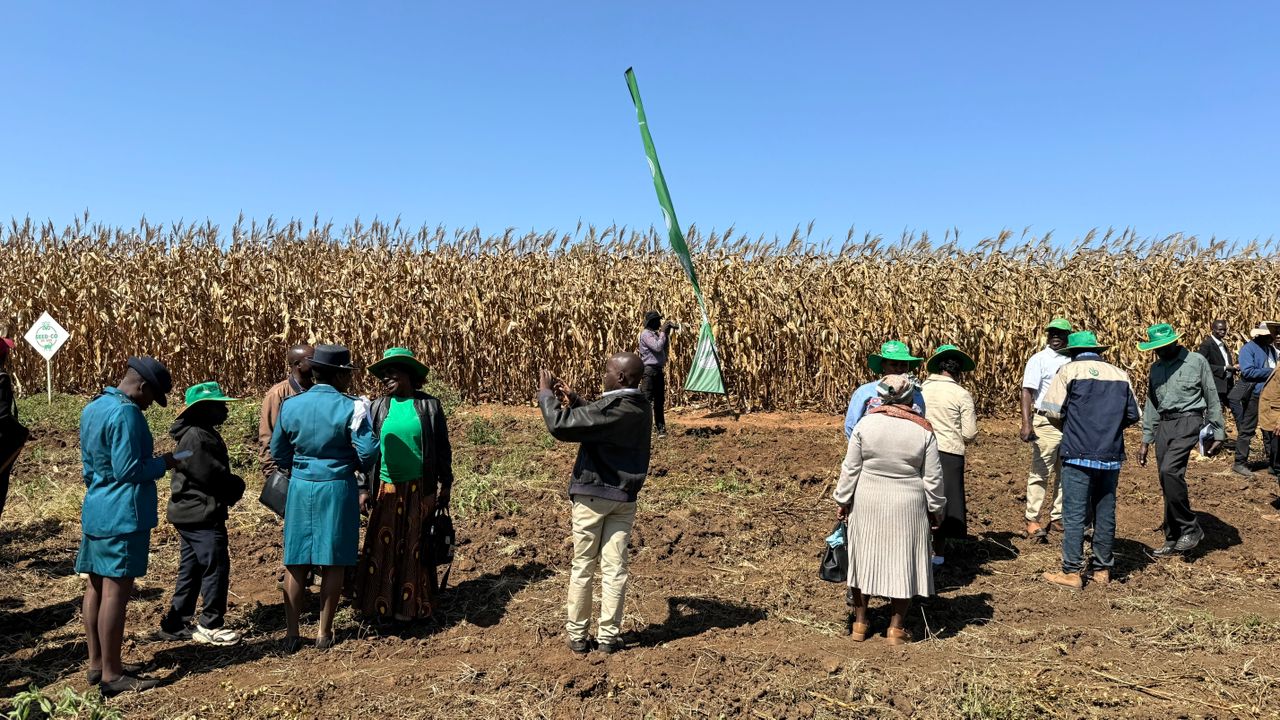
Giving an update on the side-lines of a field day held at Mupfumira Farm in Magunje this Friday, Mashonaland West Provincial Director in the Ministry of Lands, Agriculture, Water, Fisheries and Rural Development, Mrs Madlinah Magwenzi said the province had managed to harvest 384 000 hectares from the original target of 360 000 hectares.
“We had 360 000 hectares as a target but managed to surpass it to 384 000. We are also excited to highlight that in terms of yield, last season we had 0.9 tonnes per hectare and this season we have 1.5 tonnes per hectare. Last season we had about 250 metric tonnes in terms of production and this season we are at 356 metric tonnes.”
Host farmer, Mr Armstrong Mupfumira who is earmarking 11 tonnes per hectare from his 20-hectare piece of land spoke on the importance of adhering to good agricultural practices.
“We had a rough season since we received the rains a bit late. However, we ensured that we chose the right seed variety and worked closely with our agricultural extension offers who always guided us accordingly. We had 20 hectares and we are expecting an average of 11 tonnes per hectare. It is also imperative that we exercise crop rotation, the right selection of chemicals and good agricultural practices.”
Meanwhile, a call was extended to farmers to utilise certified hybrid seed varieties which are more resilient to drought and disease in the wake of climate change-induced weather patterns.
The uptake of climate-proof farming methods such as conservation agriculture (Pfumvudza/Intwasa), use of drought-tolerant hybrid seeds, and expanded irrigation schemes are some of the initiatives introduced to ensure the country is food secure at the household level.

