



Story by Wellington Makonese
WATER purification has received a cutting-edge enhancement, thanks to a ground-breaking innovation from a Midlands State University student. The project involves transformation of scrap metal into essential chemical compounds vital for water treatment.
Water treatment remains a challenge in many areas primarily due to high operational costs of treatment equipment and chemicals in the absence of localised remedies.
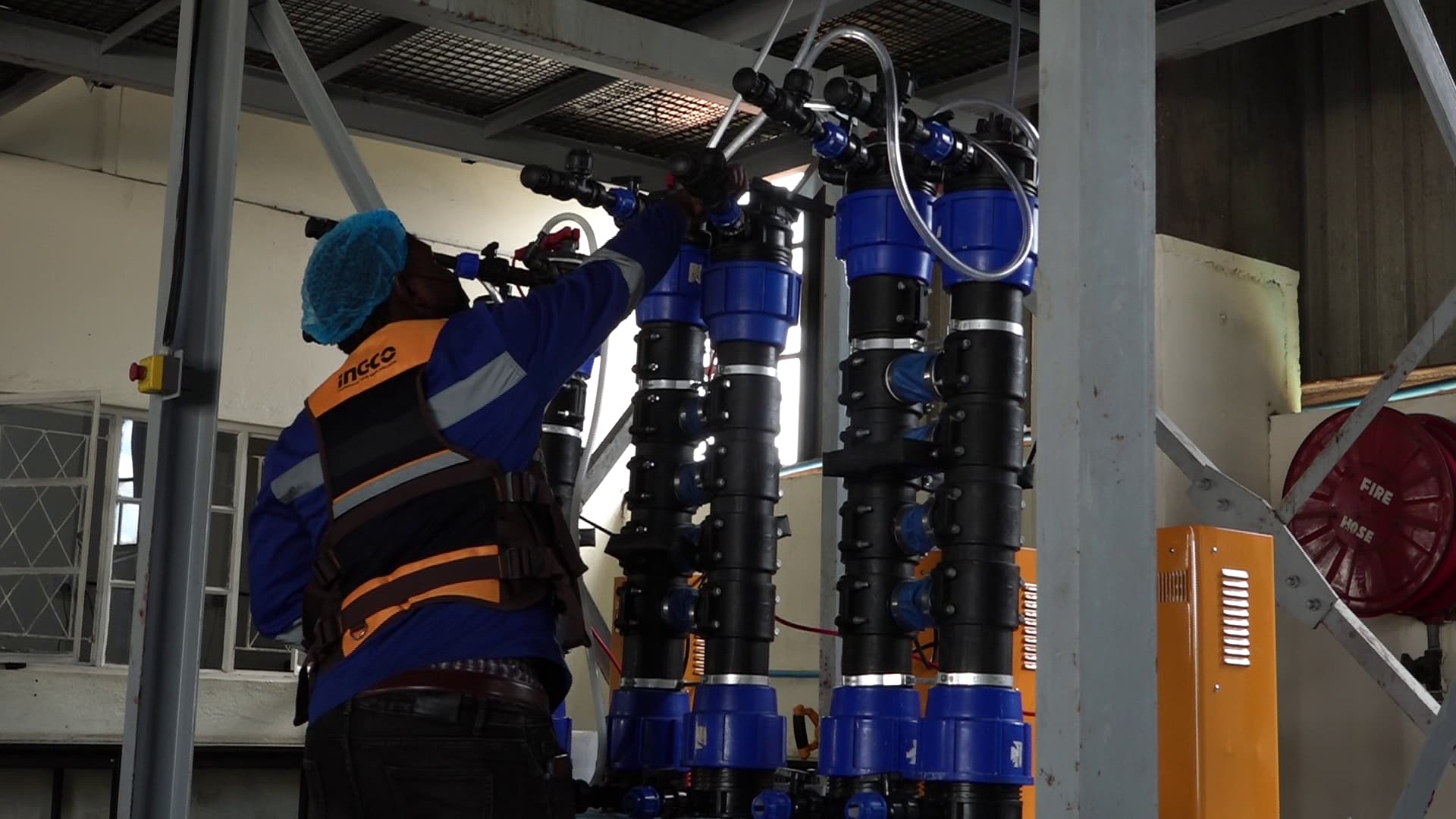
However, an industrial chemistry student at MSU has developed a pioneering reactor system capable of synthesising ferric and ferrous sulphite from scrap metal through a reactor system, potentially revolutionising the industry.
But how does this innovative reactor system transform waste metal into a valuable resource?
“This project I have designed is Turning scrap metal ion into a vital resource for water treatment. The reactor system makes it possible to turn this scrap into valuable resources. It produces chemicals at a cheap cost to make these ion tablets. This allows the country to reduce the import bill,” Student Industrial Chemistry, Landel Lunga said.
The project, designed with health and environmental considerations in mind, has already demonstrated laboratory efficacy and is now transitioning toward commercial viability.
“The project has been proved in the lab, we now have the project functional and pure. It is tested and good for those women who lack ion in their bodies. We are only waiting for the partnership part. We have already collaborated with Zimphos commercialisation comes next,” Landel Lunga said.
MSU’s Research Department is actively supporting the initiative, expanding an electronic purification unit in tandem with the project, viewing it as a precursor to broader water treatment innovations.
“What we have here is an electronic unit designed to produce chlorine-related products for cleaning up or purifying water. It uses sodium chloride. Our aim is to have a start-up company. Iron sulphite production is the first step to do that, and when we produce it, then it comes through here for purification,” Executive Director Research MSU, Mr Gift Mehlana said.
With innovation at its core, Zimbabwe’s Heritage-Based Education 5.0 framework continues to demonstrate the transformative potential of scientific ingenuity in tackling water security challenges—an essential step toward sustainable industrial advancement.

