



Story by Abigirl Tembo, Health Editor
ZIMBABWE has achieved a significant milestone in its fight against HIV and AIDS, surpassing the UNAIDS 95-95-95 targets among the adult population but challenges remain for children.
The country has made significant strides in its HIV/AIDS response, with an impressive 98 % of adults knowing their status, 97 % on antiretroviral therapy (ART), and 96 % achieving viral suppression.
However, challenges remain in ensuring children receive equal care, with only 61 % knowing their status, with 100 % of those knowing their status on ART and 90 % achieving viral suppression, hence falling short of the 95-95-95 UNAIDS target.
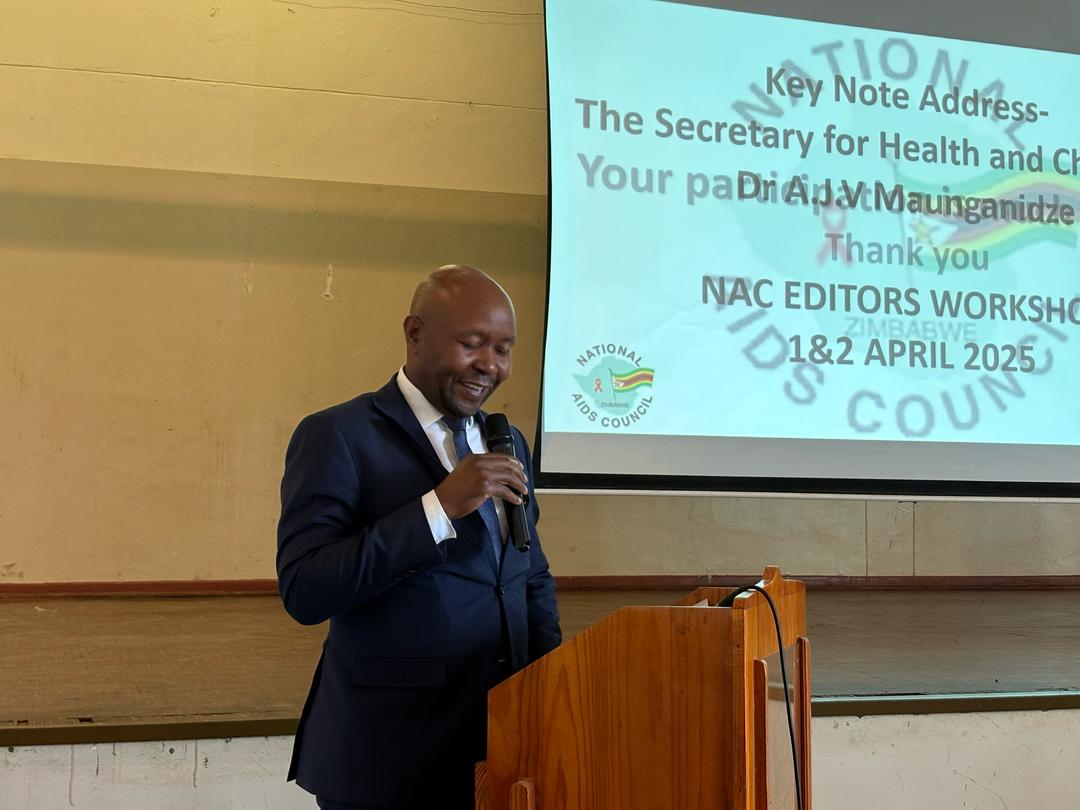
Officiating at the National AIDS Council Editors workshop in Chinhoyi, the Permanent Secretary in the Ministry of Health and Child Care, Dr Aspect Maunganidze emphasised the need for robust HIV social protection mechanisms and called on the media to play a crucial role in shaping the HIV narrative.
“Although we have made significant progress in response to HIV, which has resulted in us achieving the 95-95-95 global targets, challenges still remain, and we still need to work together to address those challenges,” he said.
“In particular, new infections are a real menace which can make us regress in the achievements we have made. These new infections have been identified to be particularly in the most vulnerable groups including children who, by not of their fault, can be born with HIV, parents, especially the mother, do not adhere to well-outlined guidelines of what to do in order to prevent mother-to-child transmission.
“We need to have robust HIV social protection mechanisms, and we are aware that, of late, there has been a rise in non-communicable diseases. In the same population, which means, as we make achievements on antiretroviral supply, and make sure everyone is on antiretroviral drugs, and that they are virally suppressed, it also means they will age as well as others without HIV and as they age, we know that hypertension, which is high blood pressure and diabetes will start to set in.
“They will be affected by the same disease patterns. In this regard, we now move towards horizontal or integrated interventions, which will make sure that it is not all about just HIV, but other conditions that affect the same patient.
National AIDS Council Operations Director, Mr Raymond Yekeye also highlighted the media’s role in telling the HIV story, emphasizing their commitment to accurate and responsible reporting as indispensable.
“As gatekeepers of information, your commitment to accurate, responsible, and impactful information is indispensable. The workshop has been designed to provide you with the latest information on the HIV and AIDS landscape in Zimbabwe. For those of us and a lot of you colleagues, I think we have seen first-hand what has been happening in the HIV response, what changes have happened in the response, how many people we have lost, how many have survived with HIV.
“The onus is now on you to educate the nation on what is going on and also on what needs to be done to ensure that we protect and maintain the gains made in the fight against HIV,” Mr Yekeye said.
As Zimbabwe continues to build on its successes and address the remaining challenges in its HIV and AIDS response, the media’s role in promoting awareness and education is crucial in ensuring that all individuals, including children, receive the care and support they need to live healthy and fulfilling lives.

