



Story by Gay Matambo
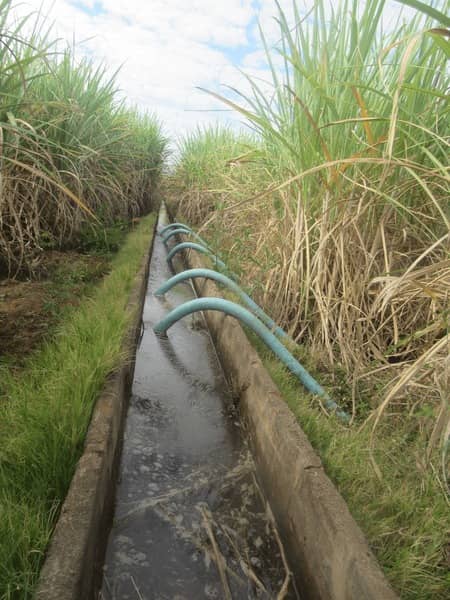
The sugar industry has been implored to embrace water conservation techniques in a move meant to ease pressure on water utilities and infrastructure used to irrigate sugarcane plantations in the Lowveld.
The heavy rains being experienced in most parts of the country have brightened prospects of a good harvest by sugar cane outgrowers in the Lowveld whose operations were under threat from an acute shortage of irrigation water due to the El Niño-induced drought that hit the region during the last summer cropping season.
The state of cane, particularly at Mkwasine Estates and parts of Hippo Valley, had been seriously affected by the prolonged dry spell and insufficient irrigation water from supply dams.
It is against this background that the sugar industry has been challenged to adopt efficient irrigation methods such as the drip irrigation technique to conserve water for future purposes.
“Why we are introducing water efficient irrigation methods such as drip irrigation in the Lowveld is because of water scarcity challenges. We have a conventional figure of water that is needed to grow cane which is 15 mega litres per hectare. Due to water scarcity issues especially at Manjerenje Dam, just last year it was around 15% full which means water had depleted so in trying to solve the water issues we have introduced this sub-surface drainage system and we have found that it is a very good game changer, especially in saving water and also it boosts yields,” said Zimbabwe Sugar Association Experiment Station (ZSAES) engineer, Mr Goden Mabaya.
“In general, in the sugar industry, our cost of production is very high, but if we look at the drivers of this cost in terms of labour, machinery, and inputs. In a way to address or reduce the cost of production as well as conserving water technologies like drip irrigation come into play. It is an automated system and requires very few people to manage it. ZINWA charges a lot of money to the farmers in terms of the amount of water they use per hectare. We here figures of 15 mega litres per hectare and that is charged to the farmer so by reducing the cost on the amount of water we are also reducing the cost of production,” said ZSAES senior industrial agricultural research chemist, Dr Washington Mutatu.
Sugarcane outgrowers who spoke to this news crew concurred that water conservation remains a collective responsibility.
“We are indeed thankful for the good rains as farmers but we should also conserve this water in the face of climate change. Last year the El Niño-induced drought hit us hard so we have to do all that we can to conserve and harvest water,” a sugarcane outgrower said.
“The sugar industry has been using the flood irrigation method. It’s high time we adopt other water efficient irrigation methods such as the drip irrigation system. It saves water and it is also a very good cost-cutting measure when it comes to production,” said another outgrower.
“It is everyone’s mandate especially in the industry to conserve water. Sugarcane fields are expanding hence there is also a need to expand the water conveyance system to ensure that every farm gets water. This will also be possible if we conserve the water in our dams,” added another.
Tugwi-Mukosi Dam provides 80% of the irrigation water required by the country’s major sugar producers, Triangle and Hippo Valley Estates.
Apart from the country’s largest inland dam, other water bodies that supply the remaining 20% include Lake Mutirikwi, Manjerenje, Siya and Manyuchi dams.

