



Story by Fungai Jachi
Government has launched the Intangible Cultural Heritage (ICH) project to document Zimbabwean cultural values and practices to preserve local traditions.
The project, a collaboration between the Government of Zimbabwe and the United Nations Educational, Scientific and Cultural Organisation (UNESCO) will run for two years from 2025 to 2026 with government confident the project will go a long way in preserving the country’s intangible cultural heritage.
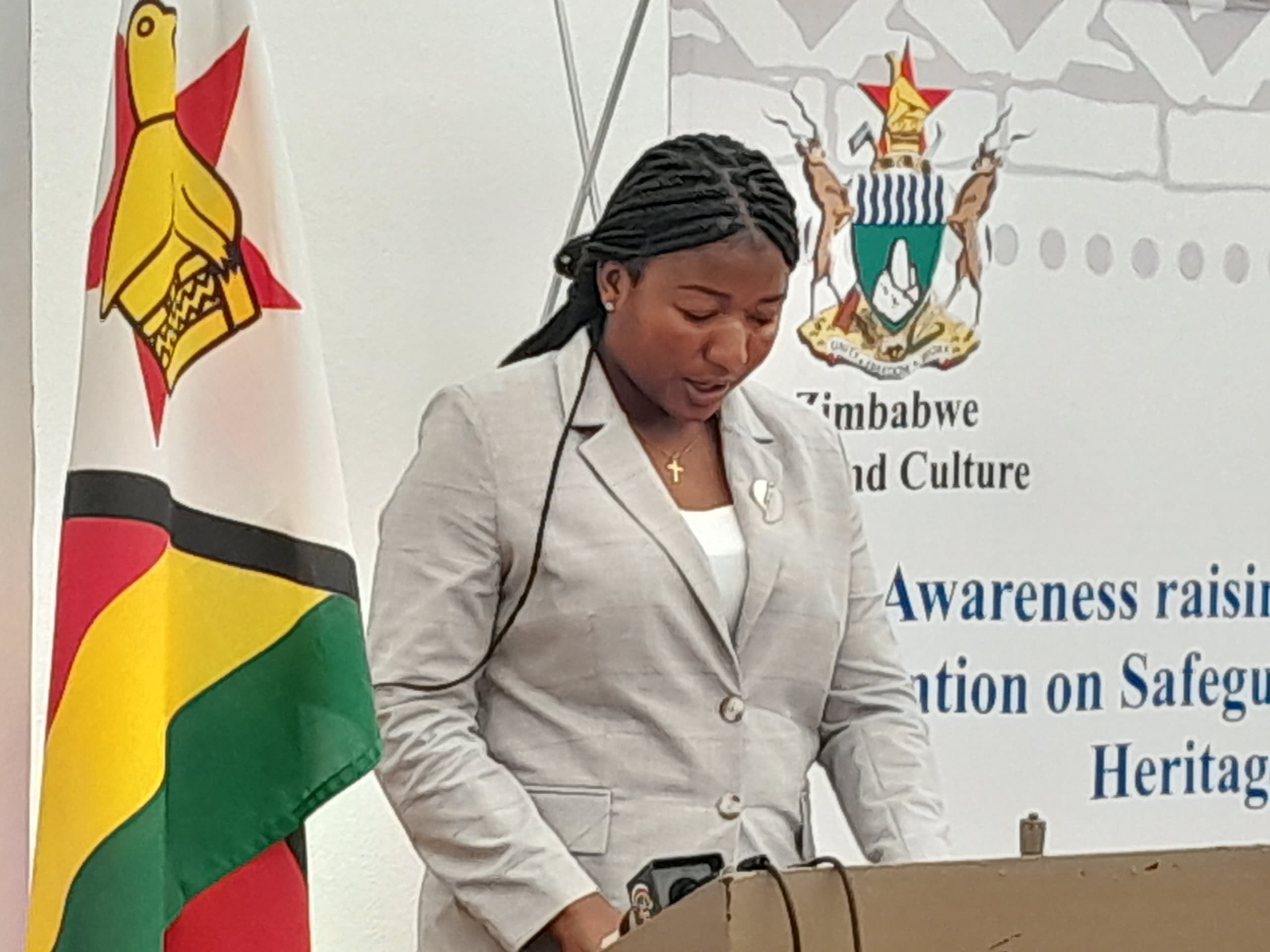
Deputy Minister of Sport, Recreation, Arts and Culture Honourable Emily Jesaya says more needs to be done to raise awareness on the importance of safeguarding intangible cultural heritage.
“Our intangible cultural heritage is a vital part of our identity, and it plays a significant role in promoting cultural diversity, social cohesion and economic development. However, this heritage is facing numerous threats including globalisation, urbanisation and the erosion of traditional practices. Hence there is need to work together as a collective to ensure we do all we can to preserve our traditions for us to have an identity,” she said.
Deputy Minister of Primary and Secondary Education Honourable Angeline Gata spoke on government initiatives to promote cultural preservation through education.
“As a ministry we have introduced the heritage based education curriculum this is one way to ensure that from a tender age children are taught of the importance of our traditions,” she said.
Traditional leaders also welcomed the launch of the programme.
“This is a welcome development which will see to the preservation of our values as a people. This is really a significant milestone for the country, what we have to do is to work together in the various communities to ensure we preserve our rich culture and values,” noted Chief Seke.
In 2003 UNESCO adopted the Convention for the Safeguarding of the Intangible Cultural Heritage.
The convention recognises the importance of intangible cultural heritage, which includes traditions, customs, languages, music, dance and other forms of cultural expression.
These are passed on from generation to generation.
Zimbabwe with its rich cultural heritage, ratified the convention in 2010.

