



Story by Oleen Ndori
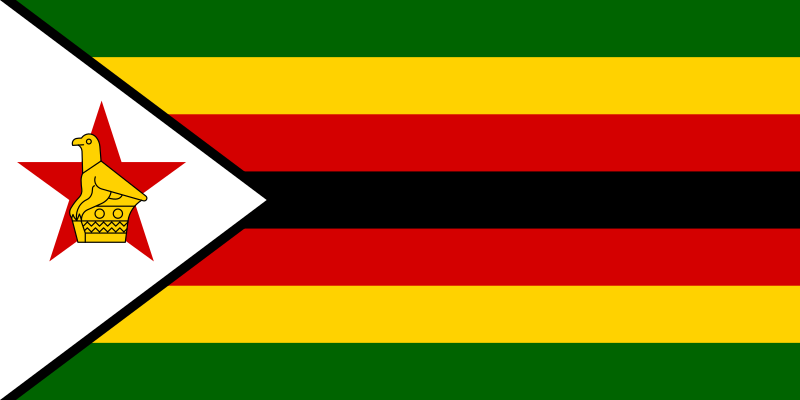
Zimbabwe’s bid to join the BRICS community continues to drive the country’s engagement and re-engagement policy that seeks to grow the economy and respond to the illegal sanctions imposed on the country by the West.
In an interview with Russian news agency, Sputnik during the 8th Broadcast and Digital Media Convention in Swakopmund, Namibia recently, the Minister of Information, Publicity and Broadcasting Services, Dr Jenfan Muswere said the BRICS platform is ideal for Zimbabwe’s growth trajectory.
“Part of the re-engagement and engagement agenda also includes joining and working closely with other progressive organisations such as BRICS and many other institutions for us to be able to be part of an all-inclusive international relations ecosystem across the board and the joining of BRICS has so many numerous advantages.
“We share so many historical ties with most of the countries in BRICS and it can also be a platform for us as a country in terms of trade, industrial growth and many other advantages in the international relations forum. Also of importance is to tackle and correct the topic of the global westernised or weaponised media strategy, that mostly spreads misinformation and disinformation in order to further narrow views about Africa, the region and also about Zimbabwe as a country,” he said.
He also spoke of the importance of the Southern Africa Broadcasting Association (SABA) and the role it plays in the growth of the broadcasting sector within the SADC region.
“The most important aspects related to our coming to attend SABA is also part of the re-engagement and engagement strategy in the context of ensuring that we achieve total liberation of the media industry in the region and also in Africa and this is also in line with the Africa that we want in terms of Agenda 2063.
“So in the context of broadcasting, which has reached a point of convergence between broadcasting, ICT and new technology, the SABA programme, in terms of contributions, ensures that we are in a position as a country to reposition Zimbabwe in terms of its correct social, political and economic status, but also to drive the Africa Renaissance Project, which seeks to ensure that we achieve media sovereignty in the context that Africa as a continent in the region should own, produce and develop African stories from an African perspective.
“This is also part of overthrowing the last of imperialism in that information sovereignty, and media sovereignty are key. In that Africa’s media strategy should reflect the facts from Africa, should reflect the ethics, the ethos, the heritage, the values of our continent, and our region,” he added.
Dr Muswere also highlighted policies that have been put in place by the Second Republic to grow the media and communication sector.
“Under the leadership of President Emmerson Mnangagwa, a number of programmes, policies, and legislation has been put in place in order to achieve media sovereignty in the context of Zimbabwe as a country. The first was to repeal AIPA, which in the context of other members of the Fourth Estate was regarded as draconian, but also to introduce the Freedom of Information Act, which seeks to ensure that members of the Fourth Estate and the people of Zimbabwe have access to information.
“All this is also guaranteed in terms of the constitutional provisions, which seek to ensure freedom of expression, and freedom of information, and also to support the protection of journalists in the context of media diversity, but at the same time taking into consideration that Zimbabwe as a country should always of paramount importance come first.
“The second issue is policy formulation. In terms of policy, the National Broadband Plan has been put in place, the Smart Zimbabwe Master Plan has been put in place and is being rolled out in order to guarantee technological sovereignty in the context of ensuring that we leave no one and no place behind, given the reality that information ubiquity is going on very well in the context of Zimbabwe,” he further explained.
Dr Muswere also addressed the 8th Broadcast and Digital Media Convention, where he revealed the acceleration of the DTT Zimdigital project and the licensing framework for community radio stations with 13 community radio stations having been licensed.

