



Story by Tamuka Charakupa
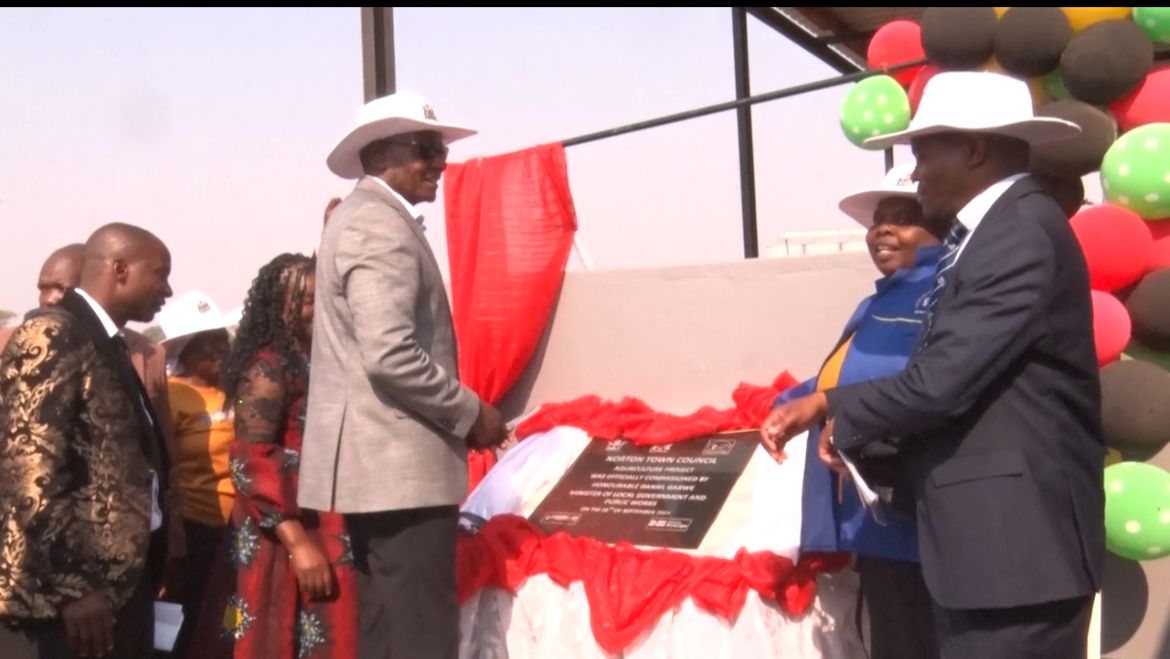
A fish farming project unveiled in Norton this Friday has been hailed as a critical pedestal to unlock income opportunities for at least 100 women in the area.
The project is part of several women empowerment programmes which continue to be rolled out across the country targetting vulnerable members of the community.
“This project was targeting vulnerable members within our community such as widows, orphans, sex workers etc and to date, we are realising meaningful profits to take care of our families,” said Mrs Sitshengisiwe Ncube, the project’s chairperson.
“We want to thank the government for allowing such partnerships that are benefitting communities because they promote self-reliance and financial said one beneficiary,” said a beneficiary of the project.
“We are noticing a reduction in terms of gender based violence cases because women have something to do to complement household income streams,” weighed in another.
Implementing partner, Gender Links says the project is part of a US$4.6 million grant, which is being rolled out across twelve local authorities countrywide.
“We have implemented this project in Norton to the tune of about US$200 000, which is part of a US$4.6 million grant.
“We are present in 12 local authorities implementing various programmes in the fields of fine arts and crafts, renewable energy, horticulture health and sanitation as well as waste management,” said Gender Links, Director for Zimbabwe and Regional Programmes, Ms Priscilla Maposa.
The government commended the project, saying it is critical in spearheading community developments.
“The programme seeks to reduce poverty and enhance livelihoods through gender-responsive and inclusive local economic development in 12 centres of Excellence for Gender in Local Government.
“This programme is a testament to our government’s commitment to creating an enabling environment for economic growth, social justice, gender and equality.
“This project aligns perfectly with the nation’s vision of attaining an upper-middle economy by 2030 and the National Development Strategy One (NDS-1), which prioritises economic empowerment, poverty reduction, and sustainable development.
“It embodies the principle of leaving no one or no place behind, ensuring that all members of the community have access to opportunities and resources,” the Minister of Local Government and Public Works, Honourable Daniel Garwe said.
Gender equality is one of the key areas of focus under the Second Republic as the government continues to craft strategies and programmes supporting women empowerment.

