



Story by Aifheli Mudau
BEITBRIDGE is witnessing a horticultural transformation as Government-backed rural development initiatives continue to strengthen food security, create employment and stimulate economic activity through climate-smart agriculture.
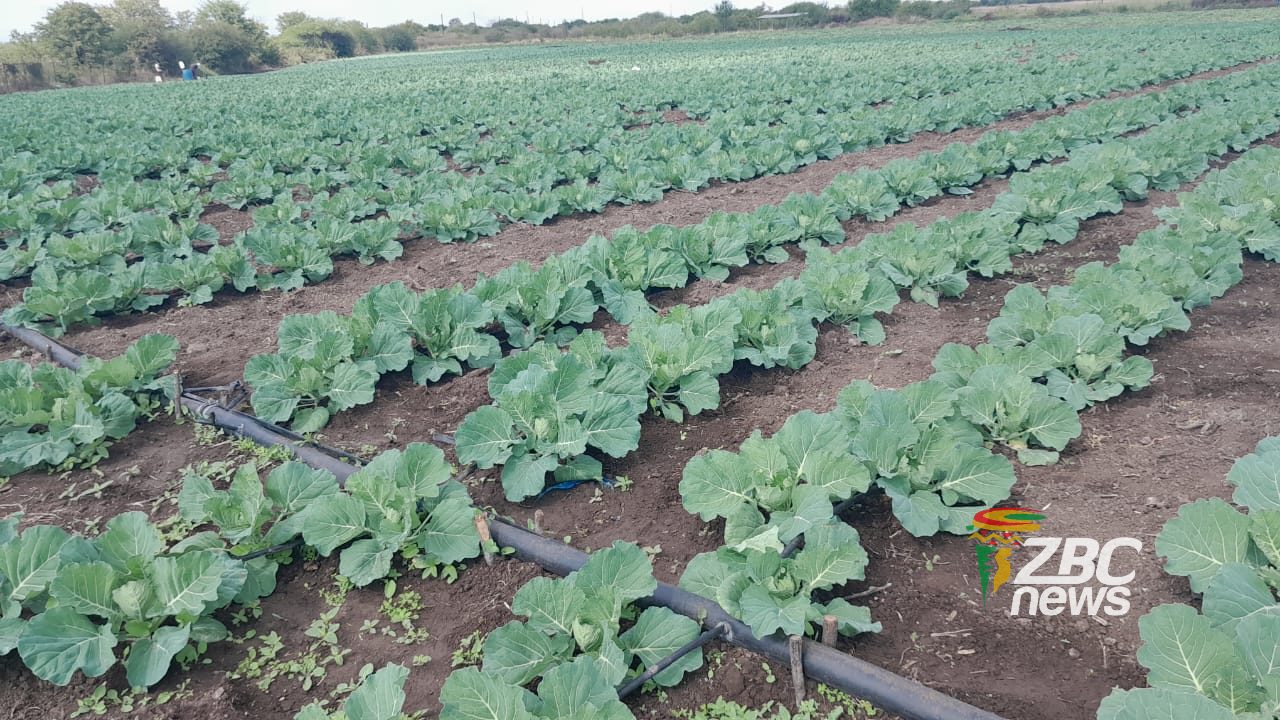
At the forefront of this progress is Royal Cooper Estate, where large-scale crop production powered by solarised boreholes is supporting livelihoods while contributing to the country’s drive towards agricultural resilience and rural industrialisation.
The estate boasts more than 100 000 cabbage heads, 40 hectares of butternut, five hectares of sugar beans and extensive tomato production, making it one of the area’s leading horticultural ventures.
The project has become a vital source of employment and income for local communities, with workers and beneficiaries highlighting its positive impact on their lives.
“I have been employed for the past 10 years, and I am earning a living through the money that I get. My children are all going to school,” an employee said.
“The irrigation is assisting with food and employment because if you are working, you are given tomatoes, butternut and cabbages for free on top of your salary,” another employee said.
“I am a single mother and the coming of the irrigation Scheme in our area has alleviated poverty in our communities,” a beneficiary said.
The irrigation Scheme, which is using solarised boreholes to run its drip system, is supporting Government’s efforts of promoting economic growth and improving the health of citizens.
“When the government introduced this method of horticulture using solarised boreholes, we ran with the idea, and we realise that the initiative by the Second Republic to use the method of farming is yielding. We have more than 100 000 cabbage heads, with butternut being our major crop. We also have tomatoes and sugar beans, and as farmers we are doing well, employing members from local communities,” Royal Cooper Estate’s operations manager, Mr Samuel Karonga said.
The Royal Cooper Estate success story comes at a time when the Second Republic is on a sustained drive to stabilise rural economies and build agricultural resilience to reduce reliance on expensive imported goods.

