



Story by Patience Nyagato
ZIMBABWE’S immunisation and oxygen delivery systems have received a major boost after the United Nations Children’s Fund handed over outreach vehicles and critical medical equipment to the Ministry of Health and Child Care.
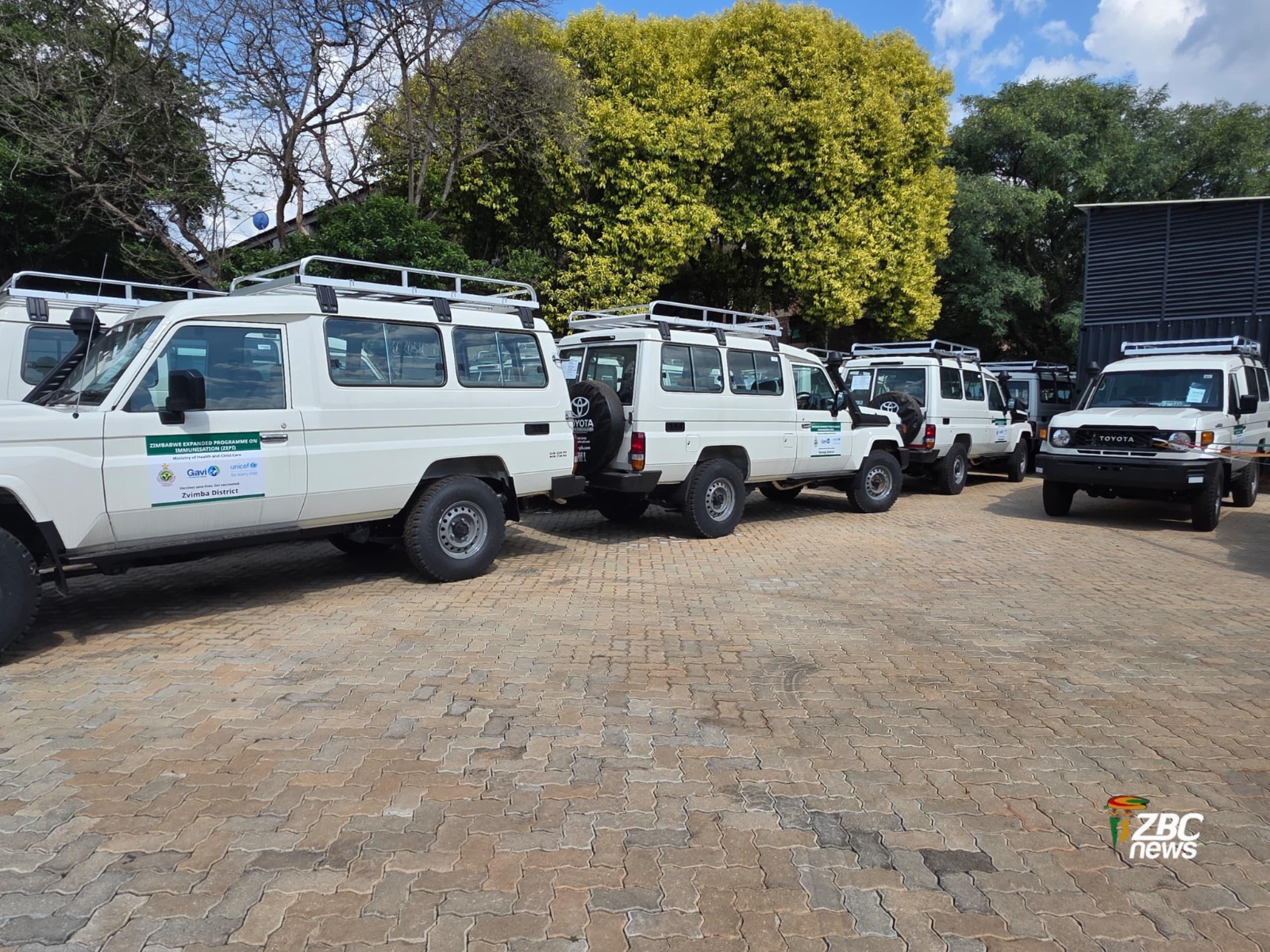
The consignment, officially received on Monday, includes 22 Land Cruiser vehicles, more than 300 motorised tricycles, two oxygen lorries and essential cold chain infrastructure such as refrigerators. The resources are expected to strengthen vaccine delivery and oxygen supply, particularly in remote and hard-to-reach communities.
For years, long distances have hampered immunisation coverage in isolated areas, leaving some children unvaccinated. Health authorities say the new fleet will enhance outreach capacity under Zimbabwe’s Expanded Programme on Immunisation (EPI), which targets vaccine-preventable diseases including measles, polio and tuberculosis.
UNICEF Representative Ms Etona Ekole said the equipment is aimed at ensuring equitable access to life-saving services.
“Basically, all of this equipment will be used to enable vaccination of children, especially in the most remote areas. These vehicles and equipment will support the Expanded Programme on Immunisation, where every child is supposed to be protected against vaccine-preventable diseases such as measles, polio and diphtheria,” she said.
“Zimbabwe has made strides in vaccination, but there is still much that remains to be done. We still have a number of zero-dose children, those who have never received any vaccine at all, meaning they remain unprotected against major antigens.”
Minister of Health and Child Care Douglas Mombeshora said the support reinforces Government’s commitment to inclusive healthcare delivery.
“COVID-19 taught us that oxygen is not a luxury; it is essential. These oxygen delivery vehicles ensure that when a patient needs oxygen, the question is no longer where we will get it,” he said.
“We meet at a time when global financing is under pressure and resources are shrinking. That is why today’s support matters even more. It is a strong statement that partnership still matters and that Zimbabwe’s children remain a priority.”
The intervention is expected to ease the burden on mothers who travel long distances to health centres and improve efficiency for frontline health workers. Authorities say the strengthened logistics system will help ensure that no child is left behind, regardless of geography or socio-economic status.

