



Story by Bruce Chahwanda, Political Editor
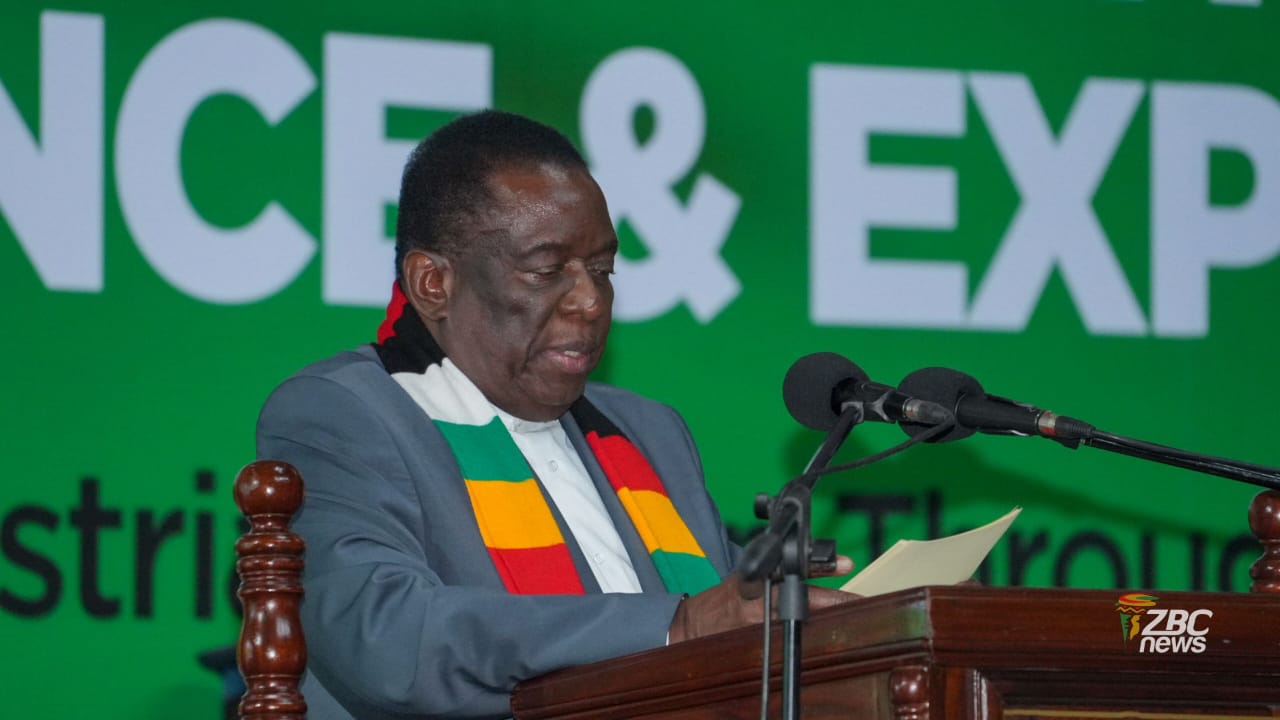
ZIMBABWE is positioning itself as a high-performing and competitive manufacturing and industrial hub, for regional, continental and international markets, President Dr Emmerson Mnangagwa said on Thursday, as he opened the inaugural Zimbabwe Industrialisation Conference and Expo in Harare.
The Head of State said the country’s industrial push would be anchored on value addition, export growth and sustainability, warning that future competitiveness would depend on environmentally responsible production.
“The future belongs to industries that are energy-efficient, environmentally-responsible and climate-resilient,” he said.
Speaking under the theme ‘Accelerating Industrialisation Through Regional Value Chains, Innovation and Trade’, President Mnangagwa said Zimbabwe’s strategic location, resource base and skills profile placed it in a strong position to scale up manufacturing and integrate into regional and global value chains.
He cited improving industrial performance, with capacity utilisation rising to 61.2% in the first quarter of 2026 from 35% in 2019, while manufactured exports increased from US$360 million to US$584 million, reflecting stronger value addition.
“The manufacturing sector now accounts for 17% of GDP,” he said, describing the growth as “phenomenal”.
However, the President warned that structural gaps persist, pointing to an estimated US$2.5 billion worth of manufactured imports that could be produced locally. “The situation… is untenable,” he said, calling for urgent scaling up of domestic production and beneficiation.
President Mnangagwa urged industry to prioritise processing of key resources including iron and steel, lithium, tobacco and agricultural products, saying local value addition was critical to job creation and export earnings.
“Our policy stance is unequivocal. National resources must be processed and beneficiated for the realisation of maximum economic returns,” he said, rejecting economic models that export raw materials with limited domestic gains.
The President also stressed the importance of regional trade frameworks, including the African Continental Free Trade Area (AfCFTA), SADC and COMESA, saying Zimbabwe was committed to expanding intra-African trade and export diversification.
To support industrial growth, President Mnangagwa said the government was implementing reforms to improve the investment climate, strengthen financing mechanisms and upgrade infrastructure.
“Modern and resilient infrastructure, stable energy supply, efficient transport systems are fundamental pre-requisites,” he said.
He added that innovation and technology adoption, including artificial intelligence, were increasingly shaping industrial competitiveness, with local firms already investing in production efficiencies.
Small and medium enterprises (SMEs) were identified as key drivers of industrial transformation, with President Mnangagwa calling for their integration into formal value chains and improved access to finance and markets.
Looking ahead, the President said Zimbabwe’s industrialisation agenda would depend on coordinated action across government, industry, finance and academia.
“Industry must invest and innovate; financial institutions must provide affordable capital and the academia ensure relevant knowledge and skills,” he said.
President Mnangagwa said the conference should deliver concrete recommendations and partnerships to accelerate industrial transformation, adding that the country had the collective resolve to advance its manufacturing sector.

