



Story by Abigirl Tembo
MICRO, Small and Medium Enterprises (MSMEs) and cooperatives are consolidating their role as a cornerstone of Zimbabwe’s economy, contributing more than 60 per cent of Gross Domestic Product and providing employment for millions of people.
From agriculture and mining to manufacturing, construction and trade, the sector is increasingly driving industrialisation, value addition and economic transformation.
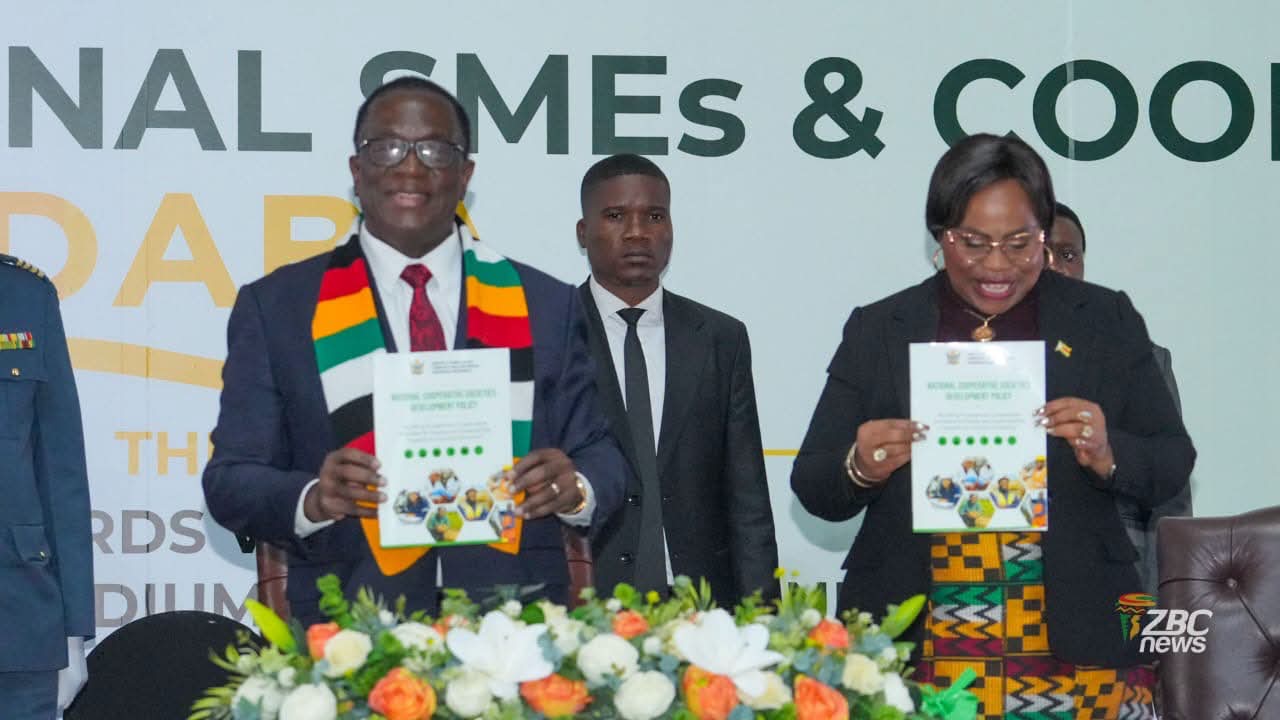
These issues took centre stage at the inaugural National MSMEs and Cooperatives Indaba, which brought together entrepreneurs, policymakers, financial institutions and development partners to explore ways of strengthening the sector through improved access to finance, technology, infrastructure, markets and policy reforms.
Representing more than four million MSMEs, Zimbabwe Chamber of SMEs Secretary General, Mr Venancio Kurauone said the sector had evolved from informal survival businesses into structured enterprises focused on production and value addition.
“We are not just a sector; we are the engine room of the economy and a catalyst for achieving Vision 2030. Without SMEs, Vision 2030 cannot be achieved.
“We have moved from survival mode to sustainable growth, production and value addition. As a sector, we are ready to absorb and integrate returning Zimbabweans from South Africa into production hubs and value chains so they contribute meaningfully to national development,” he said.
The Indaba also drew international participation, with India’s Ministry of Micro, Small and Medium Enterprises Joint Secretary, Ms Mercy Epao, sharing lessons from her country’s experience.
“In India, MSMEs contribute significantly to manufacturing output and exports and are the largest employers after agriculture. We regard MSMEs as the backbone of the economy and focus on formalisation, financial inclusion, access to credit, technology, skills development, market access, digitalisation and infrastructure support,” she said.
Finance, Economic Development and Investment Promotion Minister, Professor Mthuli Ncube said Government continues to implement reforms aimed at improving the business environment.
“Government has continued implementing reforms to reduce the cost of doing business. Transaction costs have been reduced, building plan approval processes reviewed, pharmacy licensing fees scrapped, import licence fees lowered, and reforms extended to support small-scale miners,” he said.
He said Government would continue reviewing regulations that constrain enterprise growth.
“We are committed to creating an environment where businesses, especially SMEs, can operate efficiently and contribute to economic growth,” he added.
Women’s Affairs, Community, Small and Medium Enterprises Development Minister, Senator Monica Mutsvangwa said MSMEs and cooperatives remain central to Zimbabwe’s development agenda.
“Zimbabwe’s economic transformation cannot be complete without SMEs and cooperatives. They contribute more than 60 per cent of GDP and include small-scale farmers, miners and entrepreneurs transforming local resources into finished products,” she said.
She added that the sector continues to create jobs, generate income and stimulate economic activity across the country.
The Indaba also recognised outstanding enterprises, with Presidential Awards presented to MSMEs and cooperatives for innovation, resilience, compliance and their contribution to employment creation, industrialisation and national development.
Backed by policy reforms, stronger partnerships and improved access to finance, Zimbabwe’s MSMEs and cooperatives are expected to play an even greater role in job creation, industrialisation and the country’s drive towards an upper-middle-income economy under Vision 2030.

