



Story by Abigirl Tembo
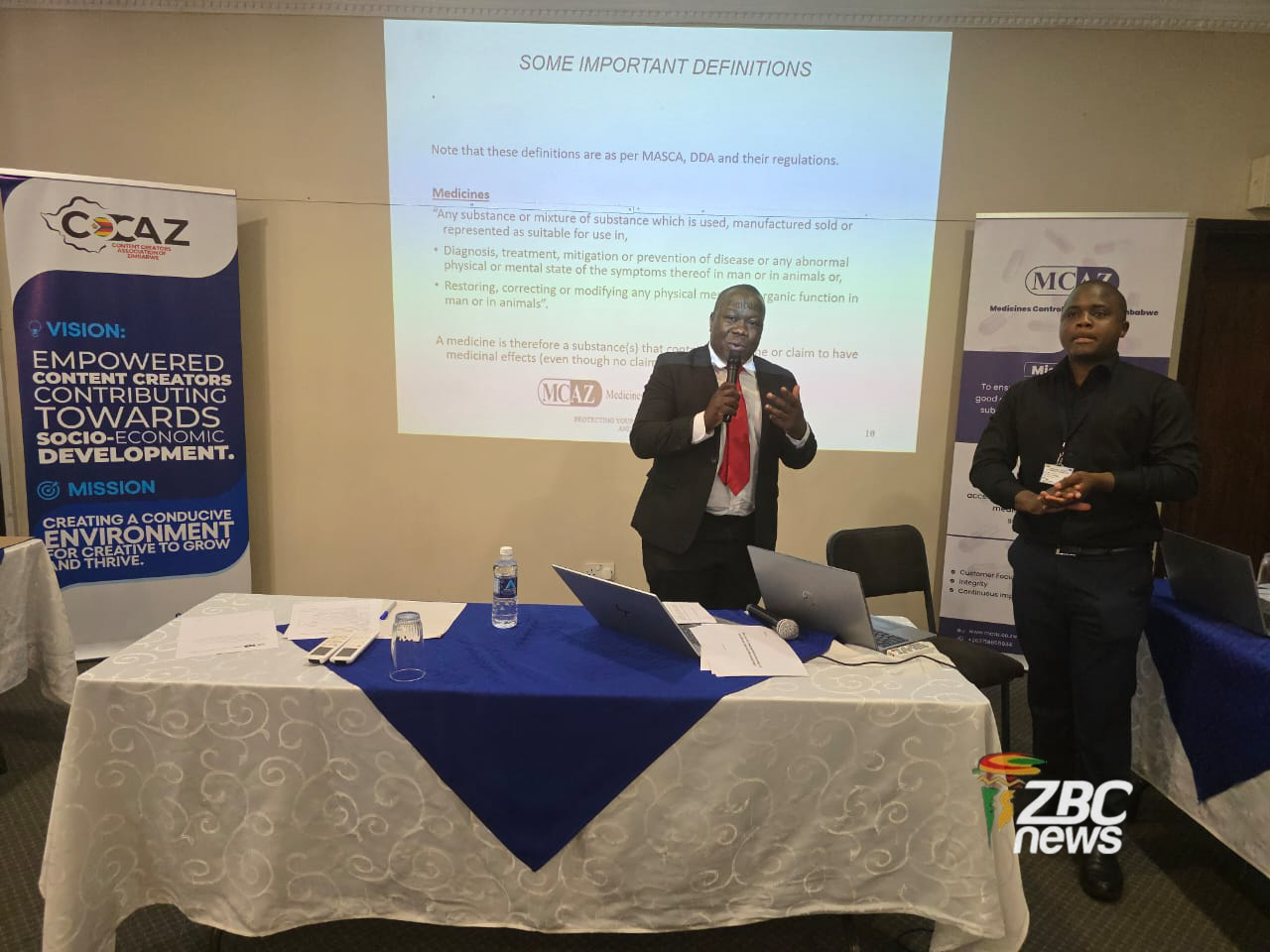
THE Medicines Control Authority of Zimbabwe (MCAZ) has partnered with the Content Creators Association of Zimbabwe to train digital content creators on the legal and ethical requirements for advertising medicines, as concerns grow over misleading health information circulating on social media.
With thousands of Zimbabweans relying on digital platforms for health information, MCAZ says unregulated medicine advertisements and unsubstantiated health claims pose a growing risk to public health.
MCAZ Public Relations and Communications Manager Mr Davidson Kaiyo said the initiative seeks to ensure content creators use their influence responsibly.
“The MCAZ exists to protect members of the public. One of the major challenges we have observed is the spread of misleading information and unsubstantiated claims on social media. People may abandon prescribed medicines in favour of products promoted without scientific evidence, placing their health at serious risk.
“Content creators need to understand the law. They have a powerful voice and significant influence. Our goal is to ensure people receive accurate, responsible and evidence-based health information that does not put their health at risk,” he said.
The training has changed how content creators approach commercial partnerships involving medicines and health products.
President of the Content Creators Association of Zimbabwe, Mr Takunda “Nex” Tapfuma, said the workshop had highlighted the need to verify products before promoting them.
“This engagement has been very beneficial. In the past, we accepted advertising jobs without knowing whether the products complied with the law. We now understand our responsibility because many people trust the information we share.
“If a company approaches us to promote a medicine or health product, we now know we can first consult the Medicines Control Authority of Zimbabwe to verify whether the product has been approved and whether it is legal to advertise it,” he said.
Content creator Wessy Issa said the training had introduced participants to regulations governing medicine advertising.
“Before this workshop, I didn’t even know there were laws governing the advertising of medicines. Now I know better,” she said.
Another content creator, Tryphine Gonz, said the workshop had changed how she would handle future advertising opportunities.
“Now I know that whenever I receive a medical-related advert, including herbs, I need to first check with the MCAZ,” she said.
Content creator Ashley Estone said the training had strengthened their role in protecting the public.
“This training has empowered us to protect our audiences by ensuring the information we share is accurate, lawful and safe. Going forward, we will create content that complies with the law and contributes positively to public health,” he said.
MCAZ says equipping content creators with the necessary legal and regulatory knowledge will help curb health misinformation online and ensure digital platforms become a source of reliable public health information rather than a risk to consumers.

