



Story by Panashe Nagoli
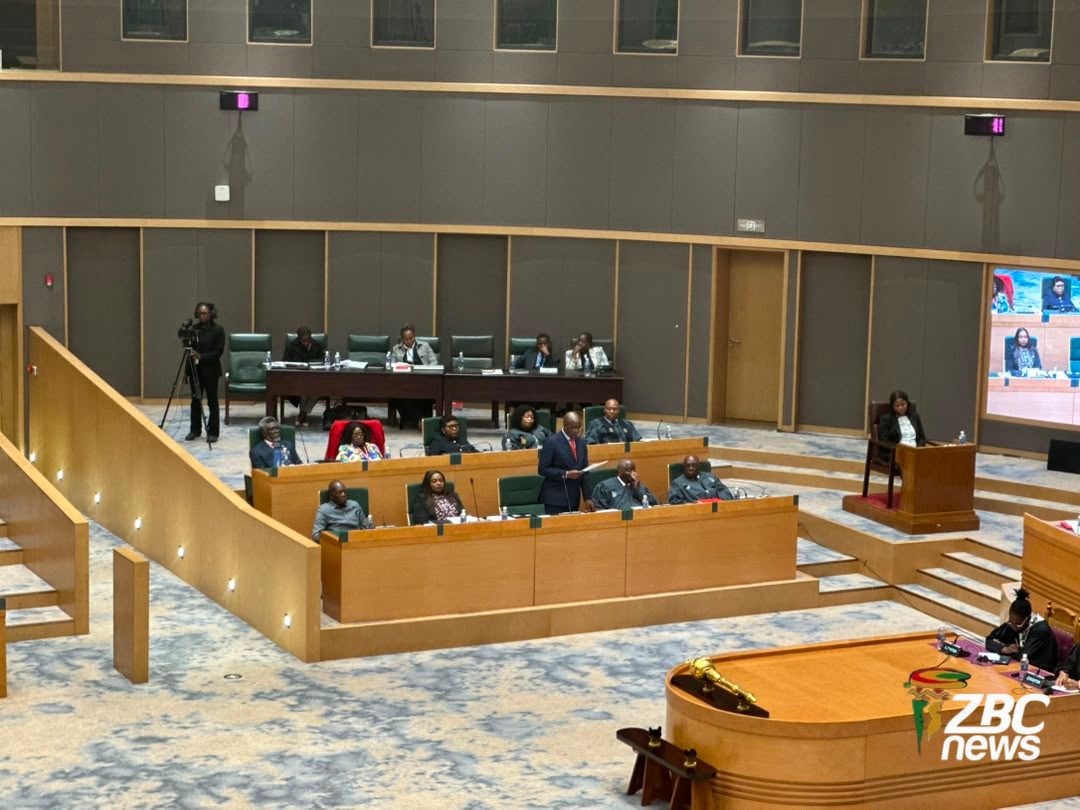
THE Constitutional Amendment No. 3 Bill has moved to the Senate, with the Minister of Justice, Legal and Parliamentary Affairs, Honourable Ziyambi Ziyambi, outlining the rationale behind the proposed constitutional changes as debate commenced in the Upper House on Tuesday.
The Bill, which was initially gazetted with 22 clauses, now contains 25 following amendments made by the National Assembly, where 216 legislators voted in favour of the proposed changes.
Presenting the Bill, Honourable Ziyambi said the amendments reflected concerns raised during parliamentary consultations and debate.
“The gazetted Bill set out twenty-two clauses. The amended version before the Senate carries twenty-five. The Bill has grown, and it has grown by listening,” he said.
He noted that provisions relating to the institution responsible for gender oversight and the role of traditional leaders in political life had been removed following concerns raised by legislators.
“The clause that would have folded away the institution charged with gender oversight was set aside, so that institution remains in place. And the clause that would have altered the standing of our traditional leaders in political life was set aside, and the present position stands.”
The minister added that the Bill had also been revised to reaffirm the constitutional duty of the Defence Forces to uphold the Constitution and had been strengthened through committee-stage refinements, including provisions on judicial leadership, the appointment of judges, representation for women and youths in local authorities, and the alignment of chiefs’ councils’ terms with the national electoral cycle.
“What has been amended was by concession, where the people asked for it, and by tidying where the text required it. That is what consultation is for,” he said.
Honourable Ziyambi said the Bill seeks to address what he described as “five afflictions” affecting Zimbabwe’s electoral system since the introduction of direct presidential elections in 1990.
Among the proposed reforms are changes to the method of electing the President and extending the national electoral cycle from five to seven years.
“The Bill reforms the manner in which we choose our highest office, so that the President is elected by the people through their Parliament, the chamber the people themselves elect, and to which the President so chosen remains continuously answerable,” he said.
He argued that the proposed system would encourage consensus-building while reducing political divisions associated with direct presidential contests.
“It reforms the length of the national electoral cycle, so that the term of the office of the President, and the lifespan of Parliament run together for seven years; rather than five, giving the people’s Government the time to plan, to build, to develop and to be judged on what it has delivered.”
Following the minister’s presentation, senators debated the Bill, with most contributors expressing support for the proposed amendments.
“This bill is a needed move aimed at the decolonisation of the constitution. Africa needs to map out its own path, and Zimbabwe is leading in that regard, and so we support the bill,” said one senator.
Another senator argued that extending the electoral cycle would allow resources to be redirected towards development, saying: “We are wasting money on the elections every five years, and so this bill solves that problem.”
Other contributors said Parliament’s constitutional powers justified the proposed changes to presidential selection and described the amendments as a means of strengthening the country’s constitutional framework and reducing electoral tensions.
The Bill now proceeds to the Committee Stage, where senators will consider it clause by clause before taking a final vote.

