



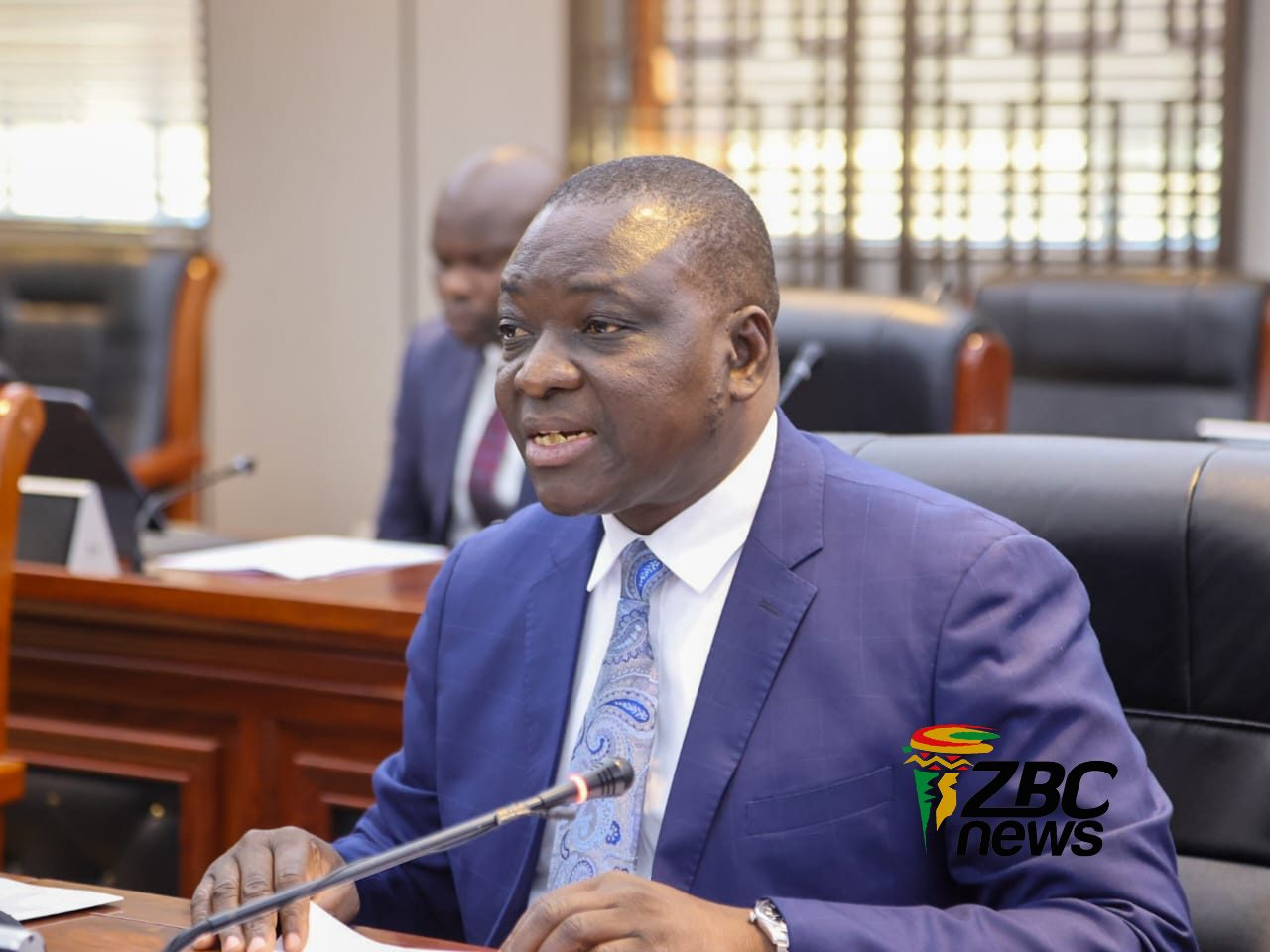
Today, 16th June, 2026, His Excellency the President, Dr. E.D. Mnangagwa chaired the Nineteenth Cabinet Meeting and the following issues, among others, were considered and approved:
1.0 END OF CYCLE REPORT ON THE IMPLEMENTATION OF PRIORITY PROJECTS FOR THE 1ST 100-DAY CYCLE OF 2026
Cabinet noted and approved the End of Cycle Report on the Implementation of Priority Projects for the 1st 100-Day Cycle of 2026 as presented by the Minister of State for National Security in the President’s Office, Honourable Lovemore Matuke. Cabinet noted with satisfaction the assessment of projects implemented under the Rapid Results 100-Day Cycle Initiative for the period 9 February to 19 May, 2026. The implementation framework serves as a strategic instrument for strengthening performance, accountability and timely delivery of high-impact programmes and projects across Government. Guided by the mantra “Nyika inovakwa nevene vayo/ Ilizwe lakhiwa ngabanikazi balo”, a total of 242 projects were implemented, out of which 143 were completed while the remaining projects are nearing completion.
The completed projects spanned the Infrastructural Development and Housing; and Inclusive Economic Growth and Structural Transformation thematic areas. It is noteworthy that out of the 242 projects, a total of 19 projects emanated from His Excellency President Dr. E. D. Mnangagwa’s clarion call for the development of previously less developed communities where projects were implemented as follows: Binga, 4; Kanyemba, 1; Siakobvu, 1; Tsholotsho, 10 and Nkayi, 2. Other success stories include the following: i. Construction of the Binga Registry Complex, Matabeleland North Province; ii. Installation of X-ray machines in Harare Metropolitan, Manicaland and Midlands Provinces; iii. Construction of the 235-megawatt Thermal Power Plant in Hwange, Matabeleland North Province; iv. Construction of the 100-megwatt Massive Prestige Thermal Power Plant in Beitbridge, Matabeleland South Province; v. Funding of 30 Micro, Small and Medium Enterprises in Norton, Mashonaland West Province; vi. GMB silo expansion in Mhangura, Mashonaland West Province; vii. Establishment of ICT laboratories in schools nationwide; viii. Construction of Maphisa Stadium in Matobo District, Matabeleland South Province; ix. Implementation of the Rangemore Presidential Housing Scheme in Matabeleland North Province; and x. Establishment of the Prospect Lithium Sulphate Plant in Goromonzi District, Mashonaland East Province.
2.0 PROPOSED VENUE FOR THE 47TH INDEPENDENCE ANNIVERSARY CELEBRATIONS AND 2027 CHILDREN’S PARTY
Cabinet noted and approved the report on the proposed venue for the 47th Independence Anniversary Celebrations and 2027 Children’s Party as presented by the Hon. Vice President Col. (Rtd.) Dr. K.C.D. Mohadi. Masvingo Province will host the 47th Independence Anniversary Celebrations and the 2027 Children’s Party in line with the Cabinet directive at its Meeting of 20th May, 2025 on the Independence Celebrations rotational hosting sequence. It should be recalled that in one of his earlier interventions, His Excellency the President stressed that remoteness and underdevelopment should be accorded importance in the selection of a hosting district. In that regard, Rutenga Growth Point in Mwenezi District has been approved as the venue for the 47th Independence Celebrations and the 2027 Children’s Party. Gonakudzingwa former detention camp in Chiredzi District; and Jenya, a Liberation War memorial site in Chivi District, were considered as the Places of Significance where the Independence Flame will be lit. The Page 4 of 11 Ministry of Home Affairs and Cultural Heritage will identify other areas of historical interest in the province and undertake the appropriate memorialisation programmes.
3.0 UPDATE ON THE OFFICIAL OPENING OF THE 34TH JUNIOR PARLIAMENT SESSION
Cabinet noted and approved a Report on the Official Opening of the 34th Junior Parliament Session as presented by the Minister of Youth Empowerment, Development and Vocational Training, Honourable T. Machakaire. Cabinet advises that the Official Opening of the 34th Junior Parliament will be presided over by His Excellency President Dr. E. D. Mnangagwa on the 8 th July 2026 at the Parliament of Zimbabwe. The event will run under the Day of the African Child inspired theme “Ensuring universal access to water, sanitation, and hygiene for every child in Africa.” The Junior Parliament mirrors the structure of the Parliament of Zimbabwe and is designed to advocate for the promotion and protection of youth rights; to cultivate leadership, civic responsibility and democratic values among the youth; and to facilitate structured and meaningful youth participation across all sectors of national development. More specifically, the Junior Parliament seeks to provide children with practical civic education on the operations of the three Arms of the State. Page 5 of 11 The Junior Parliament elections were conducted in all constituencies on 12th June 2026 and rehearsals are currently underway. Going forward, Government will continue to strengthen and expand the programme as a strategic national platform for youth development, empowerment and participation.
4.0 PROPOSED REVIEW OF MINIMUM WAGES AND RELATED CONDITIONS OF EMPLOYMENT FOR DOMESTIC WORKERS AND WORKERS IN UNCLASSIFIED OPERATIONS
Cabinet noted and approved the Review of Minimum Wages and related conditions of employment for domestic workers and workers in unclassified operations as presented by the Minister of Public Service, Labour and Social Welfare, Honourable Edgar Moyo. The Minister of Public Service, Labour and Social Welfare sought the review of minimum wages and related conditions of employment for certain classes of workers in terms of Section 19 of the Labour Act [Chapter 28: 01]. In fixing the minimum wages and related conditions of employment for domestic workers and workers in unclassified operations who are not covered by National Employment Councils, recommendations of the tripartite Wages and Salaries Advisory Council (WASC) were taken into consideration. Page 6 of 11 Accordingly, the minimum wage for workers in unclassified operations is henceforth pegged at US$270 payable in local currency. The minimum wage for domestic workers will be US$90. Other workers will be paid as follows: Yard Worker/ Gardener US$ 90.00; Cook/ Housekeeper US$ 99.00; Child/Disabled/Aged Minder US$108.00; Disabled/Aged Minder with Red Cross Certificate US$117.00 The revised minimum wages are with immediate effect.
5.0 PROPOSED HOSTING OF THE ZIMBABWE TRIPARTITE NEGOTIATING FORUM GLOBAL SUMMIT ON INCLUSIVE GROWTH: 21-25 SEPTEMBER, 2026
Cabinet approved the Hosting of the Zimbabwe Tripartite Negotiating Forum Global Summit on Inclusive Growth, Decent Work, Beneficiation and Investment Promotion from 21st to 25th September, 2026 at Elephant Hills Resort in Victoria Falls, as presented by the Minister of Public Service, Labour and Social Welfare, Honourable Edgar Moyo. The Tripartite Negotiating Forum (TNF), established in terms of the TNF Act of 2019 under the Ministry of Public Service, Labour and Social Welfare, will host the event. The Summit will strengthen partnerships for Government, Page 7 of 11 Business and Labour to accelerate inclusive economic transformation, investment and industrialisation. The Summit will attract approximately 1 000 delegates from over 15 countries and will strengthen Zimbabwe’s international re-engagement agenda by demonstrating commitment to social dialogue, labour stability, policy predictability and inclusive economic governance. Hosting the Summit will also reinforce Zimbabwe’s reputation as a stable and reformoriented economy committed to sustainable growth and decent work.
6.0 MEMORANDUM OF UNDERSTANDING BETWEEN THE REPUBLIC OF ZIMBABWE AND THE HUNAN PROVINCIAL CENTRE FOR DISEASE CONTROL AND PREVENTION OF THE PEOPLE’S REPUBLIC OF CHINA
Cabinet approved the Memorandum of Understanding (MOU) between the Republic of Zimbabwe and the Hunan Provincial Centre for Disease Control and Prevention of the People’s Republic of China as presented by the Minister of Health and Child Care, Honourable Dr. D.T. Mombeshora. The MoU seeks to establish a framework for co-operation in enhancing academic and research capabilities for Malaria control and elimination. The co-operation will be implemented through the National Institute of Health Research (NIHR) under the Ministry of Health and Child Care. The areas of co-operation include joint disease control initiatives, research and Page 8 of 11 technology transfer, capacity building and multilateral collaboration. The Parties will promote Malaria control strategies, including surveillance, response and evaluation models in high Malaria burden areas in Zimbabwe. The Parties will also collaborate in establishing a China-Zimbabwe joint Malaria Laboratory for monitoring anti-malarial drug resistance and vector control research. Further co-operation will include technical training in laboratory management, epidemiology and health economics, and joint applications for funding from international organisations and exploring trilateral co-operation with other countries.
7.0 MEMORANDUM OF UNDERSTANDING BETWEEN THE REPUBLIC OF ZIMBABWE AND THE GOVERNMENT OF THE REPUBLIC OF KENYA ON COOPERATION IN THE FIELD OF HEALTH
Cabinet approved the Memorandum of Understanding (MOU) between the Republic of Zimbabwe and the Government of the Republic of Kenya on Cooperation in the Field of Health as presented by the Minister of Health and Child Care, Honourable Dr. D.T. Mombeshora. The MoU seeks to create a framework to promote, develop and increase co-operation between Zimbabwe and Kenya in primary health care, including reproductive, maternal, neonatal, child and adolescent health and immunisation programmes; secondary health care, including specialist Page 9 of 11 services and referrals of patients, laboratory, forensic pathology and blood services; and health systems resilience, including public health emergencies preparedness. The co-operation will also cover the development of pharmaceutical and medical devices; health financing; human resources for health; health technology, including health information and biotechnology; and other areas of co-operation mutually agreed by the Parties. The MoU will be in effect for a period of 5 years, and will be automatically extended for a successive period of 5 years.
8.0 MEMORANDUM OF UNDERSTANDING BETWEEN THE REPUBLIC OF ZIMBABWE AND GOVERNMENT OF THE REPUBLIC OF GHANA ON COOPERATION IN THE FIELD OF AGRICULTURE
Cabinet noted and approved the Memorandum of Understanding between the Republic of Zimbabwe and Government of the Republic of Ghana on cooperation in the field of agriculture as presented by the Minister of Agriculture, Mechanisation and Water Resources Development. The Memorandum of Understanding seeks to facilitate cooperation in the following areas: sustainable conservation agriculture; research development and technology; exchange knowledge in crop production and development; livestock production and development; irrigation development; education, training and extension; marketing and trade development; mechanisation development; fisheries production and development; exchange experts, professionals, scientists and trainees; and the conduct of study tours, seminars and other professional trainings.
9.0 REPORT ON THE STATE VISIT TO ZIMBABWE BY HIS EXCELLENCY TEODORO OBIANG NGUEMA MBASOGO, PRESIDENT OF EQUATORIAL GUINEA
Cabinet noted and approved the Report on the State Visit to Zimbabwe by His Excellency Teodoro Obiang Nguema Mbasogo, President of Equatorial Guinea from 11-12 June 2026, as presented by the Minister of Foreign Affairs and International Trade, Honourable Professor Amon Murwira. The two-day State Visit was highly significant in solidifying the strategic political, economic and diplomatic partnerships between the two countries. The visit also marked an operational leap following the recent inaugural session of the Zimbabwe-Equatorial Guinea Joint Permanent Commission on Cooperation (JPCC). The primary significance of the visit spans several key areas, as follows: i. the call for rationalization of visa fees charged by the two countries; ii. promoting tourism development through exchange of experiences and expertise and joint promotion of tourist destinations; iii. Cooperation in the field of education; iv. Cooperation in the agricultural and fisheries sectors; and v. Mining. The two leaders presided over the signing of four major Memoranda of Understanding (MoUs), and agreements as follows: i. Agreement on Economic and Trade Cooperation; ii. Memorandum of Understanding in the Field of Education; iii. Memorandum of Cooperation in the Training of Translators and Interpreters; iv. Agreement on the Rules of Procedure for the Joint Commission on Cooperation: The Visit also reinforced pan-African solidarity, and laid the foundation for further strengthening of bilateral relations, with particular emphasis, interalia, on economic cooperation, trade and investment, tourism, energy, agriculture, immigration, Defence and Correctional Services. I THANK YOU!

